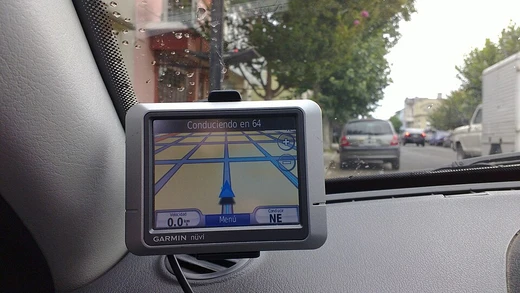
GPS tracking unit
A device that tracks assets using GNSS and transmits location data.
A GPS tracking unit—often called a GPS tracker or just a tracker—is a device that pinpoints the location of whatever it's attached to, forming part of a larger tracking system. It works by picking up signals from a Global Navigation Satellite System (GNSS) to calculate its exact geographic position. That location data, plus any other telemetry from the vehicle or asset, gets sent to an internet-connected device or a central server through an embedded cellular, radio, or satellite modem. This setup allows remote, real-time monitoring and management of vehicles, assets, people, and animals, and it's a key part of intelligent transportation systems. In 2022, the global market for these devices was worth over $2.5 billion, and it's expected to grow at a compound annual rate of more than 13%, reaching $4.76 billion by 2027.
Consumers use GPS tracking units, and they're also a standard part of fleet telematics systems and fleet digitalization. The data these devices collect usually goes to specialized fleet management software. Many modern cars come with a factory-installed telematic control unit (TCU), but aftermarket GPS trackers are used to manage mixed fleets—vehicles from different brands—and to equip vehicles that don't have built-in telematics. Specialized hardware manufacturers make these devices.
Technology and components
A modern GPS tracking unit combines several key electronic parts to figure out and send its location and other information.
GNSS receiver: This is the main part that picks up signals from satellite systems like GPS, GLONASS, or Galileo to calculate the device's precise coordinates. Communications module: The unit has a modem to transmit data. The type of modem decides the network coverage: Cellular: Most trackers use a cellular modem (on GSM, GPRS, LTE, or 5G networks) to send data to a central server. Satellite: For remote areas without reliable cell service, some devices use a satellite modem that communicates through constellations like Globalstar or Iridium. Microcontroller: A central processor runs the system, handling location data from the GNSS receiver and controlling the communications module and other parts. It relies on basic electronic components like transistors to manage circuits and switching.
Quick Facts
- Projected cagr
- over 13%
- Leading suppliers
- CalAmp
- ORBCOMM
- Queclink
- Teltonika
Facts from the source article.
Lore & Background
GPS tracking units integrate several key electronic components to determine and transmit location and other data. The core architecture consists of a GNSS receiver that acquires signals from satellite constellations such as GPS, GLONASS, or Galileo to calculate precise geographic coordinates. A communications module—either cellular (using GSM, GPRS, LTE, or 5G networks) or satellite (via constellations like Globalstar or Iridium)—transmits data to a central server. A microcontroller manages the system, processing location data and controlling components, while onboard memory stores location data for buffering or logging. Devices are powered by an internal rechargeable battery or a direct connection to a vehicle's electrical system. Additional components may include accelerometers and gyroscopes for detecting movement and impacts, inputs/outputs for connecting to external sensors or controlling a starter interrupt, and cameras for video telematics.
GPS tracking units can be categorized by application and form factor. Personal and asset trackers are small, portable, battery-powered devices used for tracking people, animals, or high-value mobile assets, with applications including personal safety, lone worker safety, asset tracking, and animal tracking. Vehicle trackers are designed for installation in cars, trucks, motorcycles, buses, and heavy machinery, and are a core component of fleet management systems, often referred to as automatic vehicle location (AVL) systems. Vehicle trackers are further categorized by installation method: hardwired trackers wired directly into a vehicle's electrical system for deep integration; OBD plug-in trackers that connect to the OBD-II port for simple installation and diagnostic data; and battery-powered trackers that are self-contained and wireless for flexibility.
The commercial vehicle segment is the largest end-user of GPS tracking devices, driven by the need for real-time fleet monitoring and management. While many modern vehicles have a factory-installed telematic control unit (TCU), aftermarket GPS tracking units are used to manage mixed fleets and equip vehicles lacking native telematics. The global market was valued at over $2.5 billion in 2022 and projected to grow at a CAGR of over 13% to reach $4.76 billion by 2027.
Reader's Guide
GPS tracking units have become a foundational technology in commercial fleet management, precision agriculture, and asset tracking. In fleet management, they enable operational efficiency through route optimization and dispatching, driver safety monitoring by tracking behaviors like speeding and harsh braking, and automated maintenance scheduling using mileage and engine hour data. These systems also help prevent gasoline theft and support comprehensive fuel-management systems. In precision agriculture, trackers on tractors and farm machinery provide real-time location and status information, enable parallel driving to avoid overlap during field work, and control fuel consumption across different machines. For asset and equipment tracking, battery-powered trackers are placed on non-powered or intermittently powered assets such as trailers and containers, allowing logistics companies to monitor their location. The technology is also used in humanitarian aid operations to enhance operational visibility and cost-effectiveness. The market is served by numerous specialized manufacturers, with companies like CalAmp, ORBCOMM, Queclink, and Teltonika among the leading suppliers. The distinction between data-pushing devices that transmit in real-time and data-logging units that store history for later download remains relevant for different use cases.
Core Architecture and Electronic Components
A modern GPS tracking unit is a compact electronic system built around several interdependent components working in concert. At its core sits a GNSS receiver that locks onto signals from satellite constellations—GPS, GLONASS, or Galileo—to compute precise geographic coordinates. That position data is handed off to a microcontroller, a central processor that orchestrates the entire device, managing circuits through foundational elements like transistors and coordinating every subsystem. To transmit data externally, a communications module comes into play: most units rely on a cellular modem riding GSM, GPRS, LTE, or 5G networks, while those deployed in remote regions without reliable cell coverage instead tap into satellite constellations such as Globalstar or Iridium. Onboard memory serves a dual purpose, buffering location fixes during network outages to prevent data loss and logging full journey histories for later review. Power comes either from an internal rechargeable battery for portable use or a direct tap into a vehicle's electrical system for permanent installs. Many units also carry accelerometers and gyroscopes to detect harsh braking, acceleration, or impacts, input/output ports for reading door sensors or triggering a starter interrupt, and even integrated dashcams adding a visual layer to the data stream—a practice commonly called video telematics.
Market Scale and the Fleet Ecosystem
The GPS tracking hardware market has grown into a multi-billion-dollar industry with strong forward momentum. Valued at over $2.5 billion in 2022, the global market is projected to expand at a compound annual growth rate exceeding 13 percent, reaching an estimated $4.76 billion by 2027. A major engine of that growth is the commercial vehicle segment, which stands as the largest end-user of GPS tracking devices, driven by the demand for real-time fleet monitoring and management. These trackers form the backbone of modern fleet telematics systems and are frequently referred to as automatic vehicle location (AVL) systems within broader intelligent transportation frameworks. While many contemporary vehicles ship from the factory with a manufacturer-installed telematic control unit, aftermarket GPS trackers fill a critical gap: they let operators manage mixed fleets containing vehicles from multiple brands and equip older vehicles that lack native telematics hardware entirely. The data these devices collect is typically routed to specialized fleet management software platforms for centralized oversight. A range of specialized hardware manufacturers serves this space, with companies such as CalAmp, ORBCOMM, Queclink, and Teltonika recognized among the leading suppliers of vehicle tracking hardware worldwide.
Personal Safety and Asset Monitoring
Beyond the commercial fleet world, GPS tracking units play a vital role in protecting people and monitoring valuable mobile property. Personal and asset trackers are typically small, portable, battery-powered devices whose compact form factor allows them to be carried on a person, clipped onto equipment, or fitted to a pet's collar. In the realm of personal safety, these devices monitor the location of children, elderly individuals, or other vulnerable persons, with many models incorporating an SOS button that can instantly dispatch an alert and the user's coordinates to a designated caregiver. Lone worker safety is another critical application, providing location data and panic alerts for employees operating in remote or hazardous environments. For asset tracking, the same compact hardware follows shipping containers, portable generators, and other non-powered equipment as they move through supply chains. Animal tracking represents yet another use case, with devices placed on pets or wildlife to monitor location and movement patterns over time. While most modern units transmit their position in real-time—a function known as data pushing—some specialized models operate in a logging mode, storing position history onboard for later download rather than streaming it continuously.
Vehicle Integration: Hardwired and OBD Approaches
When GPS tracking units are installed in vehicles—cars, trucks, motorcycles, public transit buses, or heavy machinery—the method of installation shapes what the device can accomplish. Hardwired trackers are connected directly into a vehicle's electrical system, drawing a constant and reliable power supply. This deep integration unlocks a broader set of capabilities: the tracker can monitor ignition status, activate a starter interrupt to immobilize the vehicle, and connect to a wide array of third-party sensors reporting variables such as fuel level, cargo temperature, and tire pressure. In many cases, hardwired units can also tap directly into the vehicle's CAN bus to read detailed operational data, making them the preferred choice for professional fleet digitalization in commercial operations. At the other end of the spectrum, OBD plug-in trackers slot directly into a vehicle's OBD-II port, requiring no special tools for installation. Beyond basic location data, these plug-in units pull a broad range of diagnostic information from the onboard computer, including engine RPM, fuel level, and Diagnostic Trouble Codes useful for maintenance scheduling. This no-wire approach makes OBD trackers particularly attractive for quick deployment across a diverse vehicle lineup.
Frequently Asked Questions
What is a GPS tracking unit?
It is a compact hardware node—sometimes simply called a tracker—that you bolt onto a vehicle, attach to a person, or clip to an animal. Its job is to lock onto satellite navigation signals, figure out where it is, and push that position data out to a remote server or a user's phone.
What happens to the location data once the unit has it?
The tracker bundles the coordinates with any extra telemetry—speed, fuel level, engine status—and hands the packet to an embedded cellular, radio, or satellite modem. That modem relays the information over the internet to a central server or a connected device so an operator can watch the asset in real time.
Who are the biggest names making GPS tracking units today?
CalAmp, ORBCOMM, Queclink, and Teltonika are widely cited as leading suppliers in a global market that cleared $2.5 billion in 2022 and is projected to approach $4.76 billion by 2027, growing at a compound rate above 13 percent.
Is a GPS tracking unit the same thing as a full tracking system?
No—the unit is only the on-site sensor and transmitter; the complete system also includes the overhead satellite constellation, the communication network that carries the data, and the software dashboard where a dispatcher or owner actually views and manages the information.
More in Satellite Navigation and GPS
Spotted an error? Know more?
Reader corrections go straight into our review queue. Suggest an edit · How this site is sourced