Shadoof
An ancient counterbalanced lever for lifting water.
A shadoof is a tool used to lift water from a well or other water source onto land or into another waterway or basin. It consists of a long counterbalanced pole on a pivot with a bucket attached. Known since ancient times, it is highly efficient and commonly used in crop irrigation systems.
Quick Facts
- Earliest evidence
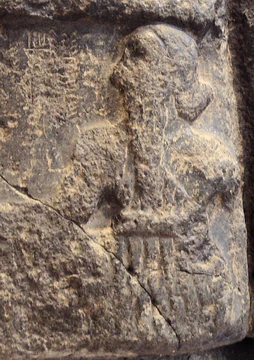
- Cylindrical seal from about 2200 BCE
- Lifting range
- 1 to 6 meters
- Efficiency
- 60%
- Height range (chad study)
- 1.8 to 6.2 meters
- Power output (chad study)
- 26.7 to 60.1 W
Facts from the source article.
History
One theory holds that the shadoof was invented in Mesopotamia as early as the time of Sargon of Akkad. The earliest known depiction appears on a cylindrical seal dating to about 2200 BCE. The Minoans are believed to have adopted it around 2100–1600 BCE. It appeared in Upper Egypt after 2000 BC, likely during the 18th Dynasty, and reached China around the same time. Some historians argue for an Egyptian origin, citing tomb drawings at Thebes from 1250 BCE. An alternative theory suggests an Indian origin, though evidence is limited. The shadoof remains in use in many parts of Africa and Asia, including rural India and Pakistan, and is common in Ukraine, Belarus, Poland, Germany, and the Great Hungarian Plain.
Design, construction, and efficiency
The shadoof is simple to build and efficient. It has an upright frame supporting a long pole or branch, pivoted about one-fifth of its length from one end. The long end carries a bucket, skin bag, or bitumen-coated reed basket; the short end bears a counterweight of clay or stone. The operator lowers the bucket using their own weight, and the counterweight raises the full bucket with little effort. Buckets may have an uneven base or a tieable top for immediate water distribution. Frames can be a single pole or a pair, and buckets attach by rope or a thinner stick. With a swinging motion, the waterproof vessel scoops water from a river or pond and empties it into runnels leading to irrigation ditches. The device reduces force requirements so performance is limited by the operator's energy processing capacity rather than muscle fatigue. Its lifting range is 1 to 6 meters. A study in Chad found one man could lift 39 to 130 liters per minute over heights of 1.8 to 6.2 meters, yielding power levels of 26.7 to 60.1 W, with an efficiency of 60%. A Nigerian study using heart rate as a metric showed that adjustments to the shadoof decreased energy consumption from about 109 to 71 watts, allowing prolonged work with fewer rest breaks.
Social effects
Shadoofs have symbolized collective effort in many cultures. In ancient Egypt and Mesopotamia, multi-tiered systems enabled water movement to higher levels through teamwork. Along with other irrigation technologies, they helped establish reliable agriculture and influenced cultural elements. During the Egyptian Middle Empire and New Kingdom, pleasure gardens with shadoof irrigation became a status symbol for luxury residences, contributing to class distinctions. At the same time, shadoofs remained essential for those with limited resources on large Nile farms. Today, many communities lack access to more sophisticated water technologies, making shadoofs an indicator of socio-economic standing. Their reliability is often overlooked. In regions like Egypt, India, and sub-Saharan Africa, shadoofs have enabled agriculture in water-scarce areas and empowered marginalized communities by securing sustenance. Women have frequently taken on shadoof operation, and the ease of use helped normalize women's increased independence in food production. However, the manual labor required poses a barrier for individuals with certain physical disabilities.
Names
Shadoof or shaduf comes from the Arabic šādūf. In the US it is called a lift, well pole, well sweep, sweep, or swape. Portuguese loan word picotah or picota is used. In Chinese it is jiégāo (桔槹). Tamil: thulla (துலா); Telugu: ethaamu (ఏతాము) or ethamu (ఏతము). Ancient Greek: kēlōn (κήλων) or kēlōneion (κηλώνειον), borrowed into Mishnaic Hebrew as קילון. Ukrainian: krynychnyi zhuravel (криничний журавель) or zvid (звід). Hungarian: gémeskút. Croatian: đeram (from Turkish germe).
More in Sargon of Akkad
Spotted an error? Know more?
Reader corrections go straight into our review queue. Suggest an edit · How this site is sourced