Chinju no mori
Sacred shrine forests preserving Japan's ancient vegetation and kami faith.
Last updated
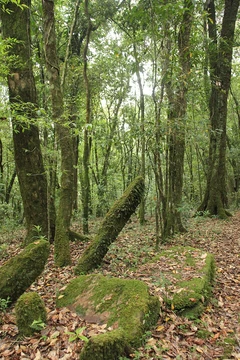
Chinju-no-mori are sacred groves found at Shinto shrines, temples, and worship sites in Japan. These forests, where kami are believed to dwell, reflect ancient nature worship. The forest itself can serve as the shrine's sacred object, and the term "mori" originally meant a grove where a kami resides.
Quick Facts
- Alternate readings
- 神社
- 社
- 杜 (all read 'mori')
- Earliest textual reference
- Man'yōshū
- Academic term used by
- International Society of Vegetation Science (Akira Miyawaki)
- Notable preserved forests
- Meiji Jingu, Tadasu Forest (Kyoto City)
- Opponent of shrine merging
- Minakata Kumagusu
Facts from the source article.
Meaning
Chinju no mori refers to the forest or grove that surrounded many Shinto shrines. The character for mori is often used, and in some cases the word shrine itself is written and read as mori, suggesting that Shrine Shinto derived from Koshinto. The character mori appears frequently in shrine names, indicating a place where a kami is present.
Thus, the characters 神社, 社, and 杜 can all be read 'mori' ('grove'), a reading attested in the Man'yōshū. This reflects the fact that the first shrines were simply sacred groves where kami were present. In modern Shinto, the shintai is understood to be the shrine architecture covered with shimenawa, with the surrounding forests considered chinju-no-mori.
In Koshinto, the original source of Shinto, objects of faith include Himorogi, Iwakura, forests, mountains, megaliths, seas, rivers, and nature itself. Many shrines were originally built on the border between the everlasting world and the present world, where a sacred stone or rock exists. Some shrines, like Omiwa Shrine in Nara Prefecture, worship a mountain as the shintai and lack a main shrine or Honden, preserving ancient nature worship.
Vegetation
Township forests are believed to have been preserved since ancient times, so their vegetation is considered to represent the original vegetation of the area. Today, when surrounding nature is often destroyed, these forests are among the few clues to former local ecology. In Japanese forest ecology, they are emphasized as shrine forests or shrine and temple forests and are frequently surveyed; many are protected as natural monuments. However, original vegetation is not always fully preserved.
When surrounding areas are developed and only the chinju forest remains isolated, a once broad ecosystem becomes fragmented. Habitat area is reduced, some species cannot sustain viable populations, and communities along mountain streams may be lost. Aridification and other changes occur, and new species invade.
For example, camphora, often seen in shrines, is not thought to have originally been found in central and southern Japan. Deciduous trees like Keyaki and Mucunoki should not occur much in the climax community south of the plains in central Honshu. In fragmented vegetation, animals often lack room to maintain populations, and animal communities degrade more than plant communities. Since many plants depend on specific animals for pollination and seed dispersal, animal degradation transforms the vegetation itself.
Decline
In modern times, belief in Shinto deities has become more abstract, and reverence for dense shrine forests has waned; many believers, such as Ujiko, do not necessarily consider them necessary. While some core shrines maintain their forests (e.g., Meiji Jingu and Tadasu Forest in Kyoto City), many shrine forests have been cut down for road repairs, agricultural and residential land development, and public facilities such as daycare centers. In urban areas, forests were often cut down or completely lost. Some shrines now consist only of torii gates and main shrines, greatly diminishing the original nature-worship meaning.
Before the Meiji era, each village had shrines of various sizes, many with a guardian forest. This was greatly reduced by the Jinja gōshi decree, which abolished many shrines and led to the logging of their forests. Minakata Kumagusu opposed shrine merging, fearing large-scale destruction of nature.
Jinja gōshi aimed to organize one shrine per administrative village and incorporate indigenous beliefs into State Shinto; one theory suggests the purpose was to gain concessions on wood resources or by-products such as camphor. Large camphor and tabunoki trees in central Honshu and southward may have been treated at a high price. Large plants of furan and sekkok, once common on sacred trees, are rarely seen due to the wildflower boom. Minakata Kumagusu once found a large epiphytic orchid at a shrine in Wakayama Prefecture and explained it to the kannushi, who was angry that advertising such a rarity would lead to theft.
Revaluation and restoration
After the Pacific War, widespread deforestation occurred as part of national land development, separate from State Shinto. This led to increased reflection on the consequences of excessive development, depopulation, and land shortage after the collapse of the bubble economy. The national trust movement and other initiatives arose to preserve and restore forests and green spaces, with success in conserving and rehabilitating forests. Following the 2011 Tōhoku earthquake and tsunami, efforts have also been made to maintain and restore affected forests.
More in Sacred Groves
Sources
Compiled from Wikipedia and the sources listed below. Text from Wikipedia is available under CC BY-SA 4.0; this entry is adapted from it.
- Wikipedia: Chinju no mori (CC BY-SA 4.0).
Spotted an error? Know more?
Reader corrections go straight into our review queue. Suggest an edit · How this site is sourced