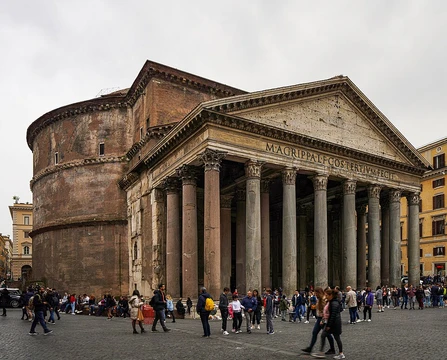
Temple of Concordia, Agrigento
Best-preserved Doric temple in Sicily, in Agrigento's Valley of the Temples.
Last updated
Where it is
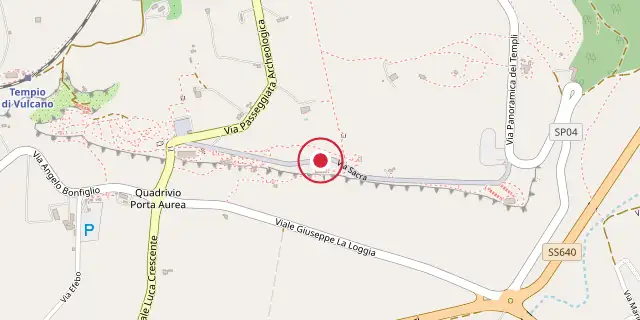
Coordinates: 37°17′24″N 13°35′31″E (37.2900, 13.5920) · Open in OpenStreetMap
Coordinates and connected clubs: the infobox of Wikipedia: Temple of Concordia, Agrigento (CC BY-SA 4.0). Map: drawn by Codexery from OpenStreetMap tiles.
Sitting in Sicily's Valley of the Temples, the Temple of Concordia is a remarkably well-preserved Doric Greek temple from Magna Graecia. It stands as the largest and best-kept Doric temple on the island, and among the finest surviving Greek temples anywhere. Located about a kilometer east of the Temple of Heracles, it overlooks the southern coast of Agrigento.
Description
The temple was built c. 440–430 BC. Its well-preserved peristasis of six by thirteen columns stands on a crepidoma of four steps, measuring 39.42 x 16.92 m and 8.93 m high.
The cella measures 28.36 x 9.4 m. The columns are 6 m high and carved with twenty flutes and harmonious entasis, tapering at the tops and swelling around the middles. It is constructed, like the nearby Temple of Juno, on a solid base designed to overcome the unevenness of the rocky terrain.
It has been conventionally named after Concordia, the Roman goddess of harmony, for the Roman-era Latin inscription found nearby, which is unrelated to it. The temple was converted into a Christian basilica in the 6th century dedicated to the apostles Peter and Paul by San Gregorio delle Rape, bishop of Agrigento, and thus survived the destruction of pagan places of worship. The spaces between the columns were filled with walling, altering its Classical Greek form.
The division between the cella and the opisthodomos was destroyed, and the walls of the cella were cut into a series of arches along the nave. The Christian refurbishments were removed during the restoration of 1785. According to another source, the Prince of Torremuzza transferred the altar elsewhere and began restoration of the classic building in 1788. According to authors of a 2007 article, it is, apart from the Parthenon, the best preserved Doric temple in the world.
More in Roman Temples by Deity
Sources
Compiled from Wikipedia and the sources listed below. Text from Wikipedia is available under CC BY-SA 4.0; this entry is adapted from it.
- Wikipedia: Temple of Concordia, Agrigento (CC BY-SA 4.0).
Spotted an error? Know more?
Reader corrections go straight into our review queue. Suggest an edit · How this site is sourced