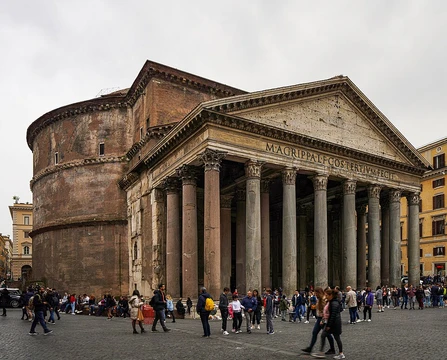
Temple of Juturna
Republican temple possibly dedicated to the goddess Juturna.
Last updated
Where it is
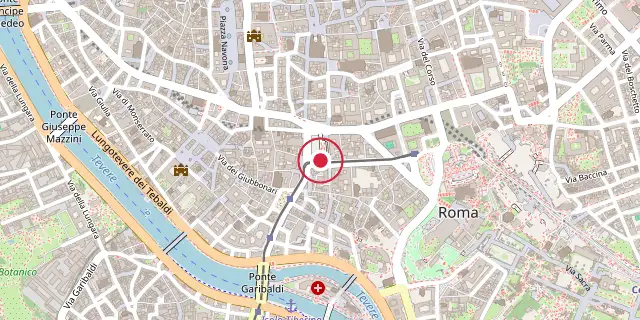
Coordinates: 41°53′42″N 12°28′37″E (41.8950, 12.4770) · Open in OpenStreetMap
Coordinates and connected clubs: the infobox of Wikipedia: Largo di Torre Argentina (CC BY-SA 4.0). Map: drawn by Codexery from OpenStreetMap tiles.
The Temple of Juturna is one of four Republican-era temples in the Largo di Torre Argentina, a square in Rome's ancient Campus Martius. It was likely built by Gaius Lutatius Catulus after his victory over the Carthaginians in 241 BC. The temple is notable as part of a sacred area discovered during 1927 demolition work, which also revealed remains of Pompey's Theatre.
Roman temples
Temple A, the designation given to the structure believed to be the Temple of Juturna, was built in the 3rd century BC. It is probably the Temple of Juturna, vowed by Gaius Lutatius Catulus following his victory against the Carthaginians in 241 BC. Behind Temple A, a long area served as a latrina, or public toilet, which had no dividers or cubicles.
In the early 900s, the temple was rebuilt as a church called San Nicola de Calcarario, and the apses and frescoes from that church are still present. The four temples at Largo di Torre Argentina, originally designated A, B, C, and D, front onto a paved street reconstructed in the imperial era after the fire of AD 80. The area is bounded to the north by the Hecatostylum and the Baths of Agrippa, to the south by buildings related to the Circus Flaminius, to the east by the Porticus Minucia Frumentaria, and to the west by the Theatre of Pompey.
Cat shelter
In Temple D at Largo di Torre Argentina, a cat sanctuary has operated since 1993. It shelters about 350 cats, offering sterilization and adoption as a no-kill facility under Italy’s 1991 law protecting feline rights and caretakers. Archaeologists have protested its presence, seeking to preserve the excavation site.
Did You Know?
- The Teatro Argentina, an 18th-century opera house in the square, premiered Rossini's The Barber of Seville in 1816.
- Julius Caesar was assassinated in the Curia of Pompey, and the believed spot is in the square.
- The name Torre Argentina comes from Strasbourg, whose Latin name was Argentoratum.
More in Roman Temples by Deity
Sources
Compiled from Wikipedia and the sources listed below. Text from Wikipedia is available under CC BY-SA 4.0; this entry is adapted from it.
- Wikipedia: Largo di Torre Argentina (CC BY-SA 4.0).
Spotted an error? Know more?
Reader corrections go straight into our review queue. Suggest an edit · How this site is sourced