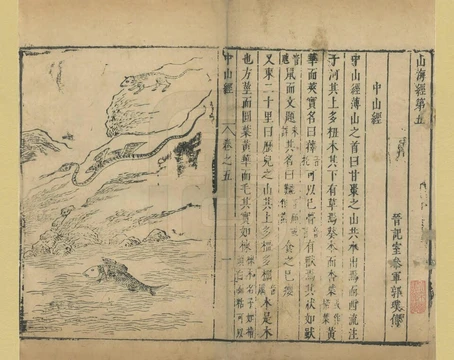
Amazon River
Largest river by discharge; length disputed with the Nile.

via Wikipedia: Amazon River · see source
The Amazon River, known as the Rio Amazonas in Spanish and Portuguese, is located in South America. It holds the title of the world’s largest river by the volume of water it discharges, and it is either the second-longest or longest river system globally, a record debated against the Nile.
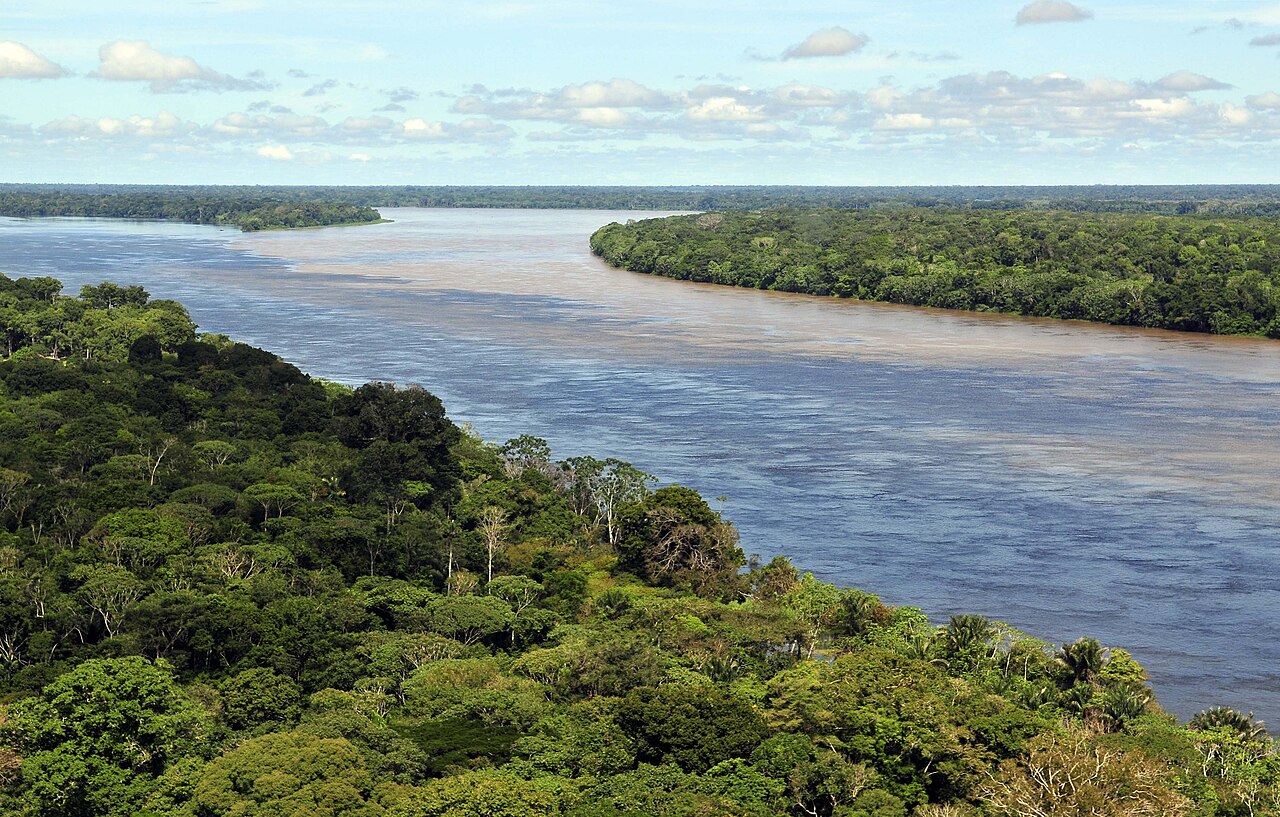
For nearly a century, the source of the Amazon basin was thought to be the headwaters of the Apurímac River on Peru’s Nevado Mismi. However, a 2014 study identified the most distant source as the headwaters of the Mantaro River on Peru’s Cordillera Rumi Cruz. The Mantaro and Apurímac rivers join, and with other tributaries, form the Ucayali River. The Ucayali then meets the Marañón River upstream of Iquitos, Peru, creating what countries other than Brazil consider the main stem of the Amazon. Brazilians call this section the Solimões River until it meets the Rio Negro at the Meeting of Waters (Encontro das Águas) near Manaus, the largest city on the river, where it becomes the Amazon.
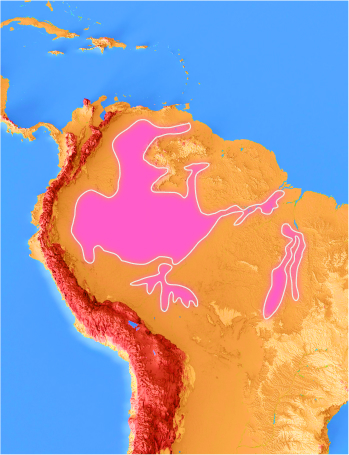
The river’s average discharge ranges from about 215,000 to 230,000 cubic meters per second, equating to roughly 6,591 to 7,570 cubic kilometers per year. This flow is greater than the combined discharge of the next seven largest independent rivers. Two of the top ten rivers by discharge are tributaries of the Amazon. The river accounts for 20% of all riverine water flowing into the world’s oceans. Its drainage basin is the largest on Earth, covering about 7,000,000 square kilometers. The portion of this basin within Brazil alone is larger than any other river’s entire basin. When the Amazon enters Brazil, it carries only one-fifth of the flow it will eventually discharge into the Atlantic, yet at that point it already exceeds the flow of any other river in the world. Its recognized length is 6,400 kilometers, though some reports give lengths varying from 6,575 to 7,062 kilometers.
**Etymology**
Europeans first knew the river as the Marañón, a name still used for the Peruvian section and for the Brazilian state of Maranhão, which includes part of the Amazon. It later became known as Rio Amazonas in Spanish and Portuguese. This name reportedly came from a 16th-century expedition led by Francisco de Orellana, whose party was attacked by native warriors led by women. These women reminded de Orellana of the Amazon warriors of Greek mythology—a tribe of female warriors linked to Iranian Scythians and Sarmatians. The word “Amazon” itself may derive from the Iranian compound *ha-maz-an-*, meaning “(one) fighting together,” or the ethnonym *ha-mazan-*, meaning “warriors.” This word is indirectly attested in a gloss by Hesychius of Alexandria, which records the Persian verb “hamazakaran” meaning “to make war,” combining the Indo-Iranian root *kar-* (“make,” from which Sanskrit “karma” also comes).
**History**
**Geological history**
Geological studies indicate that for millions of years, the Amazon River flowed from east to west—the opposite direction from today. The formation of the Andes Mountains eventually blocked its path to the Pacific Ocean, causing the river to reverse course and flow eastward into the Atlantic.
**Pre-Columbian era**
During what many archaeologists call the formative stage, Amazonian societies played a key role in the development of South America’s highland agricultural systems. Trade with Andean civilizations in the headwaters of the Andes contributed significantly to the social and religious development of higher-altitude cultures such as the Muisca and Incas. Early human settlements were typically built on low-lying hills or mounds. The earliest evidence of habitation comes from shell mounds—piles of human refuse dated mainly between 7500 BC and 4000 BC. These are associated with ceramic-age cultures; no preceramic shell mounds have been documented. A second type of mound consists of artificial earth platforms for entire villages, best represented by the Marajoara culture. Figurative mounds are the most recent type of occupation.
There is ample evidence that the areas around the Amazon River were home to complex, large-scale indigenous societies, primarily chiefdoms that developed towns and cities. Archaeologists estimate that when Spanish conquistador Francisco de Orellana traveled the Amazon in 1541, more than 3 million indigenous people lived in the region. These pre-Columbian settlements created highly developed civilizations. For example, pre-Columbian inhabitants of Marajó Island may have developed social stratification and supported a population of 100,000 people. To achieve this, indigenous people altered the rainforest’s ecology through selective cultivation and the use of fire. Scientists argue that by repeatedly burning areas of the forest, they enriched the soil with nutrients, creating dark soil areas known as *terra preta de índio* (“Indian black earth”). This fertile soil allowed for large-scale agriculture, which sustained large populations and complex social structures. Further research suggests this practice began around 11,000 years ago. Some researchers believe its effects on forest ecology and regional climate explain an otherwise puzzling band of lower rainfall across the Amazon basin.
Many indigenous tribes engaged in constant warfare. According to James S. Olson, the Munduruku expansion in the 18th century dislocated and displaced the Kawahíb, breaking that tribe into much smaller groups. The Munduruku first came to the attention of Europeans in 1770 when they began a series of widespread attacks on Brazilian settlements.
- length
- 6,400 kilometers (4,000 mi), with reports varying from 6,575 to 7,062 kilometers
- average_discharge
- 215,000 to 230,000 cubic meters per second
- drainage_basin_area
- approximately 7,000,000 square kilometers
- source
- headwaters of the Mantaro River on the Cordillera Rumi Cruz in Peru (per a 2014
- mouth
- Atlantic Ocean
- continent
- South America
Lore & Background
The Amazon was initially known by Europeans as the Marañón, and the Peruvian part of the river is still known by that name. The name Rio Amazonas was reportedly given after native warriors, led by women, attacked a 16th-century expedition by Francisco de Orellana, reminding him of the Amazon warriors of Greek mythology. The word Amazon itself may derive from an Iranian compound meaning 'one fighting together' or 'warriors.'
Geological studies suggest that for millions of years, the Amazon River flowed in the opposite direction—from east to west—until the Andes Mountains formed, blocking its flow to the Pacific Ocean and causing it to switch directions to its current mouth in the Atlantic Ocean. The headwaters of the Apurímac River on Nevado Mismi in Peru had been considered the Amazon basin's most distant source for nearly a century until a 2014 study found it to be the headwaters of the Mantaro River on the Cordillera Rumi Cruz in Peru. In March 1500, Spanish conquistador Vicente Yáñez Pinzón was the first documented European to sail up the Amazon River, calling it Río Santa María del Mar Dulce. Francisco de Orellana was the first European to travel from the origins of the upstream river basins in the Andes to the mouth of the river, baptizing some affluents like the Rio Negro, Napo, and Jurua. The name Amazonas is thought to be taken from the native warriors, mostly women, whose attack on this expedition reminded De Orellana of the mythical female Amazon warriors from ancient Hellenic culture.
Reader's Guide
The Amazon River is a defining geographical feature of South America, holding the title of the world's largest river by discharge volume and possessing the largest drainage basin. Its significance extends beyond its sheer size: it accounts for 20% of all riverine water entering the oceans, and its basin supports immense biodiversity and has been home to complex indigenous societies for millennia. The river's disputed length with the Nile highlights ongoing scientific debate, while its geological history—having once flowed westward before the Andes reversed its course—illustrates the dynamic nature of Earth's landscapes. The Amazon's name, derived from encounters with warrior women during Orellana's expedition, ties it to classical mythology. Its tributaries, including two of the top ten rivers by discharge, contribute to its massive flow, which at its entry into Brazil already exceeds that of any other river in the world. The river's pre-Columbian societies, such as the Marajoara culture, developed advanced settlements and altered the forest ecology through practices like creating terra preta, demonstrating a long history of human interaction with the environment. The Amazon remains a critical subject for study in hydrology, ecology, and anthropology.
Did You Know?
- The Amazon River represents 20% of the global riverine discharge into oceans.
- Two of the top ten rivers by discharge are tributaries of the Amazon River.
- The Amazon enters Brazil with only one-fifth of the flow it finally discharges into the Atlantic Ocean, yet already has a greater flow at that point than any other river in the world.
- Geological studies suggest that for millions of years, the Amazon River flowed in the opposite direction – from east to west – until the Andes Mountains formed and reversed its course.
- The name 'Amazon' may derive from an Iranian compound *ha-maz-an- meaning '(one) fighting together' or the ethnonym *ha-mazan- 'warriors'.
Hydrological Supremacy and Global Significance
The Amazon River stands as the undisputed champion of water volume on Earth, pushing an average of 215,000 to 230,000 cubic meters of water into the Atlantic every single second. That staggering figure translates to roughly 6,591 to 7,570 cubic kilometers annually—a quantity that exceeds the combined output of the next seven largest independent rivers on the planet. In fact, two of the world's top ten rivers by discharge are themselves tributaries feeding into the Amazon. The river accounts for a full fifth of all freshwater that rivers deliver to the world's oceans. Its drainage basin, spanning approximately 7,000,000 square kilometers, is the largest on Earth, and the portion lying within Brazil alone surpasses the basin of any other river system. Remarkably, even before the Amazon fully assembles its tributaries, it enters Brazil carrying only one-fifth of its eventual discharge—yet at that point it already outflows every other river on the planet.
A River Rewritten by Mountains
For millions of years, geological evidence suggests the Amazon flowed in the opposite direction, carrying its waters east to west toward what is now the Pacific Ocean. The rise of the Andes Mountains fundamentally altered this ancient course, blocking the river's western path and forcing it to reverse its flow entirely, redirecting its enormous volume toward the Atlantic. Today, the river's true source remains a subject of scholarly debate. For nearly a century, the headwaters of the Apurímac River on Nevado Mismi in Peru were regarded as the most distant origin point. A 2014 study, however, identified the Mantaro River's headwaters on the Cordillera Rumi Cruz as the actual farthest source. The Mantaro and Apurímac converge to form the Ucayali, which then meets the Marañón upstream of Iquitos. Brazilians refer to this stretch as the Solimões, and the river earns its full Amazon name only at the Meeting of Waters in Manaus, where the Solimões and Rio Negro finally merge.
Civilizations Beneath the Canopy
Long before European eyes ever reached the basin, the Amazon nurtured complex, large-scale indigenous societies that many archaeologists now recognize as chiefdoms capable of building towns and cities. Estimates suggest that when Francisco de Orellana crossed the river in 1541, more than three million indigenous people inhabited its surroundings. On the island of Marajó, communities may have achieved social stratification and sustained a population of roughly 100,000. The earliest physical evidence of habitation—shell mounds of human refuse—dates between 7500 BC and 4000 BC, while the Marajoara culture is best known for constructing artificial earth platforms for entire villages. A remarkable agricultural innovation, terra preta de índio, or "Indian black earth," was created through repeated selective burning of forest areas, enriching the soil with nutrients. This practice, potentially dating back 11,000 years, made large-scale farming viable and may even explain a puzzling band of lower rainfall across the basin.
Names, Warriors, and First Encounters
The river's identity has shifted across cultures and centuries. Europeans initially called it the Marañón, a name still used for the Peruvian stretch and echoed in the Brazilian state of Maranhão. The name "Amazonas" reportedly emerged after 16th-century explorer Francisco de Orellana's expedition was attacked by warriors led by women, evoking for him the legendary Amazon warriors of Greek mythology—female fighters linked to Iranian Scythians and Sarmatians. The word "Amazon" itself may trace to an Iranian compound meaning "one fighting together" or "warriors," attested indirectly through a Persian war-related term in the lexicon of Hesychius of Alexandria. Before Orellana, Vicente Yáñez Pinzón became the first documented European to sail up the river in March 1500, naming it Río Santa María del Mar Dulce—the "sweet sea"—because its freshwater pushed far out into the ocean.
Gallery
Frequently Asked Questions
Who is Amazon River?
The Amazon River is a colossal waterway in South America that holds the title of the world's greatest river by discharge volume. It drains a basin of roughly seven million square kilometers and ultimately empties into the Atlantic Ocean.
What are Amazon River's powers/role?
The Amazon pushes between 215,000 and 230,000 cubic meters of water into the sea every single second, representing about one-fifth of all riverine discharge on the planet. Its drainage basin is the largest watershed anywhere on Earth.
Where does Amazon River's story begin?
A 2014 study identified the river's true headwaters at the Mantaro River on the Cordillera Rumi Cruz range in Peru. From that origin point, the waterway stretches approximately 6,400 kilometers, though estimates range as high as 7,062 km.
How does Amazon River's story end?
The Amazon's journey concludes at its mouth, where it spreads its enormous freshwater volume into the Atlantic Ocean. This transition marks the shift from a freshwater river system to a marine environment.
Why is Amazon River important?
Beyond its unmatched discharge and basin size, the Amazon sustains one of the richest tropical ecosystems on the planet and plays a central role in the global water cycle. Its contested length title against the Nile has also made it a perennial flashpoint in geographical debate.
More in Rivers And Seas Of The World 1-24
Spotted an error? Know more?
This is a living reference — every entry is fact-audited, and reader corrections feed straight into our audit queue. Suggest an edit · See this site's audit record