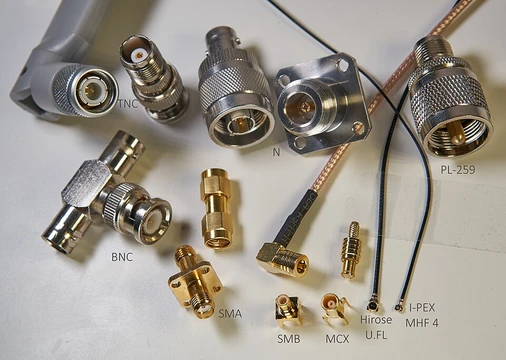
Characteristic impedance
Ratio of voltage to current for a travelling wave on a line.
Last updated

SVG Drawing: wdwd · Public domain
Characteristic impedance, also called surge impedance and often denoted Z₀, is a property of a uniform transmission line. It is defined as the ratio of the voltage amplitude to the current amplitude for a wave traveling in a single direction along the line, assuming no reflections from the opposite direction.
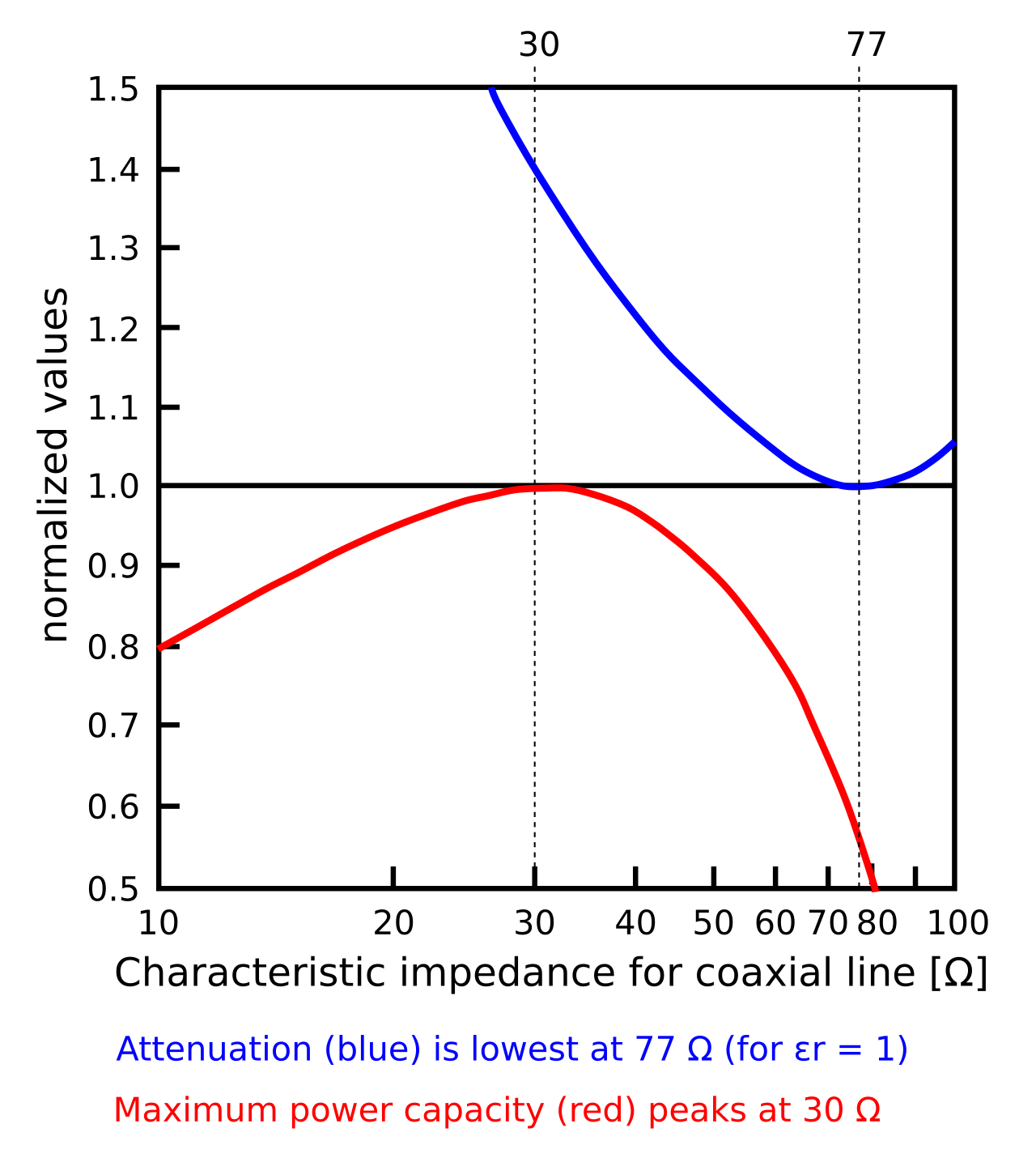
Another way to think of it is as the input impedance of a transmission line that is infinitely long. The value of characteristic impedance depends only on the line’s geometry and the materials it is made from; for a uniform line, it does not change with the line’s length. It is measured in ohms.

For a lossless transmission line, the characteristic impedance is purely real—it has no reactive component. In such a line, energy from a source at one end travels through without being dissipated in the line itself. If a finite-length transmission line (whether lossless or lossy) is terminated at one end with a load equal to its characteristic impedance, the source sees the line as if it were infinitely long, and no reflections occur.
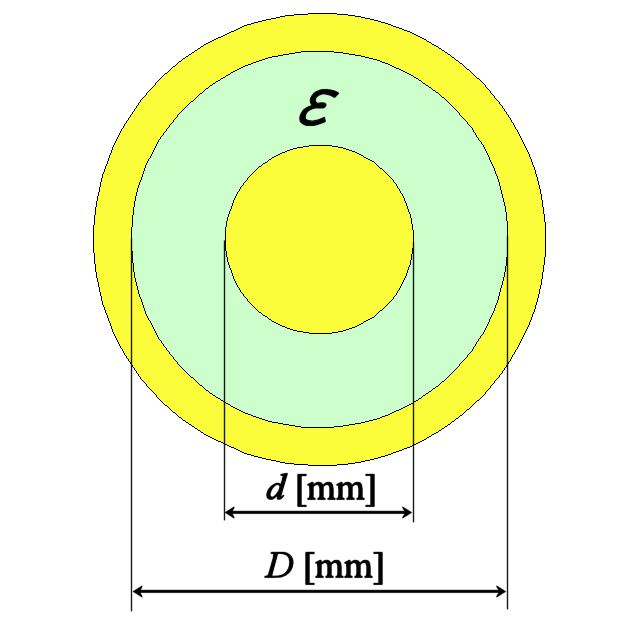
In the transmission line model, the characteristic impedance at a given angular frequency is the ratio of voltage to current for a pure sinusoidal wave of that frequency traveling along the line. This holds for finite lines until the wave reaches the end, where a reflection typically occurs.
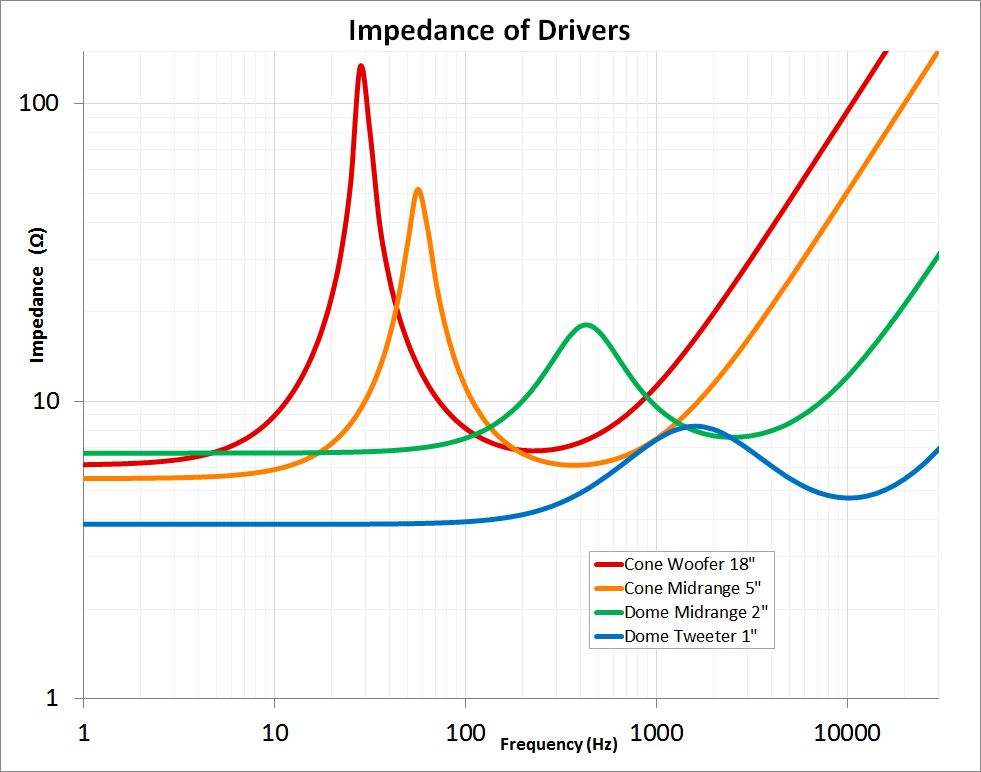
When the reflected wave returns to the source, it is reflected again, altering the voltage-to-current ratio at the input. This new ratio, which includes the reflected energy, is called the input impedance of that specific line and load combination. For an infinite line, the input impedance equals the characteristic impedance because the transmitted wave never reflects back.
The general expression for characteristic impedance, derived from the telegrapher's equations, involves the line’s series impedance and shunt admittance per unit length. This expression also applies at DC by letting the angular frequency approach zero. The term "surge impedance" comes from the fact that a sudden surge of energy on a finite line initially sees an impedance of Z₀ before any reflections return. Because all quantities in the derivation are per unit length, the "per length" parts cancel out, making the characteristic impedance independent of the line’s total length.
Lore & Background
The characteristic impedance arises from the telegrapher's equations, which model a transmission line as a distributed network of series impedance and shunt admittance. For an infinite line, the input impedance equals the characteristic impedance because no reflected wave returns. A finite line terminated in its characteristic impedance also appears infinite to the source, producing no reflections.
The general expression for characteristic impedance is Z₀ = √((R + jωL)/(G + jωC)), where R, L, G, and C are the per-unit-length resistance, inductance, conductance, and capacitance. For a lossless line (R = 0, G = 0), this reduces to Z₀ = √(L/C), which is purely real and frequency-independent. Commercial cables are manufactured to approximate this condition closely over a wide range of frequencies.
Reader's Guide
Characteristic impedance is a fundamental parameter in radio-frequency and telecommunications engineering. When a transmission line is terminated in its characteristic impedance, energy from the source is fully delivered to the load without reflections, maximizing power transfer and minimizing signal distortion.
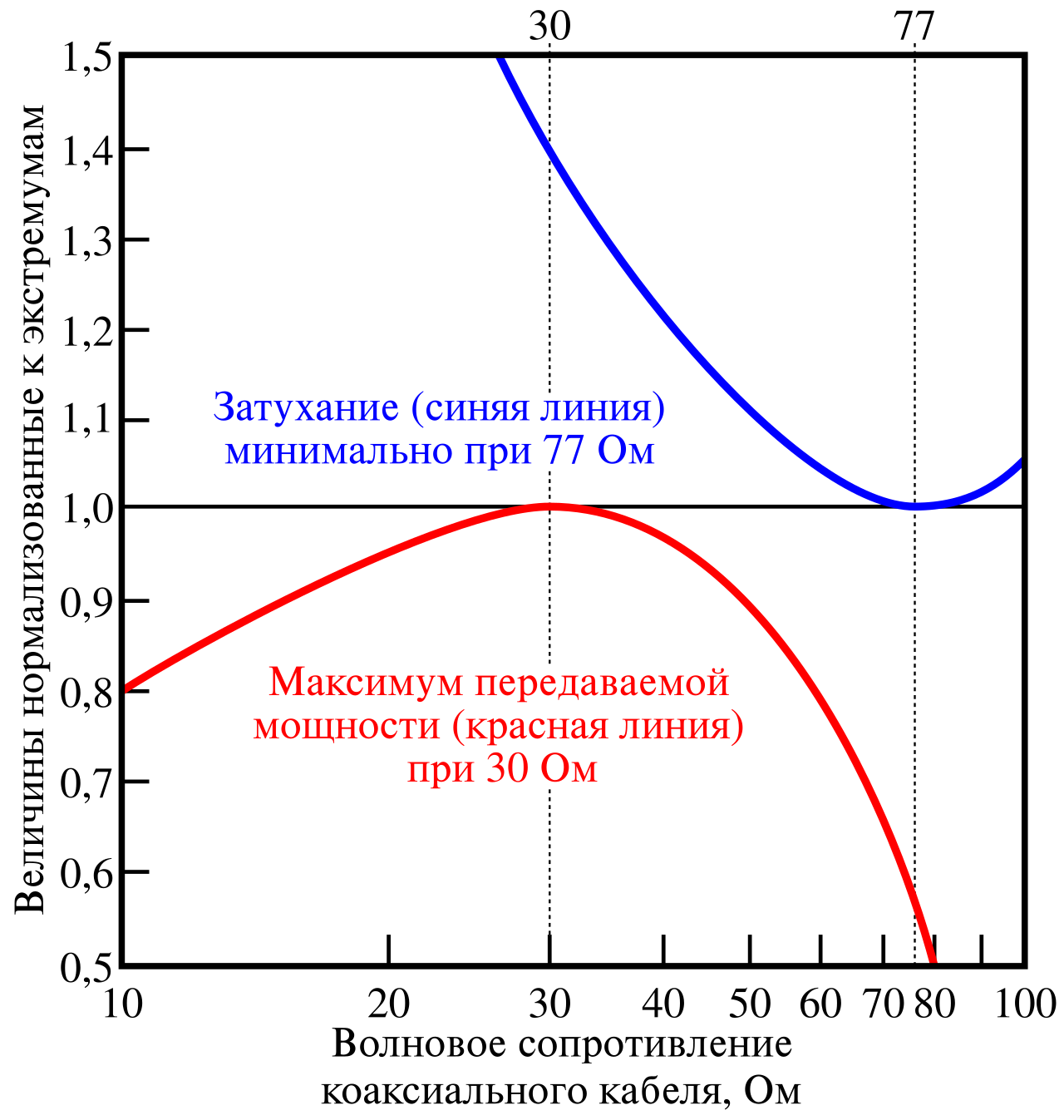
This property is essential for designing impedance-matched systems in applications such as antenna feeds, cable television, and high-speed digital data links. The concept also extends to surge impedance, describing the impedance seen by a transient wave before any reflections return. Because the characteristic impedance depends only on the line's geometry and materials, it remains constant along a uniform line regardless of length, allowing engineers to specify cables with standard impedance values (e.g., 50 Ω or 75 Ω) for consistent system performance.
More in RF Connectors and Coax
Sources
Compiled from Wikipedia and the sources listed below. Text from Wikipedia is available under CC BY-SA 4.0; this entry is adapted from it.
- Wikipedia: Characteristic impedance (CC BY-SA 4.0).
Spotted an error? Know more?
Reader corrections go straight into our review queue. Suggest an edit · How this site is sourced