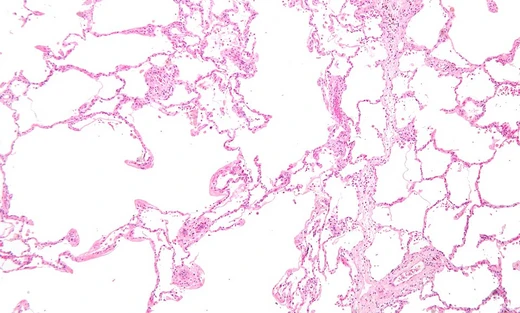
Air trapping
Abnormal lung air retention seen in obstructive diseases.
Air trapping, also known as gas trapping, occurs when air stays in the lungs abnormally, preventing a person from fully exhaling. This condition appears in obstructive lung diseases like asthma, bronchiolitis obliterans syndrome, and chronic obstructive pulmonary diseases such as emphysema and chronic bronchitis. Rather than being a diagnosis itself, air trapping is a symptom that helps narrow down possible underlying illnesses.
Quick Facts
- Also known as
- gas trapping
- Observed in
- asthma
- bronchiolitis obliterans syndrome
- chronic obstructive pulmonary diseases (emphysema, chronic bronchitis)
Facts from the source article.
Imaging
When it comes to spotting air trapping, CT scans are the top imaging tool. On an inspiratory scan, the condition can show up as darker patches, a pattern known as mosaic attenuation. The key sign is that these dark areas stay dark on an expiratory scan, while healthy lung tissue turns whiter. This expiratory phase is crucial for confirming air trapping and telling it apart from vascular issues that cause a similar look.
Measurement and function
Air trapping shows up as poorly ventilated lung areas. While usually harmless by itself, it's often spotted by chance on a CT scan, where exhale-phase images reveal leftover bright gas. Lung function tests or basic spirometry can also detect it through a higher residual volume and a forced expiratory volume measurement. For smokers who dive, this condition becomes risky. When diving, the lung shrinks and forces air into those weak spots. During ascent, the trapped air expands, straining the lung tissue so much it can tear.
More in Respiratory Diseases
Spotted an error? Know more?
Reader corrections go straight into our review queue. Suggest an edit · How this site is sourced