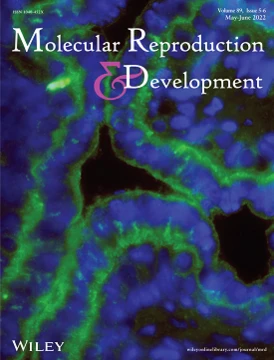
Parthenogenesis
Last updated
It occurs naturally in many invertebrates, some vertebrates, and plants.[1] In asexual reproduction termed parthenogenesis, an embryo forms directly without fertilization being required.[2] Certain organisms, like bdelloid rotifers, use parthenogenesis as their sole reproductive method, whereas other species alternate between sexual and parthenogenetic reproduction.[3]
Key facts and history
The switch between sexuality and parthenogenesis can be triggered by season, lack of males, or conditions favoring rapid population growth.[4] In aphids, a generation conceived sexually produces only females due to non-random segregation of sex chromosomes.[5] Over 80 species of unisexual reptiles, amphibians, and fishes exist in nature where males are no longer part of reproduction.[6] In 2022, researchers produced viable offspring from unfertilized eggs in mice by addressing genomic imprinting problems.[7]
Researchers have artificially triggered parthenogenesis in normally sexual animals, such as fish, amphibians, and mice.[8] The initial documentation of an all-female vertebrate reproducing occurred in 1932 with the fish Poecilia formosa.[9]
What the cited sources add
A BBC News report states that the Amazon Molly fish, which is all female, has survived for 70,000 years without reproducing sexually.[10] Philip Cohen's New Scientist article notes that parthenogenesis is a normal way of life for some plants, insects, and even lizards.[11] The same article describes a three-year-old boy with mild learning difficulties and asymmetric facial features who was a parthenogenetic chimera.[11] A CNN report states that some lizards and fish can adapt to parthenogenesis when faced with adverse environments, pollution, or over-hunting.[12]
References
- Wikipedia, "Parthenogenesis" (CC BY-SA 4.0), which cites: Halliday, "Reptiles & Amphibians", Torstar Books, 1986, p. 101; Walker, "Scientists discover unknown lizard species at lunch buffet", CNN, 2010-11-11; Allen, "Molecular evidence for the first records of facultative parthenogenesis in elapid snakes", Royal Society Open Science, February 2018; Savage, "A guide to the recognition of parthenogenesis in incubated turkey eggs", Oregon State University, 11 February 2008; Ryder, "Facultative parthenogenesis in California condors", Journal of Heredity, 2021-12-17, p. 569–574; Ramachandran, "Pare en.wikipedia.org
- Wikipedia, "Parthenogenesis" (CC BY-SA 4.0), which cites: "γένεσις A.II", Clarendon Press, 1940 (original not read by us) en.wikipedia.org
- Wikipedia, "Parthenogenesis" (CC BY-SA 4.0), which cites: Scott, "Concise encyclopedia biology", Walter de Gruyter, 1996; Poinar, "Elaeolenchus parthenonema n. g., n. sp. (Nematoda: Sphaerularioidea: Anandranematidae n. fam.) parasitic in the palm-pollinating weevil Elaeidobius kamerunicus Faust, with a phylogenetic synopsis of the Sphaerul; White, "Chromosomal mechanisms in animal reproduction", Bolletino di Zoologia, 1984, p. 1–23; Pujade-Villar, "Current state of knowledge of heterogony in Cynipidae (Hymenoptera, Cynipoidea)", Sessio Conjunta DEntomologia ICHNSCL, 2001, p. 87–107 (we also r en.wikipedia.org
- Wikipedia, "Parthenogenesis" (CC BY-SA 4.0), which cites: Kratochvíl, "Mixed-sex offspring produced via cryptic parthenogenesis in a lizard", Molecular Ecology, November 2020, p. 4118–4127; Ryder, "Facultative Parthenogenesis in California Condors", Journal of Heredity, 2021-12-17, p. 569–574 (original not read by us) en.wikipedia.org
- Wikipedia, "Parthenogenesis" (CC BY-SA 4.0), which cites: Schwartz, "Der Chromosomenzyklus von Tetraneura ulmi de Geer", Zeitschrift für Zellforschung und Mikroskopische Anatomie, 1932, p. 645–687 (original not read by us) en.wikipedia.org
- Wikipedia, "Parthenogenesis" (CC BY-SA 4.0), which cites: Booth, "Facultative parthenogenesis discovered in wild vertebrates", Biology Letters, 2012, p. 983–985 (original not read by us) en.wikipedia.org
- Wikipedia, "Parthenogenesis" (CC BY-SA 4.0), which cites: Wei, "Viable offspring derived from single unfertilized mammalian oocytes", PNAS, 7 March 2022 (original not read by us) en.wikipedia.org
- Wikipedia, "Parthenogenesis" (CC BY-SA 4.0), which cites: Booth, "Evidence for viable, non-clonal but fatherless boa constrictors", Biology Letters, 2010, p. 253–256; Wei, "Viable offspring derived from single unfertilized mammalian oocytes", PNAS, 7 March 2022 (original not read by us) en.wikipedia.org
- Wikipedia, "Parthenogenesis" (CC BY-SA 4.0), which cites: Price, "Comparative behavior in lizards of the genus Cnemidophorus (Teiidae), with comments on the evolution of parthenogenesis in reptiles", Copeia, 1992, p. 323–331; Schut, "Parthenogenesis in a passerine bird, the Zebra finch Taeniopygia guttata", Ibis, 2008, p. 197–199; Chapman, "Virgin birth in a hammerhead shark", Biology Letters, 2007, p. 425–427; Vrijenhoek, R.C., R.M. Dawley, C.J. Cole, and J.P. Bogart. 1989. "A list of the known unisexual vertebrates", pp. 19–23 in: Evolution and Ecology of Unisexual V; Hubbs, "Apparent parthe en.wikipedia.org
- "No sex for all-girl fish species", BBC News, 23 April 2008. facts only, no text reused. news.bbc.co.uk
- Philip Cohen, "The boy whose blood has no father", New Scientist, 7.10.1995. facts only, no text reused. newscientist.com
- Walker, "Scientists discover unknown lizard species at lunch buffet", CNN, 2010-11-11. facts only, no text reused. cnn.com
Each numbered sentence above was checked against the source it cites before publication. Sentences citing Wikipedia adapt text from the English Wikipedia article Parthenogenesis (contributors), used under CC BY-SA 4.0; this entry is available under the same licence. Other sources were used for facts only; no text or images are copied from them.
More in Reproduction And Development
Sources
Compiled from Wikipedia and the sources listed below. Text from Wikipedia is available under CC BY-SA 4.0; this entry is adapted from it.
- Wikipedia: Parthenogenesis (CC BY-SA 4.0).
- Word definitions: the Codexery glossary, each quoted from its Wikipedia article.
Spotted an error? Know more?
Reader corrections go straight into our review queue. Suggest an edit · How this site is sourced