
African traditional religions
Oral, animistic traditions centered on ancestors and spirits.

AlleandroX · CC0
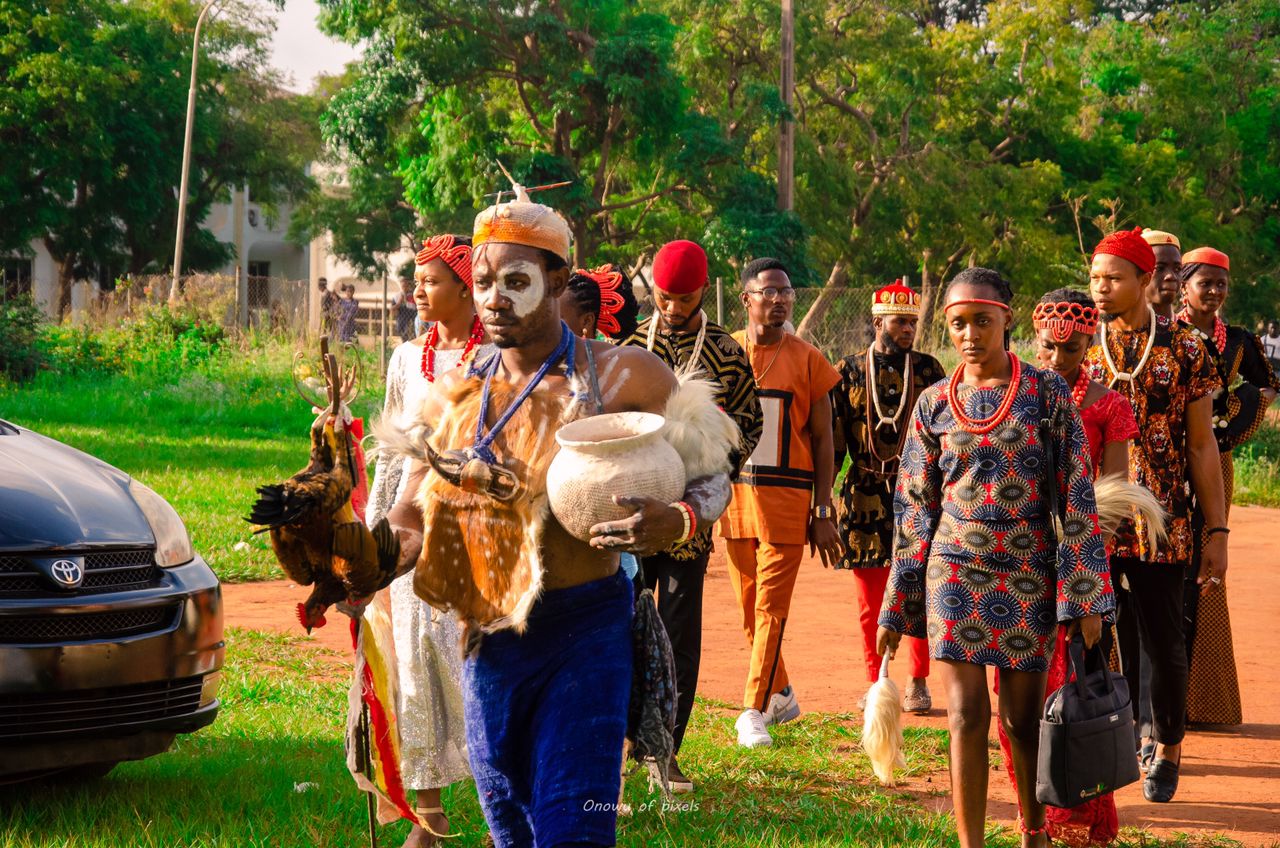
African traditional religions are highly diverse, encompassing the ethnic beliefs of numerous peoples across the continent. These traditions are fundamentally oral, transmitted across generations through narratives, songs, myths, and festivals rather than through scriptural texts. A core characteristic is animism, often combined with polytheistic and pantheistic elements. Belief systems typically include a hierarchy of spirits, higher and lower gods, and sometimes a supreme being. Ancestor veneration is central, with the dead maintaining a spiritual connection to the living; ancestral spirits are generally benevolent, though they may cause minor illnesses as warnings. The role of humanity is viewed as harmonizing nature with the supernatural. Practices include the use of magic and traditional medicine, which is directly linked to religious belief. Spiritual leaders and priests are essential, and mystics, akin to shamans, perform healing and divination after being called by ancestors or gods, undergoing strict training in herbalism and mystical skills. Traditional religions also incorporate elements of totemism and shamanism. While some traditions have a pantheistic worldview with a supreme creator alongside other deities, others are purely polytheistic. Deceased humans, animals, and important objects are believed to exist in a spirit world, able to influence the physical world. Indigenous concepts of a high god or force, distinct from Abrahamic monotheism, were present in Africa before the introduction of Islam and Christianity. These Abrahamic religions have largely displaced indigenous faiths, though they are often adapted to local cultural contexts, and many Africans combine traditional beliefs with Abrahamic practices. Followers of traditional African religions number over one hundred million across forty-three countries, and these religions are also practiced in the Caribbean, Central and South America, and the United States.
- core_beliefs
- Animism, ancestor worship, spirit world, free will; diverse theologies including monism, polytheism, pantheism, and supreme creator deities
Lore & Background
African traditional religions are highly diverse, with beliefs and practices varying across ethnic groups. They are generally oral rather than scriptural, passed down through generations via narratives, songs, myths, and festivals. Core concepts include animism, the worship of tutelary deities, nature worship, ancestor worship, and belief in an afterlife. Some traditions have a pantheistic worldview with a supreme creator god alongside other gods and spirits, while others emphasize a single supreme being without a pantheon or are more monistic. Elements of totemism, shamanism, and veneration of relics are also present. Spiritual leaders and priests are essential to community religious life. Mystics, often called by ancestors or gods, undergo strict training to learn healing, divining, and the use of natural herbs. Ancestors maintain a spiritual connection with living relatives; most are benevolent, but may cause minor illnesses to warn of wrongdoing. Traditional African medicine is directly linked to these religions. The defining line between deities and ancestors is often contested, but ancestors are believed to occupy a higher level of existence than living humans and can bestow blessings or illness. Some research suggests that certain monotheistic concepts, such as belief in a high god or force, existed in Africa before the introduction of Abrahamic religions, though these differed from Abrahamic monotheism. Jacob Olupona, a professor of indigenous African religions, summarizes these traditions as complex animistic systems that are not only religions but worldviews and ways of life. He rejects simplistic definitions of monotheism, noting that some traditions have a supreme being while others do not.
Reader's Guide
Their significance lies in their oral transmission, complex animistic worldview, and emphasis on ancestor veneration as central to community life. These traditions have been largely displaced by Islam and Christianity, but often syncretize with Abrahamic faiths, adapting to local cultural contexts. The legacy includes the rise of religions like Yoruba, Odinala, and Voodoo in the Caribbean, Central and South America, and the Gulf Coast of the United States. Traditional African religions highlight the importance of harmonizing nature with the supernatural, and their practices—such as divining, healing, and ancestor propitiation—continue to influence contemporary spiritual movements. The scholarly work of figures like Jacob Olupona underscores the complexity of these traditions, rejecting oversimplified monotheistic labels and affirming them as comprehensive worldviews. Their enduring impact is seen in the ongoing practice of ancestor worship, the use of traditional medicine, and the preservation of oral narratives that sustain cultural identity across generations.
Did You Know?
- African traditional religions are generally oral rather than scriptural, passed down through narratives, songs, myths, and festivals.
- Ancestors are believed to maintain a spiritual connection with living relatives and can bestow blessings or cause minor illnesses as warnings.
- Some research suggests monotheistic concepts, such as belief in a high god, existed in Africa before the introduction of Abrahamic religions.
- The Yoruba religion and Odinala religion are popular in the Caribbean and portions of Central and South America.
Cosmological Framework and the Spirit World
The spiritual architecture of African traditional religions rests on a deeply animistic foundation, one that weaves together polytheistic and pantheistic threads into a remarkably layered cosmology. At the apex of many systems sits a supreme creator, though this figure coexists alongside a vast pantheon of specialized deities, territorial spirits, and ancestral presences. In other traditions, no single supreme being dominates; instead, a purely polytheistic order of gods, spirits, and supernatural entities governs the natural and unseen realms. The afterlife is not an endpoint but a continuation: the dead persist within a spirit world where they can still interact with the living. Some traditions, such as the Serer faith, incorporate a concept of reincarnation in which the deceased may return into their own blood lineage to fulfill unfinished purposes, while explicitly rejecting any notion of the supreme creator Roog undergoing such a cycle. Elements of totemism, shamanism, and relic veneration further enrich this spiritual landscape, reflecting what scholars describe as a complex and advanced cultural heritage rooted in ancient African thought.
Oral Transmission and the Living Community
Unlike scriptural faiths, African traditional religions carry their teachings through the living voice. Stories, myths, songs, and festive gatherings serve as the primary vessels through which spiritual knowledge migrates from one generation to the next, making the tradition less a fixed doctrine and more a shared cultural identity. The community, the extended family, and the surrounding environment are not peripheral to faith but central to it; a person's spiritual life is inseparable from these relational bonds. Within this communal framework, specialized roles ensure the religious survival of the group. Spiritual leaders and priests guide ritual life, while mystics—individuals who must be specifically called by ancestors or deities—undertake rigorous training to master healing arts, divination, and the use of natural herbs. These traditional healers function much like shamans, offering counsel, fortune-telling, and the ability to locate hidden objects through mystical skill. The entire system depends on oral continuity: without the community's collective memory, the spiritual architecture would dissolve.
Ancestral Bonds and the Language of Healing
A defining thread running through most African traditional religions is the enduring spiritual bond between the living and their deceased relatives. Ancestral spirits are generally regarded as benevolent guides who watch over their kin, yet they also communicate warnings when the living strays from the right path. These warnings often manifest as minor illnesses, while more serious outbreaks of disease are interpreted as signs that the gods themselves have been offended. This intimate, ongoing dialogue between generations makes ancestor veneration the emotional and practical core of many traditions. Closely intertwined with this belief is traditional African medicine, which draws directly from the same spiritual framework. Healers, once called by the ancestors or gods, spend years learning to work with natural herbs, perform divination, and address both physical and spiritual ailments. The medicine is not separate from the religion; it is its practical expression, a means by which the community maintains harmony between the natural and supernatural orders.
Global Reach and Syncretic Adaptation
Today, adherents of African traditional religions span forty-three countries, with an estimated population exceeding one hundred million. Yet the story does not end on the continent. Yoruba religion, the Igbo tradition of Odinala, and Gaboism are experiencing renewed growth, and their influence stretches across the Caribbean, Central and South America, and the Gulf Coast states of the United States, where Voodoo holds particular prominence. Across Africa itself, a remarkable pattern of syncretism has emerged: rather than being wholly displaced by Christianity and Islam, indigenous beliefs have been woven into those Abrahamic frameworks. Monotheistic ideas, including the concept of a single creator, entered traditionally polytheistic systems at an early stage, and many West African faiths now blend the two. Scholars note that certain monotheistic concepts—belief in a high god alongside intermediary spirits—existed in Africa before any Abrahamic contact, though these indigenous forms differed significantly from the strict monotheism later introduced. The result is a religious landscape where ancient and imported traditions coexist and continuously reshape one another.
Gallery
Frequently Asked Questions
Who is African traditional religions?
African traditional religions are not a single figure or character but a broad family of indigenous belief systems practiced across the African continent. They are held together by shared threads like reverence for ancestral spirits and a worldview in which the natural world is alive with spiritual presence, yet each ethnic community carries its own distinct myths, deities, and rituals.
What are African traditional religions's powers/role?
The spiritual 'powers' in these traditions include a layered cosmos of higher creator deities, lower nature spirits, and the ever-present influence of ancestors who mediate between the living and the divine. Practitioners engage these forces through divination, ritual sacrifice, herbal medicine, and communal festivals to maintain balance between the human, natural, and supernatural realms.
How does African traditional religions's story end?
There is no fixed ending because the tradition is perpetually retold rather than closed; each generation reshapes the myths, songs, and ceremonial practices it inherits. The 'story' continues as long as communities gather to honor their ancestors, consult spirit mediums, and perform seasonal rites that reassert their bond with the land.
Why is African traditional religions important?
It provides a complete cosmological and ethical framework for billions of people, linking daily life to a web of spiritual obligations toward ancestors, nature, and the divine. Its oral, communal mode of transmission also preserves vast archives of philosophy, ecology, and history that exist outside written colonial records.
What makes African traditional religions different from 'world religions' like Christianity or Islam?
Where Christianity and Islam rely on a single sacred text and a universal founder, African traditional religions are locally rooted, orally transmitted, and highly pluralistic—some communities are monistic, others polytheistic, and still others pantheistic. There is no central church or dogma; authority rests with elders, spirit mediums, and the ongoing practice of ritual within each specific community.
More in Religious Traditions 1-24
Spotted an error? Know more?
This is a living reference — every entry is fact-audited, and reader corrections feed straight into our audit queue. Suggest an edit · See this site's audit record