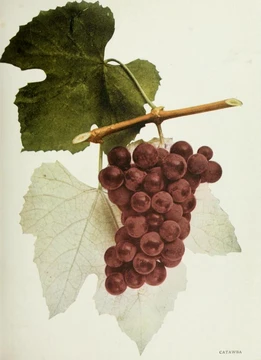
Canaiolo
A historic Tuscan blending grape, once dominant in Chianti.
Last updated
Canaiolo, also called Canaiolo nero or Uva Canina, is a red Italian wine grape grown primarily in Central Italy, most notably in Tuscany. It is often used together with Sangiovese and Colorino to create Chianti wine and is an important secondary component of Vino Nobile di Montepulciano. A white berried mutation known as Canaiolo bianco exists in Umbria.
In Tuscany
Ampelographers think Canaiolo probably comes from central Italy, maybe Tuscany itself. It used to be a common grape in the Chianti area and likely made up the biggest part of Chianti blends during the 1700s. The Italian writer Cosimo Villifranchi wrote about how popular the grape was and that it was often mixed with Sangiovese, Mammolo, and Marzemino. One reason Canaiolo did so well there might be how well it worked with the governo winemaking method, which helped make sure fermentation finished completely.
Back then, unstable Chiantis often had faults because they could not finish fermenting, leaving yeast cells active in the wine. This incomplete fermentation happened partly because cooler weather after harvest stunned the yeast and stopped it from working, before modern temperature-controlled tanks existed. Winemakers in Chianti first came up with governo in the 1300s. The process adds half-dried grapes to the must, giving the yeast fresh sugar to keep it active through the whole fermentation.
Canaiolo’s resistance to rotting while it partially dried made it a perfect choice for this technique. In the 1800s, Baron Bettino Ricasoli set the modern Chianti recipe, which used mostly Sangiovese with Canaiolo added for its fruitiness and to soften Sangiovese’s tannins. Wine expert Hugh Johnson compared the Sangiovese-Canaiolo pairing to how Cabernet Sauvignon gets softened by Merlot’s fruit in a classic Bordeaux blend. As Sangiovese became more popular, Canaiolo declined because more winemakers rushed to plant Sangiovese instead.
Outside Chianti, Canaiolo’s role in the Sangiovese-based Vino Nobile di Montepulciano also shrank, though it was never as important there as it had been in Chianti. The phylloxera disaster at the end of the 1800s showed a special problem Canaiolo has with grafting: many vines planted on new American rootstock simply failed. Today, only a few vineyards in the Chianti Classico region focus on Canaiolo, including the family estates of Bettino Ricasoli in Brolio and Gaiole in Chianti, plus some scattered vineyards in Barberino Val d’Elsa. There are renewed efforts and research into clonal selections to bring the variety back in Tuscany.
Synonyms
Canaiolo is also known under many synonyms, including Caccione nero, Cacciuna, Cagnina, Calabrese, Canaiola, Canaiolo Borghese, Canaiolo Cascolo, Canaiolo Colore, Canaiolo Grosso, Canaiolo nero, Canaiolo nero a Raspo rosso, Canaiolo nero Comune, Canaiolo nero Grosso, Canaiolo nero Minuto, Canaiolo Pratese, Canaiolo Romano, Canaiolo rosso Piccolo, Canaiolo Toscano, Canaiuola, Canaiuolo, Canajola Lastri, Canajolo, Canajolo Lastri, Canajolo nero Grosso, Canajolo Piccolo, Canajuola, Canajuolo nero Comune, Canina, Cannaiola, Cannajola, Colore, San Giovese, Tindillaro, Tindilloro, Uva Canaiolo, Uva Canajuola, Uva Canina, Uva Colore Canaiola, Uva Dei Cani, Uva Donna, Uva Fosca, Uva Grossa, Uva Marchigiana, Uva Merla, and Vitis Vinifera Etrusca.
More in Red Wine Grape Varieties
Sources
Compiled from Wikipedia and the sources listed below. Text from Wikipedia is available under CC BY-SA 4.0; this entry is adapted from it.
- Wikipedia: Canaiolo (CC BY-SA 4.0).
- Word definitions: the , each quoted from its Wikipedia article.
Spotted an error? Know more?
Reader corrections go straight into our review queue. Suggest an edit · How this site is sourced