Balun
An electrical device interfacing balanced and unbalanced lines.
Last updated

Original: Angusmclellan Vector: Wolfmankurd~commonswiki · CC BY-SA 3.0
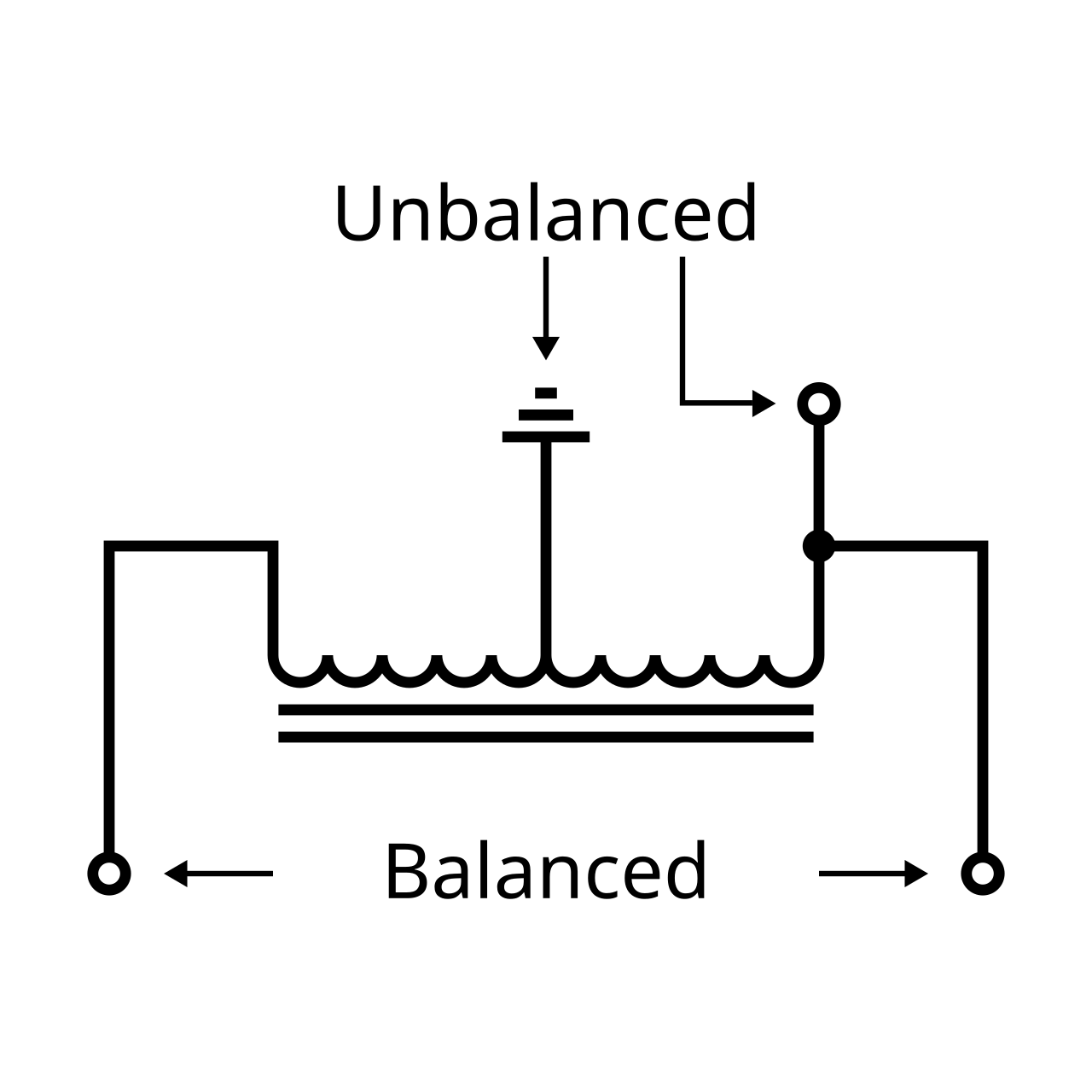
A balun is a three-port device that converts between balanced and unbalanced signals, functioning as a reciprocal power splitter.[1] It can be used bidirectionally and may or may not have equal input and output impedances.[1]
Quick Facts
- Types
- Classical transformer type
- autotransformer type
- transmission-line transformer type
- planar and Marchand baluns
- Frequency range
- Up to at least 100 GHz for planar types
- Inventor of marchand balun
- Nathan Marchand
- Year of guanella transformer
- 1944
Facts from the source article.
Key facts and history
The balun was first documented in 1939 as a device to feed the television transmitting antenna for the Empire State Building.[1] Baluns made with combined magnetic and capacitive coupling can operate from below 1 MHz to V-band frequencies.[1] They transform 300-Ω twin-lead or 450-Ω ladder line to 75-Ω coaxial cable.[2] Baluns are used as common mode chokes to prevent coaxial cable from radiating power at antenna feed points.[2]
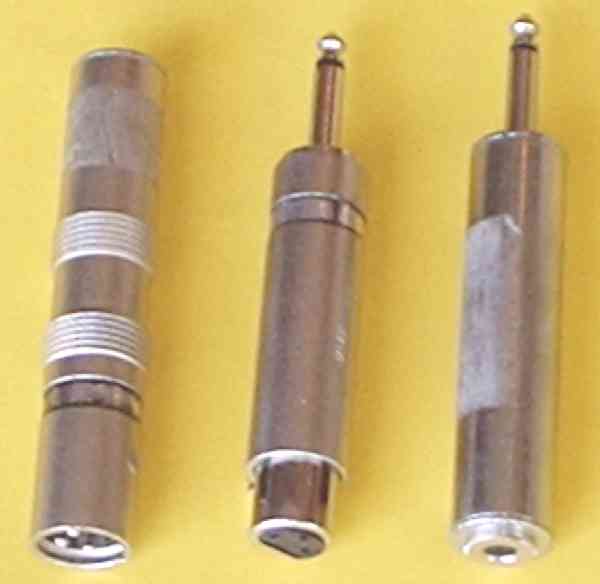
In audio systems, baluns provide balanced mains power to eliminate noise from appliances and lighting.[3] Because ferrite permeability drops sharply above MHz frequencies, conventional magnetic transformers cannot operate beyond roughly 1 GHz.[4] For microwave applications such as mixers and push-pull amplifiers, baluns are needed across the 1-100 GHz frequency range.[5] Baluns are used in television and amateur radio setups to match both the impedance and the balanced/unbalanced nature of feedlines and antennas.[6]
What the cited sources add
Marki Microwave's primer states that a balun has equal power outputs like a Wilkinson power divider.[1] Typical phase balance for standard microwave baluns is ±15° maximum and ±10° typical.[1] Low performance baluns have amplitude balances of ±1.5 dB maximum and ±1 dB typical.[1] Common mode rejection ratio (CMRR) for low performance baluns is 15 to 20 dB, while some Marki baluns achieve up to 45 dB.[1]
Baluns are used to interface local video, audio, and digital signals to long distance transmission lines such as RS-422 and Ethernet.[1] Another high-volume application is creating balanced devices like push-pull amplifiers and balanced mixers.[1]
References
- "Balun Basics Primer", Marki Microwave. facts only, no text reused. markimicrowave.com
- Wikipedia, "Balun" (CC BY-SA 4.0), which cites: Feeding a Dipole Antenna with a Balun (original not read by us) en.wikipedia.org
- Wikipedia, "Balun" (CC BY-SA 4.0), which cites: Balanced Power Technologies b-p-t.com (original not read by us) en.wikipedia.org
- Wikipedia, "Balun" (CC BY-SA 4.0), which cites: Hamilton, "The Small-Signal Frequency Response of Ferrites", High Frequency Electronics, June 2011 (original not read by us) en.wikipedia.org
- Wikipedia, "Balun" (CC BY-SA 4.0), which cites: "Balun Basics Primer", Marki Microwave (we also read that source) en.wikipedia.org
- Wikipedia, "Balun" (CC BY-SA 4.0), which cites: Baluns: What They Do And How They Do It (W7EL) eznec.com (original not read by us) en.wikipedia.org
Each numbered sentence above was checked against the source it cites before publication. Sentences citing Wikipedia adapt text from the English Wikipedia article Balun (contributors), used under CC BY-SA 4.0; this entry is available under the same licence. Other sources were used for facts only; no text or images are copied from them.
More in Radio Electronics
Sources
Compiled from Wikipedia and the sources listed below. Text from Wikipedia is available under CC BY-SA 4.0; this entry is adapted from it.
- Wikipedia: Balun (CC BY-SA 4.0).
Spotted an error? Know more?
Reader corrections go straight into our review queue. Suggest an edit · How this site is sourced