Amargasaurus
A small sauropod with tall spines on its neck and back.

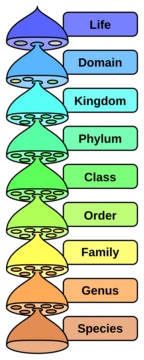
Amargasaurus is a genus of sauropod dinosaur that lived during the Early Cretaceous, approximately 130 to 120 million years ago, in what is now Argentina. Its name means "La Amarga lizard," after the geological formation where it was found. The only known skeleton, discovered in 1984, is nearly complete and includes a fragmentary skull, making it one of the best-preserved sauropods from its time. First formally described in 1991, it contains a single species, *Amargasaurus cazaui*. Although large, it was small for a sauropod, with a relatively short neck and a body plan typical of the group: a long tail, barrel-shaped trunk, and four column-like legs. Its most distinctive feature is the pair of parallel rows of extremely tall spines running down its neck and back, taller than those of any other known sauropod. These spines, bifurcated along their length, were circular in cross-section and tapered toward the tips, reaching their greatest height on the middle neck vertebrae. Studies suggest they may have been covered by a horn sheath or connected by ligaments to form a scaffold for a neck sail, possibly used for display, combat, or defense. The neck consisted of thirteen vertebrae, and the trunk had nine dorsal and five fused sacral vertebrae. The skull, only partially preserved, likely had a broad, horselike snout with pencil-like teeth, and the nostril opening was positioned behind the eye, which was proportionally large. Amargasaurus is classified within the family Dicraeosauridae, a group of sauropods with shorter necks and smaller bodies. It was a herbivore, sharing its environment with at least three other sauropod genera, and likely fed at mid-height, as indicated by the orientation of its inner ear and neck vertebrae.
- field
- Paleontology
- nationality
- Argentina
- known_for
- Two parallel rows of tall spines on neck and back
- length
- 9 to 13 meters (30 to 43 feet)
- weight
- 2.5–4 metric tons (2.8–4.4 short tons)
Lore & Background
Amargasaurus was a relatively small sauropod, reaching about 9 to 10 meters in length and weighing roughly 2.5 to 3 tonnes. Its body followed the typical sauropod plan: a long tail and neck, a small head, and a barrel-shaped trunk supported by four column-like legs. The neck was shorter than in most other sauropods, a trait shared with its close relatives, and consisted of thirteen vertebrae that formed ball-and-socket joints. The trunk contained nine dorsal vertebrae and five fused sacral vertebrae, with robust ribs indicating a strong rib cage. Unlike many other sauropods, its dorsal vertebrae lacked deep lateral excavations known as pleurocoels. The most distinctive feature was the pair of extremely tall, upward-projecting neural spines on the neck and front of the back, which were bifurcated along their entire length, forming two parallel rows. These spines were circular in cross-section and tapered toward the tips; the tallest, on the eighth cervical vertebra, reached about 60 centimeters. They were bowed backward over the adjacent vertebrae. The last two dorsal vertebrae, the hip, and the foremost tail also had elongated spines, though these were not split but flared into paddle-shaped ends. The pelvic region was relatively wide, and the forelimbs were slightly shorter than the hind limbs. Only the rear part of the skull is preserved, but it likely had a broad, horselike snout with pencil-like teeth. The nostril opening was positioned in the posterior half of the skull, diagonally above a proportionally large eye opening. Uniquely among related dinosaurs, the skull had small parietal openings on its backside, which in other tetrapods are usually seen only in juveniles. The only known skeleton was discovered in 1984 in the La Amarga Formation of Argentina, which dates to the Early Cretaceous, about 130 to 120 million years ago. This herbivore shared its environment with at least three other sauropod genera, likely feeding at mid-height to reduce competition.
Reader's Guide
Amargasaurus is significant as one of the best-known sauropods from the Early Cretaceous of South America, providing valuable insights into the diversity and anatomy of the family Dicraeosauridae. Its most distinctive feature—the two parallel rows of tall, bifurcated neural spines on the neck and anterior dorsal vertebrae—has sparked debate about their function. Studies have suggested they may have supported a horn sheath or formed a scaffold for a neck sail, possibly used for display, combat, or defense. Amargasaurus also contributes to understanding sauropod feeding ecology; analysis of its inner ear and neck vertebrae suggests it habitually fed at mid-height, with its snout about 80 centimeters above the ground and a maximum feeding height of 2.7 meters. This likely helped reduce competition with other sauropod genera that shared its environment. The completeness of the skeleton, including a rare partial skull, makes Amargasaurus a key reference for dicraeosaurid anatomy and evolution.
Did You Know?
- Amargasaurus sported two parallel rows of tall spines down its neck and back, taller than in any other known sauropod.
- The name Amargasaurus alludes to the La Amarga Arroyo, with 'amarga' meaning 'bitter' in Spanish.
- The skeleton is currently stored in the collection of the Bernardino Rivadavia Natural Sciences Museum in Buenos Aires.
Frequently Asked Questions
What is Amargasaurus?
Amargasaurus was a relatively small sauropod dinosaur that roamed what is now Argentina during the Late Cretaceous. It is instantly recognizable by a pair of rows of remarkably tall spines extending along both its neck and its back.
What were the spines on Amargasaurus's neck actually for?
The exact function remains debated, but researchers propose the spines could have anchored a covering of horn material or formed a sail-like structure. They may have served in visual display, in fights between individuals, or as a defensive feature against predators.
How big was Amargasaurus?
The animal stretched roughly 9 to 13 meters (about 30 to 43 feet) from snout to tail tip and tipped the scales somewhere between 2.5 and 4 metric tons. That places it on the smaller end of sauropod body sizes, well below giants like Argentinosaurus.
Where were Amargasaurus fossils found?
All known remains come from sedimentary deposits in Argentina, making it one of the many prehistoric creatures whose story is told through South American fossil beds.
What made Amargasaurus unique among sauropods?
Among every sauropod we have identified so far, none possesses neck and back spines that rival the extraordinary height seen in Amargasaurus. That single trait sets it apart visually from all other members of its group.
More in Prehistoric Extinct Animals 1-24
Spotted an error? Know more?
This is a living reference — every entry is fact-audited, and reader corrections feed straight into our audit queue. Suggest an edit · See this site's audit record