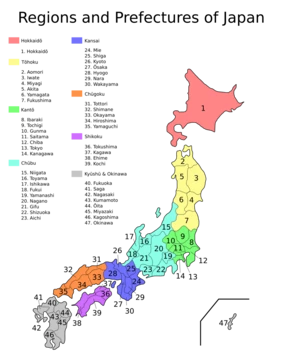
Tottori Prefecture
Japan's least populous prefecture, home to the largest sand dunes.
Last updated
Where it is
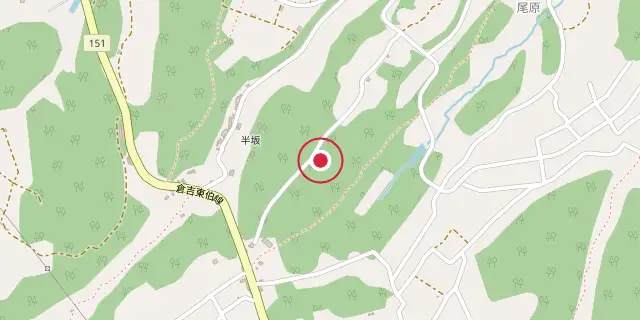
Coordinates: 35°26′56″N 133°45′58″E (35.4490, 133.7660) · Open in OpenStreetMap
Coordinates and connected clubs: the infobox of Wikipedia: Tottori Prefecture (CC BY-SA 4.0). Map: drawn by Codexery from OpenStreetMap tiles.
As of 2023, Tottori Prefecture had 538,525 residents and a geographic area of 3507.13 km², making it Japan's least populous prefecture.[1] Tottori serves as the prefecture's capital and largest city; Yonago, Kurayoshi, and Sakaiminato are also major cities.[2]
Geography and history
The name "Tottori" first appears in the Nihon shoki in 213 AD, when an elder named Yukuha Tana presented a swan to the emperor.[3] The name combines two kanji characters meaning "bird" and "to get," reflecting early residents' livelihood of catching waterfowl.[3] Tottori Prefecture was settled very early in Japan's prehistoric period, with remains from the Jōmon period (14,000–300 BC).[4] The Ikeda clan controlled the region from Tottori Castle throughout the Edo period (1603–1868).[5]
The prefecture's boundaries were established in 1888, and its harbors later served as transit points for goods between Japan and colonial areas.[6] In 1943, a magnitude 7.2 earthquake destroyed 80% of Tottori city.[5] As of 2012, 14% of the prefecture's land area was designated as Natural Parks.[7] Within the prefecture, the Mukibanda Yayoi remains—the largest known Yayoi period settlement in Japan—are situated in the low foothills of Mount Daisen.[4]
During the Genpei War (1180–1185), Daisen-ji and Sanbutsu-ji temples in Tottori served as a base for forces opposing the Taira clan.[5]
What the cited sources add
Yonago's population decreased from 143,856 to 143,246 in the same period.[8] Kurayoshi's population fell from 55,669 to 43,251.[8]
References
- Wikipedia, "Tottori Prefecture" (CC BY-SA 4.0), which cites: Nussbaum, Louis-Frédéric. (2005). "Tottori Prefecture" in ; "Chūgoku" at . (original not read by us) en.wikipedia.org
- Wikipedia, "Tottori Prefecture" (CC BY-SA 4.0), which cites: Nussbaum, "Tottori" at . (original not read by us) en.wikipedia.org
- Wikipedia, "Tottori Prefecture" (CC BY-SA 4.0), which cites: "Nihongi; chronicles of Japan from the earliest times to A.D. 697", C.E. Tuttle Co., 1972, p. 175 (we also read that source) en.wikipedia.org
- Wikipedia, "Tottori Prefecture" (CC BY-SA 4.0), which cites: "Tottori Prefecture", Shogakukan, 2012; Muki-Banda Remains; "Mukibanda-iseki (妻木晩田遺跡)", Shogakukan, 2012; "Tottori Plain", Shogakukan, 2012; Nussbaum, "Provinces and prefectures" in . (original not read by us) en.wikipedia.org
- Wikipedia, "Tottori Prefecture" (CC BY-SA 4.0), which cites: "Tottori-ken (鳥取県)", Shogakukan, 2012 (original not read by us) en.wikipedia.org
- Wikipedia, "Tottori Prefecture" (CC BY-SA 4.0), which cites: "Tottori Prefecture", Shogakukan, 2012 (original not read by us) en.wikipedia.org
- Wikipedia, "Tottori Prefecture" (CC BY-SA 4.0), which cites: "General overview of area figures for Natural Parks by prefecture", Ministry of the Environment (original not read by us) en.wikipedia.org
- "Tottori (Japan): Prefecture, Major Cities & Towns - Population Statistics, Maps, Charts, Weather and Web Information", www.citypopulation.de. facts only, no text reused. citypopulation.de:80
Each numbered sentence above was checked against the source it cites before publication. Sentences citing Wikipedia adapt text from the English Wikipedia article Tottori Prefecture (contributors), used under CC BY-SA 4.0; this entry is available under the same licence. Other sources were used for facts only; no text or images are copied from them.
More in Prefectures Of Japan
Related in Prefectures Of Japan
Links follow this subject's own source article.
Sources
Compiled from Wikipedia and the sources listed below. Text from Wikipedia is available under CC BY-SA 4.0; this entry is adapted from it.
- Wikipedia: Tottori Prefecture (CC BY-SA 4.0).
Spotted an error? Know more?
Reader corrections go straight into our review queue. Suggest an edit · How this site is sourced