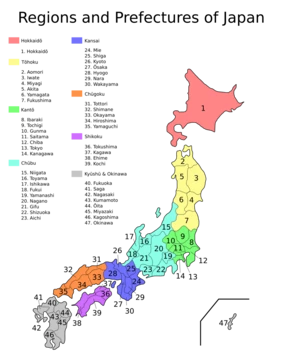
Hokkaido
Northernmost Japanese island, former Ainu homeland, now a prefecture.
Last updated

663highland · via Wikipedia: Hokkaido · CC BY 2.5
Where it is
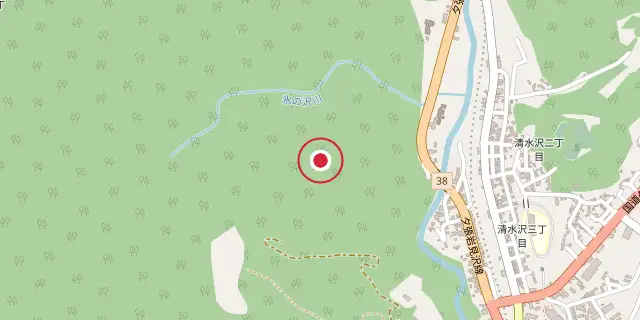
Coordinates: 43°00′00″N 142°00′00″E (43.0000, 142.0000) · Open in OpenStreetMap
Coordinates and connected clubs: the infobox of Wikipedia: Hokkaido (CC BY-SA 4.0). Map: drawn by Codexery from OpenStreetMap tiles.
Hokkaido is the second-largest and northernmost of Japan's four main islands, and together with its surrounding islands it forms the largest and northernmost prefecture.[1] Hokkaido is separated from Honshu by the Tsugaru Strait.[1] The names Ezo, Ezochi, and Ezogashima were all used historically for Hokkaido.[2]
Geography and history
Hokkaido is separated from Sakhalin by La Pérouse Strait and from Kunashir Island by Nemuro Strait.[3] Hokkaido is Japan's coldest region, with relatively cool summers and icy, snowy winters.[4] Roughly two thousand years in the past, Yayoi people settled on the island, causing a widespread transition toward farming.[5] After the Meiji Restoration in 1869, Japan annexed the whole island, colonized it, and gave it the name Hokkaido.[2]
The Ainu were stripped of their lands by Japanese settlers and compelled to integrate into Japanese society.[2] Hokkaido attained the status of a full prefecture in 1947.[6]
What the cited sources add
The same article notes that the Hokkaido Railway Company cancelled at least 40 train services in eastern Hokkaido over derailment concerns due to extreme heat.[7] A 36-year-old amateur golfer died after collapsing during a tournament in Hokkaido's Shimizu town during that heat wave.[7]
References
- Wikipedia, "Hokkaido" (CC BY-SA 4.0), which cites: MLIT (Ministry of Land, Infrastructure, Transport and Tourism), 22 August 2015 (original not read by us) en.wikipedia.org
- Wikipedia, "Hokkaido" (CC BY-SA 4.0), which cites: Nussbaum, Louis-Frédéric. (2005). "Hokkaidō" in; Siripala 2020, p. 36–37; Seaton, "Oxford Research Encyclopedia of Asian History", 2017; {{bulleted list| | | | }}; "University of Hawaiʻi Press - Manifold"; "How the Sharing of Ainu Culture Became One Man's Lifework|Features|HOKKAIDO LOVE! -Hokkaido Official Tourism Site", 15 July 2023; "Recent History of the Ainu", Hokkaido Museum; Seaton, "Oxford Research Encyclopedia of Asian History", 2017; Jolliffe 2020; Cobb, "Japan's forgotten indigenous people", BBC Travel, 20 May 2020; Honna, "Language en.wikipedia.org
- Wikipedia, "Hokkaido" (CC BY-SA 4.0), which cites: Nussbaum, Louis-Frédéric. (2005). "Hokkaidō" in (original not read by us) en.wikipedia.org
- Wikipedia, "Hokkaido" (CC BY-SA 4.0), which cites: Sim, "Hokkaidō sizzling in temperatures up to 39.5 deg C as unseasonal heat wave grips Japan", The Straits Times, 26 May 2019 (we also read that source) en.wikipedia.org
- Wikipedia, "Hokkaido" (CC BY-SA 4.0), which cites: "A Journey into the culture and history of Hokkaidō.", hkd.mlit.go.jp (original not read by us) en.wikipedia.org
- Wikipedia, "Hokkaido" (CC BY-SA 4.0), which cites: kotobank.com; kotobank.com (original not read by us) en.wikipedia.org
- Sim, "Hokkaidō sizzling in temperatures up to 39.5 deg C as unseasonal heat wave grips Japan", The Straits Times, 26 May 2019. facts only, no text reused. straitstimes.com
Each numbered sentence above was checked against the source it cites before publication. Sentences citing Wikipedia adapt text from the English Wikipedia article Hokkaido (contributors), used under CC BY-SA 4.0; this entry is available under the same licence. Other sources were used for facts only; no text or images are copied from them.
Also in the Codexery
More in Prefectures Of Japan
Sources
Compiled from Wikipedia and the sources listed below. Text from Wikipedia is available under CC BY-SA 4.0; this entry is adapted from it.
- Wikipedia: Hokkaido (CC BY-SA 4.0).
Spotted an error? Know more?
Reader corrections go straight into our review queue. Suggest an edit · How this site is sourced