Seleucid Empire
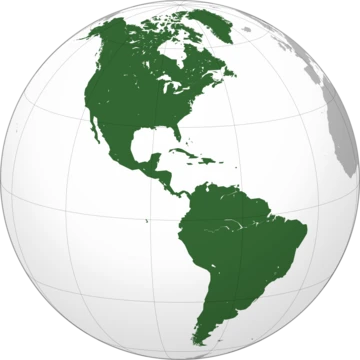
Largest empire in pre-Columbian America, centered in Cusco.

via Wikipedia: Inca Empire · see source
The Inca Empire, officially known as the Realm of the Four Parts (Quechua: Tawantinsuyu), was the largest empire in pre-Columbian America. Its administrative, political, and military center was the city of Cusco. The Inca civilization rose from the Peruvian highlands sometime in the early 13th century. The Portuguese explorer Aleixo Garcia was the first European to reach the Inca Empire in 1524. Later, in 1532, the Spanish began the conquest, and by 1572 the last Inca state was fully conquered.
- founder
- Manco Capac (legendary)
- capital
- Cusco
- ended
- 1572 (last Inca state fully conquered)
- field
- Pre-Columbian empire
- known_for
- Largest empire in pre-Columbian America; monumental stone architecture; Qhapaq Ñ
Lore & Background
From 1438 to 1533, the Incas incorporated a large portion of western South America, centered on the Andean Mountains, using conquest and peaceful assimilation. At its largest, the empire joined modern-day Peru with western Ecuador, western and south-central Bolivia, northwest Argentina, the southwesternmost tip of Colombia, and a large portion of modern-day Chile. Its official language was Quechua. The Inca Empire lacked many features associated with Old World civilizations: no wheel, draft animals, iron or steel, or a system of writing. Notable features included monumental stonework, the Qhapaq Ñan road network, finely-woven textiles, quipu for record keeping, and agricultural innovations. The empire functioned largely without money or markets; exchange was based on reciprocity, and 'taxes' consisted of a labor obligation. The Inca rulers owned all means of production and reciprocated with access to land and goods, and celebratory feasts.
Reader's Guide
The Inca referred to their empire as Tawantinsuyu, 'the suyu of four [parts].' The four suyu were Chinchaysuyu (north), Antisuyu (east), Qullasuyu (south), and Kuntisuyu (west). The term 'Inka' translated as 'ruler' or 'lord' in Quechua, referring not only to the Sapa Inca but also to Inca nobles, who numbered only 15,000 to 40,000 ruling a population of around 10 million. The Inca Empire was preceded by the Tiwanaku (c. 300–1100 AD) and Wari (c. 600–1100 AD) empires. The Inca people were a pastoral tribe in the Cusco area around the 12th century. Two origin stories exist: the legend of the Ayar brothers, where Ayar Manco became Manco Cápac, the founder; and the legend of Manco Cápac and Mama Ocllo, sent by the Sun God from Lake Titicaca. In the early 1200s, under Manco Capac, the Inca formed the Kingdom of Cuzco. In 1438, they began far-reaching expansion under the 9th Sapa Inca, Pachacuti Cusi Yupanqui.
Did You Know?
- The Inca Empire functioned largely without money or markets, relying on reciprocity and labor obligations.
- The Incas had no system of writing, using knotted strings called quipu for record keeping and communication.
- The Portuguese explorer Aleixo Garcia was the first European to reach the Inca Empire in 1524.
- The Inca nobles numbered only 15,000 to 40,000, ruling a population of around 10 million.
- The empire's official language was Quechua.
Frequently Asked Questions
Who is Seleucid Empire?
The Seleucid Empire was a Hellenistic Greek state established by Seleucus I Nicator after Alexander the Great's territory was divided among his successors. It was governed from Seleucia and later Antioch, stretching across much of the Near East and into Central Asia.
What are Seleucid Empire's powers and role?
At its peak the empire spanned Anatolia, Persia, the Levant, Mesopotamia, and portions of modern Kuwait, Afghanistan, and Turkmenistan. It functioned as a primary hub for Hellenistic culture, blending Greek, Persian, and Near Eastern traditions.
How does Seleucid Empire's story end?
The dynasty's rule came to a close in 63 BC when the Roman Republic, under the command of Pompey, annexed the territory. This effectively dissolved the last major Hellenistic kingdom in the region.
Why is Seleucid Empire important?
It served as a major center where Greek, Persian, and Near Eastern intellectual and artistic traditions merged into a distinctive Hellenistic culture. Its legacy shaped governance, science, and art across a vast swath of the ancient world.
What major conflicts did Seleucid Empire face?
The Seleucids engaged in prolonged rivalry with Ptolemaic Egypt over control of the Levant and other contested territories. They also clashed with the Maurya Empire in the east, a conflict that ultimately reduced their hold on parts of modern Afghanistan.
More in Pre-Columbian Empires 1-20
Spotted an error? Know more?
This is a living reference — every entry is fact-audited, and reader corrections feed straight into our audit queue. Suggest an edit · See this site's audit record