
Grace Jones
Jamaican model, singer, and actress known for androgynous style.
Last updated

Gary Friedman, Los Angeles Times · CC BY 4.0
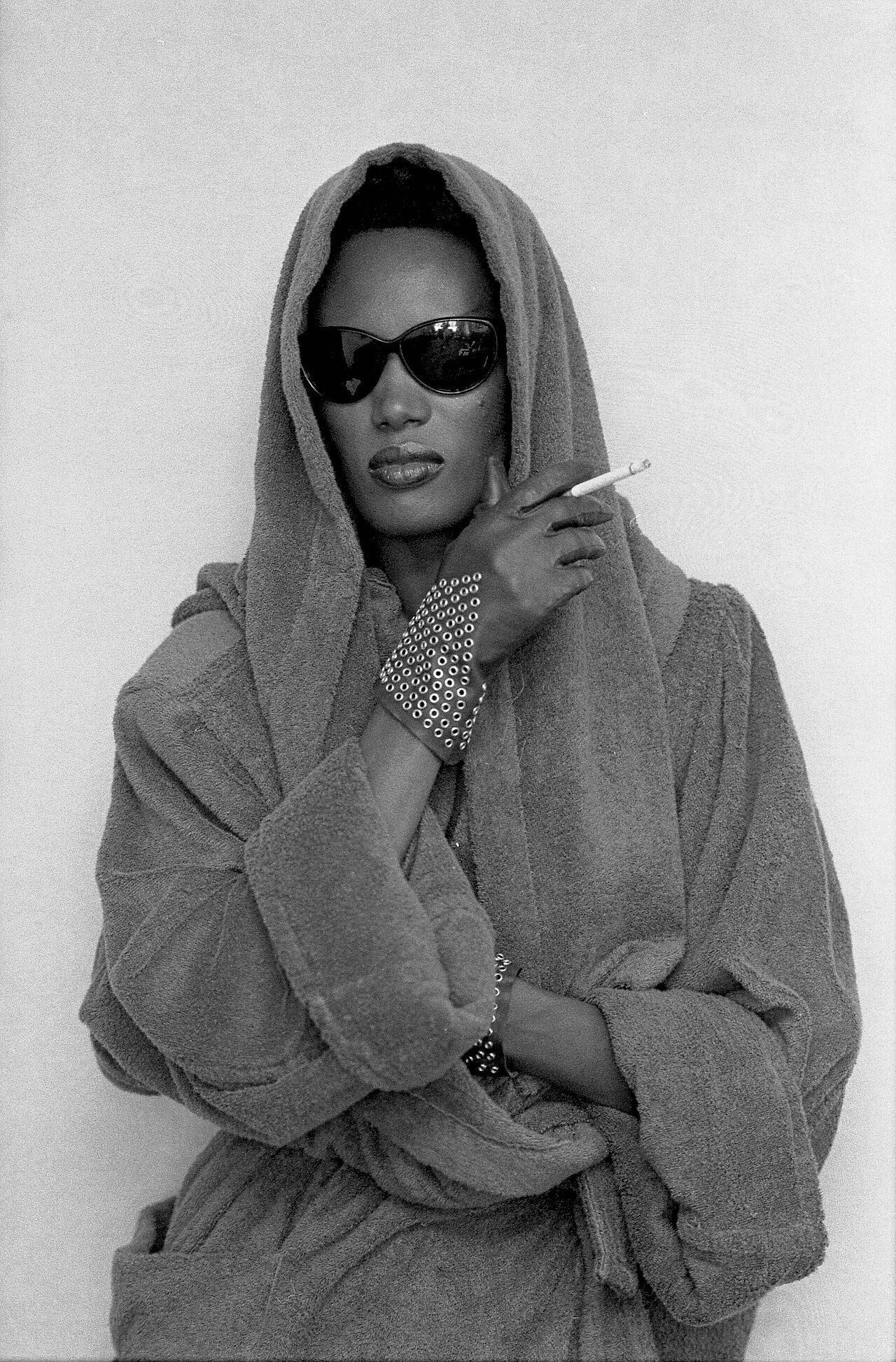
Grace Jones established herself as a singular presence in the 1970s fashion world, becoming one of the era’s most prominent Black models. Her career began after signing with the Wilhelmina agency in New York, but it was in Paris that she truly flourished. There, she walked runways for major houses including Yves Saint Laurent and Kenzo, and appeared on the covers of magazines such as Elle and Vogue Hommes. Her striking, androgynous look and bold features were captured by renowned photographers Helmut Newton, Guy Bourdin, and Hans Feurer, and she has since been recognized as an influential figure in early conversations about gender expression.
Music
In 1977, Jones transitioned into music, signing with Island Records and becoming a fixture of New York’s Studio 54 disco scene. The press often called her the “Disco Queen,” with Jet magazine declaring her “the greatest of them all” in 1979. By the early 1980s, she shifted toward a new wave sound blending reggae, funk, post-punk, and pop, frequently working with graphic designer Jean-Paul Goude and the production duo Sly & Robbie.
1980–1985: Breakthrough, Nightclubbing, and acting
She scored UK Top 40 hits with songs like “Private Life,” “Pull Up to the Bumper,” “Love Is the Drug,” and “Slave to the Rhythm.” Her album Warm Leatherette (1980), Nightclubbing (1981), and Slave to the Rhythm (1985) defined this period. In 1982, Goude directed the music video collection A One Man Show, which earned a Grammy nomination for Best Video Album. Later in her career, she collaborated with artists such as Gorillaz and Janelle Monáe, and received another Grammy nomination for her featured work on Beyoncé’s Renaissance (2022).
As an actress, Jones first appeared in independent films before landing her mainstream debut as Zula in Conan the Destroyer (1984). She followed this with a role as the villainous May Day in the James Bond film A View to a Kill (1985) and starred as a vampire in Vamp (1986), earning Saturn Award nominations for Best Supporting Actress for each.
She later acted in Eddie Murphy’s Boomerang (1992) and contributed music to its soundtrack. Jones has been cited as an influence across music and fashion. VH1 ranked her 82nd on its 1999 list of the 100 Greatest Women of Rock and Roll, she received a Q Idol Award in 2008, and Billboard named her the 40th greatest dance club artist of all time in 2016.
Background
Grace Jones possesses a highly distinctive and androgynous appearance, characterized by bold, sharp features and a strong, sculptural physique. Her look was often described as unconventional for the fashion industry of the 1970s, and she emerged as one of the most prominent Black models of that decade. Her professional range extended from high-fashion runway work for houses such as Yves St. Laurent and Kenzo to appearing on the covers of magazines including Elle and Vogue Hommes.
She was photographed by notable figures like Helmut Newton, Guy Bourdin, and Hans Feurer. In terms of habitat, Jones began her modeling career in New York City after signing with Wilhelmina Models, then moved to Paris, where she became deeply embedded in the city’s fashion scene. Later, she became associated with New York’s Studio 54-centered disco scene after beginning her music career in 1977.
Her defining characteristics include her androgynous and bold visual style, which has been cited as influential in early discussions of gender expression. Musically, she moved from disco into a new wave style that incorporated reggae, funk, and post-punk, frequently collaborating with graphic designer Jean-Paul Goude and the duo Sly & Robbie. Her acting roles, such as Zula in Conan the Destroyer and May Day in the James Bond film A View to a Kill, further cemented her iconic, larger-than-life persona.
Frequently Asked Questions
Who is Grace Jones?
Grace Jones is a Jamaican-born artist (born 1948) whose career spans high-fashion modelling, disco and new wave music, and film acting. She first rose to prominence in New York before building a lasting presence in Paris with major fashion houses.
What are Grace Jones's most famous songs?
Tracks such as "Nightclubbing" (1981) and "Pull Up to the Bumper" (1985) became signature hits during her Island Records era. Her catalogue sits at the intersection of disco, new wave, and post-punk production, often described as icy and avant-garde.
What movies has Grace Jones appeared in?
She played a leading role in the 1984 fantasy film Conan the Destroyer and appeared as the villain May Day in the 1985 James Bond film A View to a Kill. Both roles highlighted her striking, larger-than-life screen presence.
Where was Grace Jones born and where did she start her career?
She was born Grace Beverly Jones on 19 May 1948 in Jamaica. She moved to New York to launch her modelling work with Wilhelmina Models before relocating to Paris, where she walked for houses like Yves Saint Laurent and Kenzo.
More in Pop & Rock Solo Artists
Sources
Compiled from Wikipedia and the sources listed below. Text from Wikipedia is available under CC BY-SA 4.0; this entry is adapted from it.
- Wikipedia: Grace Jones (CC BY-SA 4.0).
Spotted an error? Know more?
Reader corrections go straight into our review queue. Suggest an edit · How this site is sourced