
Grace Jones
Jamaican model, singer, and actress known for androgynous style.

Gary Friedman, Los Angeles Times · CC BY 4.0
Grace Jones established herself as a singular presence in the 1970s fashion world, becoming one of the era’s most prominent Black models. Her career began after signing with the Wilhelmina agency in New York, but it was in Paris that she truly flourished. There, she walked runways for major houses including Yves Saint Laurent and Kenzo, and appeared on the covers of magazines such as *Elle* and *Vogue Hommes*. Her striking, androgynous look and bold features were captured by renowned photographers Helmut Newton, Guy Bourdin, and Hans Feurer, and she has since been recognized as an influential figure in early conversations about gender expression.
In 1977, Jones transitioned into music, signing with Island Records and becoming a fixture of New York’s Studio 54 disco scene. The press often called her the “Disco Queen,” with *Jet* magazine declaring her “the greatest of them all” in 1979. By the early 1980s, she shifted toward a new wave sound blending reggae, funk, post-punk, and pop, frequently working with graphic designer Jean-Paul Goude and the production duo Sly & Robbie. She scored UK Top 40 hits with songs like “Private Life,” “Pull Up to the Bumper,” “Love Is the Drug,” and “Slave to the Rhythm.” Her album *Warm Leatherette* (1980), *Nightclubbing* (1981), and *Slave to the Rhythm* (1985) defined this period. In 1982, Goude directed the music video collection *A One Man Show*, which earned a Grammy nomination for Best Video Album. Later in her career, she collaborated with artists such as Gorillaz and Janelle Monáe, and received another Grammy nomination for her featured work on Beyoncé’s *Renaissance* (2022).
As an actress, Jones first appeared in independent films before landing her mainstream debut as Zula in *Conan the Destroyer* (1984). She followed this with a role as the villainous May Day in the James Bond film *A View to a Kill* (1985) and starred as a vampire in *Vamp* (1986), earning Saturn Award nominations for Best Supporting Actress for each. She later acted in Eddie Murphy’s *Boomerang* (1992) and contributed music to its soundtrack. Jones has been cited as an influence across music and fashion. VH1 ranked her 82nd on its 1999 list of the 100 Greatest Women of Rock and Roll, she received a Q Idol Award in 2008, and *Billboard* named her the 40th greatest dance club artist of all time in 2016.
- field
- Singer, songwriter, model, actress
- nationality
- Jamaican
- known_for
- Androgynous appearance, bold features, influence on gender expression, disco and
Verified Timeline
Lore & Background
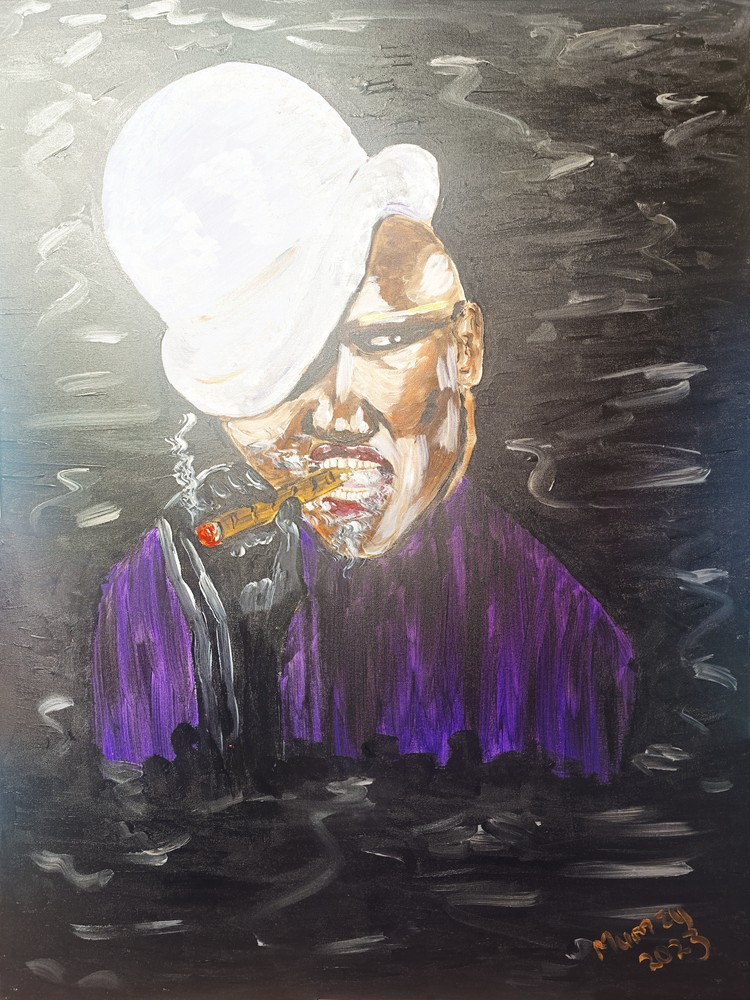
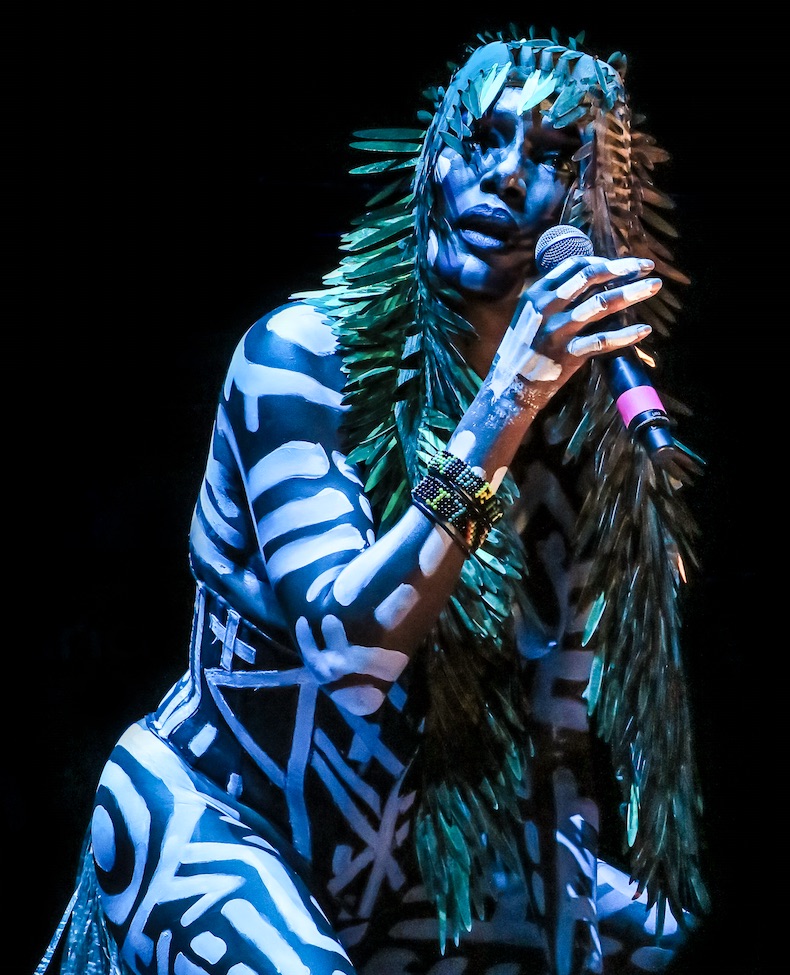
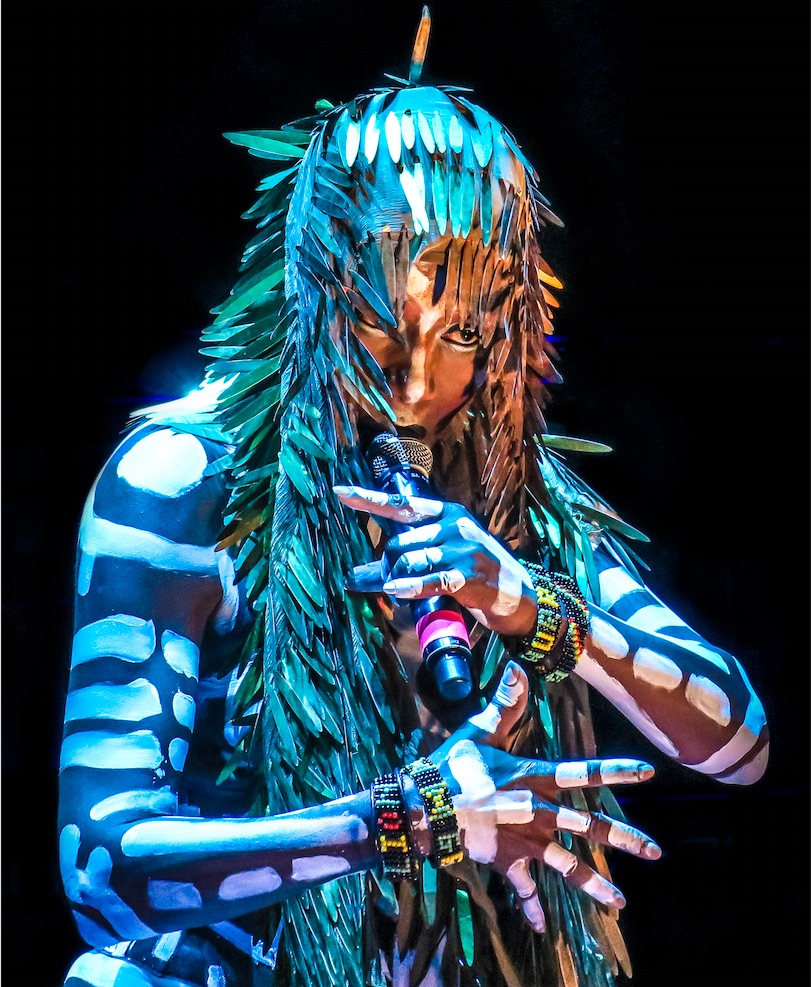
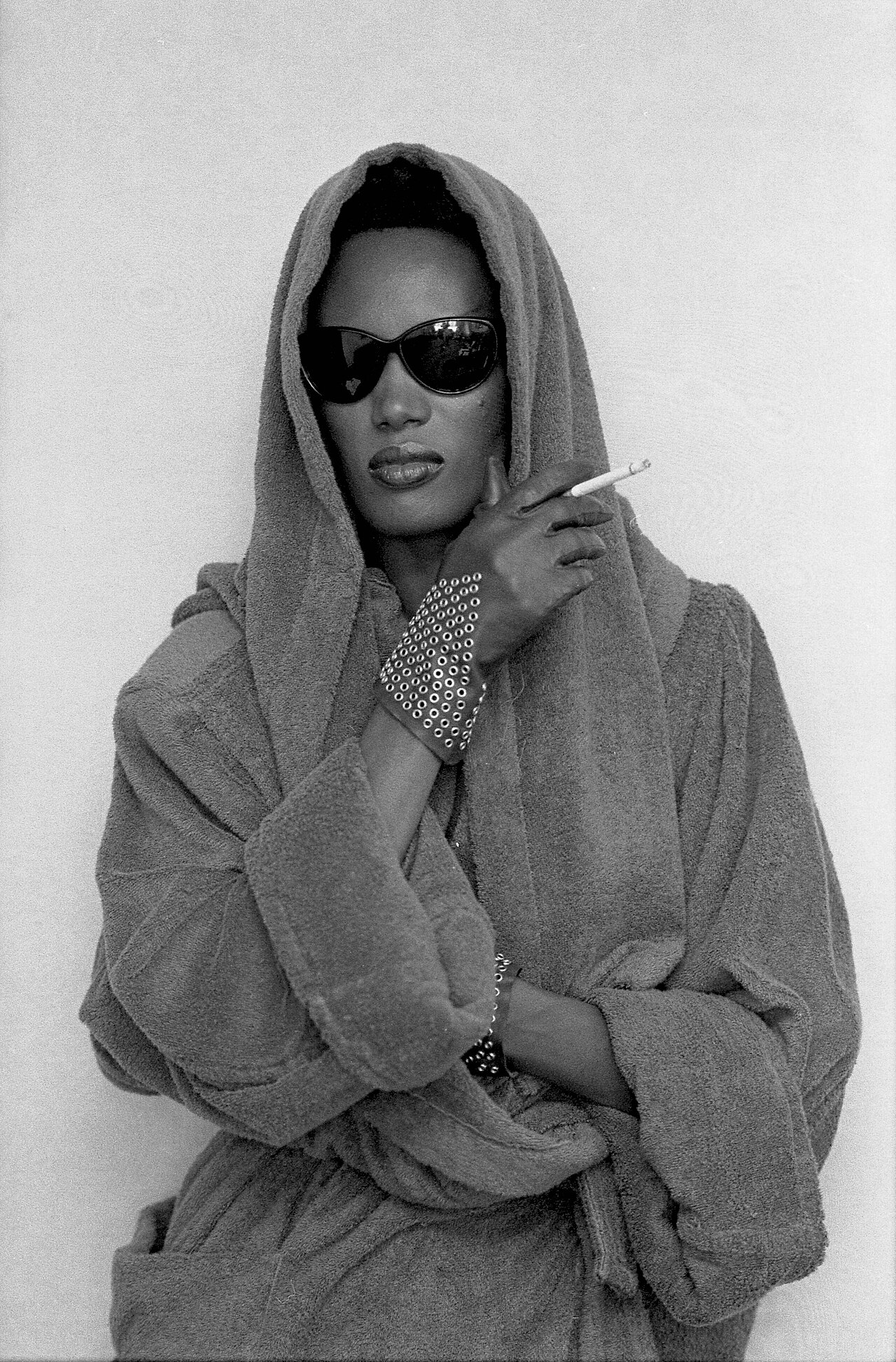
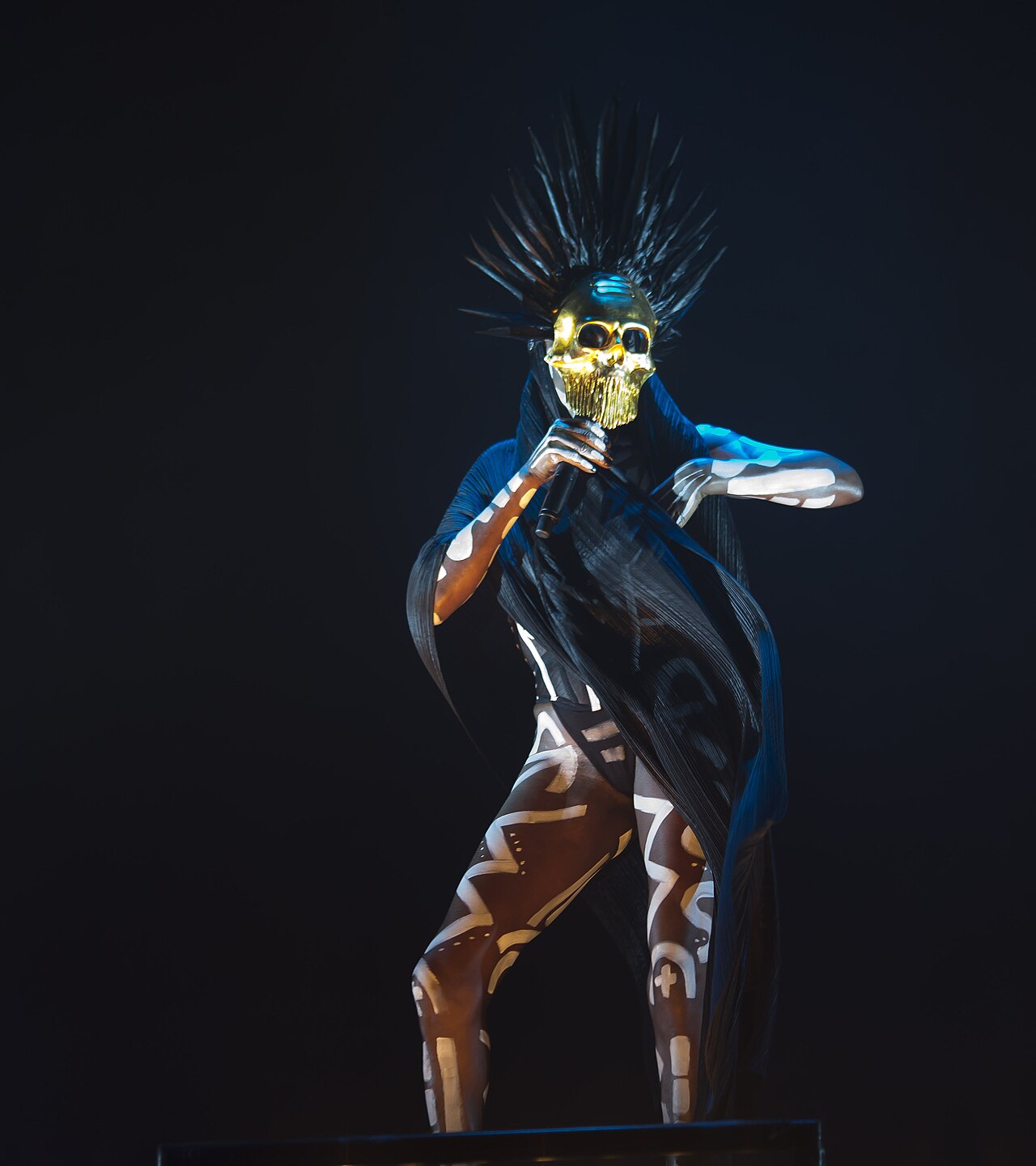
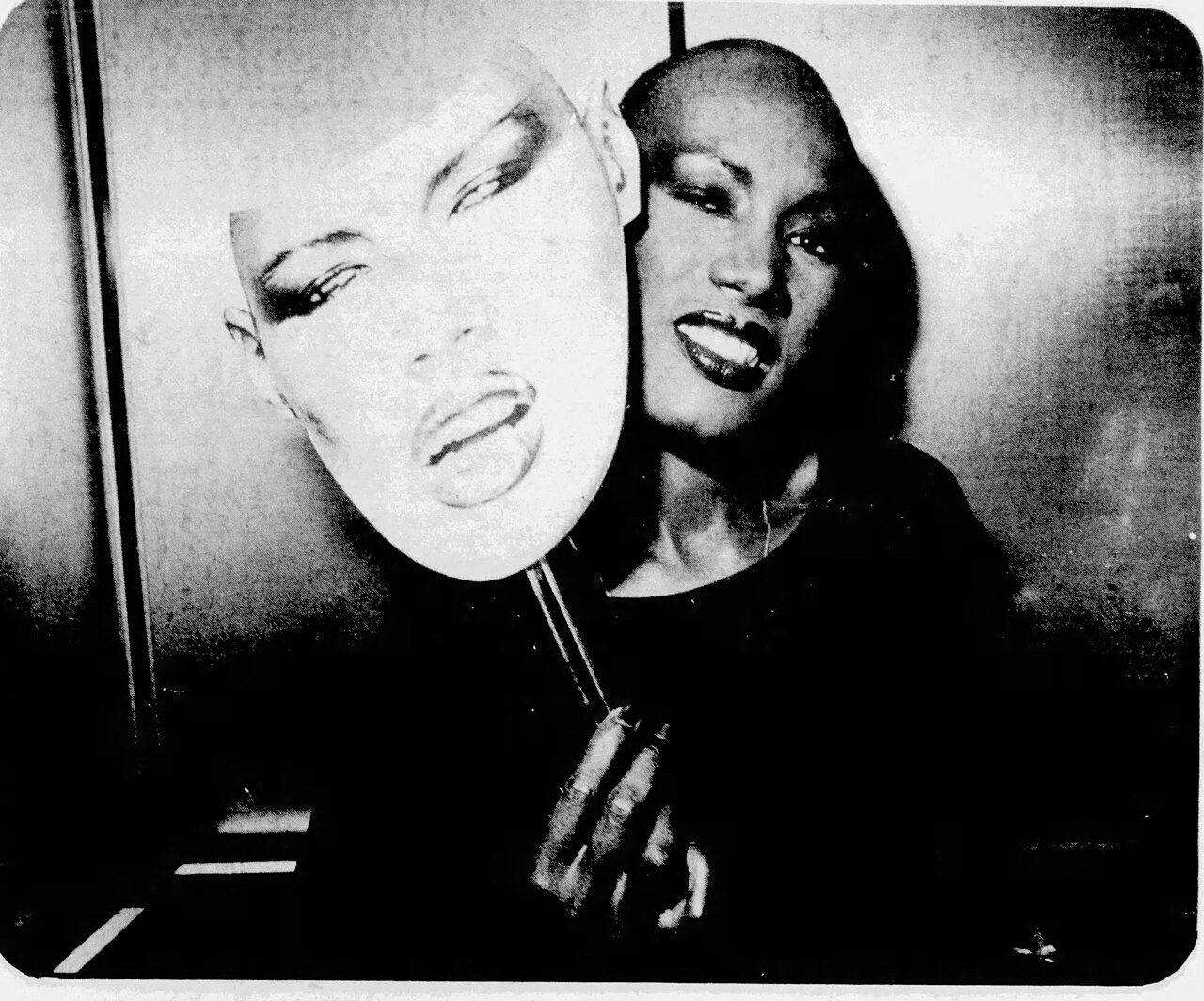
Grace Jones possesses a highly distinctive and androgynous appearance, characterized by bold, sharp features and a strong, sculptural physique. Her look was often described as unconventional for the fashion industry of the 1970s, and she emerged as one of the most prominent Black models of that decade. Her professional range extended from high-fashion runway work for houses such as Yves St. Laurent and Kenzo to appearing on the covers of magazines including Elle and Vogue Hommes. She was photographed by notable figures like Helmut Newton, Guy Bourdin, and Hans Feurer. In terms of habitat, Jones began her modeling career in New York City after signing with Wilhelmina Models, then moved to Paris, where she became deeply embedded in the city’s fashion scene. Later, she became associated with New York’s Studio 54-centered disco scene after beginning her music career in 1977. Her defining characteristics include her androgynous and bold visual style, which has been cited as influential in early discussions of gender expression. Musically, she moved from disco into a new wave style that incorporated reggae, funk, and post-punk, frequently collaborating with graphic designer Jean-Paul Goude and the duo Sly & Robbie. Her acting roles, such as Zula in *Conan the Destroyer* and May Day in the James Bond film *A View to a Kill*, further cemented her iconic, larger-than-life persona.
Reader's Guide
Grace Jones's significance stems from her groundbreaking work across modeling, music, and film, and her enduring impact on concepts of gender expression. As a model in the 1970s, she became one of the most prominent Black figures in fashion, working for houses like Yves St. Laurent and Kenzo, and appearing on the covers of Elle and Vogue Hommes. Photographers such as Helmut Newton and Guy Bourdin captured her androgynous look, which challenged conventional beauty standards and influenced early discussions of gender. Transitioning to music in 1977 with Island Records, she became a central figure in New York's Studio 54 disco scene, earning the media nickname "Disco Queen." In the early 1980s, she shifted toward a new wave style blending reggae, funk, and post-punk, collaborating frequently with designer Jean-Paul Goude and the duo Sly & Robbie. Her UK Top 40 singles included "Private Life," "Pull Up to the Bumper," and "Slave to the Rhythm." Her 1982 video collection *A One Man Show* earned a Grammy nomination for Best Video Album. As an actress, she played Zula in *Conan the Destroyer* (1984), the villain May Day in the James Bond film *A View to a Kill* (1985), and a vampire in *Vamp* (1986), all earning Saturn Award nominations for Best Supporting Actress. Later collaborations included work with Gorillaz, Janelle Monáe, and Beyoncé, the latter earning her another Grammy nomination. VH1 ranked her 82nd among the 100 Greatest Women of Rock and Roll in 1999, and in 2016 Billboard named her the 40th greatest dance club artist of all time.
Did You Know?
- She earned Saturn Award nominations for Best Supporting Actress for her roles in Conan the Destroyer, A View to a Kill, and Vamp.
Roots in a Musical Household
John Baldwin was born on 3 January 1946 in Sidcup, Kent, into a household where music was a profession rather than a pastime. His father, Joe Baldwin, played piano and arranged for big bands in the 1940s and 1950s, working notably with Ambrose and his Orchestra, while his mother also earned a living in the music trade. The family toured England together as a vaudeville comedy act, and young John learned piano from his father starting at age six. His influences stretched across genres: the blues of Big Bill Broonzy, the jazz of Charles Mingus, and the classical piano of Sergei Rachmaninoff. Constant parental touring meant he was sent to boarding school at Christ's College in Blackheath, London, for formal musical study. At fourteen he became choirmaster and organist at a local church and bought his first bass, a Dallas Tuxedo solid-body electric. He later part-exchanged his way to a 1962 Fender Jazz Bass he kept until 1976. He has credited the fluid bass solo by Phil Upchurch on "You Can't Sit Down" as the moment he was drawn to the instrument.
The Grind of Session Work
After playing in The Deltas at fifteen and then the jazz-rock group Jett Blacks, Baldwin's career accelerated in 1962 when the Shadows' Jet Harris and Tony Meehan hired him for a two-year run. In 1964, on Meehan's recommendation, he began a relentless stretch of studio work with Decca Records that would last until 1968. During those four years he played on hundreds of sessions, expanding his role to include keyboards, arranging, and general studio direction. His credits spanned an extraordinary range: string arrangements on the Rolling Stones' "She's a Rainbow," bass work for Donovan, Cat Stevens, Rod Stewart, Shirley Bassey, and Dusty Springfield, and arranging duties for Mickie Most's projects with Tom Jones, Nico, and the Walker Brothers. He even arranged the score for the 1968 film Mrs. Brown, You've Got a Lovely Daughter. The pace was punishing—two or three sessions a day, six or seven days a week, with fifty or sixty arrangements a month by 1968. He later admitted he could not remember three-quarters of the sessions he had played on. It was during this period that he adopted the stage name John Paul Jones, a suggestion from friend Andrew Loog Oldham.
Building Led Zeppelin
Jones and guitarist Jimmy Page had crossed paths repeatedly in the studio, and by 1967 Jones had contributed to the Yardbirds' Little Games album. That winter, while working on arrangements for Donovan's "Hurdy Gurdy Man," he told Page he wanted in on whatever the guitarist was planning next. When the Yardbirds fell apart and Page was left scrambling to fill previously booked Scandinavian dates, bassist Chris Dreja departed for a career in photography, leaving a vacancy. At his wife's suggestion, Jones reached out to Page directly. The guitarist, impressed by Jones's formal training and creative ideas, invited him in immediately. Vocalist Robert Plant and drummer John Bonham rounded out the quartet, initially billed as the "New Yardbirds" before settling on the name Led Zeppelin. Musically, Jones brought something distinctive to the group's sound: the singing, melodic bass lines in "Ramble On" and "The Lemon Song," and the restless shifting time signatures in "Black Dog." Paired with Bonham, he formed a rhythm section grounded in funk and soul grooves that gave the band's heaviest material its forward momentum.
Beyond the Zeppelin
The death of drummer John Bonham in 1980 brought Led Zeppelin to its end, and Jones turned his considerable talents toward a solo career and a wide array of collaborations across genres. He has worked with musicians spanning rock, pop, and experimental territory, demonstrating the same versatility that had made him indispensable in the studio decades earlier. One of his most high-profile post-Zeppelin ventures was the supergroup Them Crooked Vultures, a project he shared with Dave Grohl, Josh Homme, and Alain Johannes, which allowed him to reconnect with the collaborative, genre-bending spirit that had defined his early career. In 1995, Jones was inducted into the Rock and Roll Hall of Fame as a member of Led Zeppelin, a recognition that cemented his place in rock history not merely as a session player or arranger but as one of the foundational architects of one of the most influential bands of the twentieth century.
Gallery
Frequently Asked Questions
Who is Grace Jones?
Grace Jones is a Jamaican-born artist (born 1948) whose career spans high-fashion modelling, disco and new wave music, and film acting. She first rose to prominence in New York before building a lasting presence in Paris with major fashion houses.
Why is Grace Jones's style considered so iconic?
Her sharply angular features and deliberately androgynous look pushed back against conventional beauty standards throughout the 1970s and beyond. She is frequently cited as a trailblazer in early conversations about gender expression in fashion and popular culture.
What are Grace Jones's most famous songs?
Tracks such as "Nightclubbing" (1981) and "Pull Up to the Bumper" (1985) became signature hits during her Island Records era. Her catalogue sits at the intersection of disco, new wave, and post-punk production, often described as icy and avant-garde.
What movies has Grace Jones appeared in?
She played a leading role in the 1984 fantasy film Conan the Destroyer and appeared as the villain May Day in the 1985 James Bond film A View to a Kill. Both roles highlighted her striking, larger-than-life screen presence.
Where was Grace Jones born and where did she start her career?
She was born Grace Beverly Jones on 19 May 1948 in Jamaica. She moved to New York to launch her modelling work with Wilhelmina Models before relocating to Paris, where she walked for houses like Yves Saint Laurent and Kenzo.
More in Pop & Rock Solo Artists 1-22
Spotted an error? Know more?
This is a living reference — every entry is fact-audited, and reader corrections feed straight into our audit queue. Suggest an edit · See this site's audit record