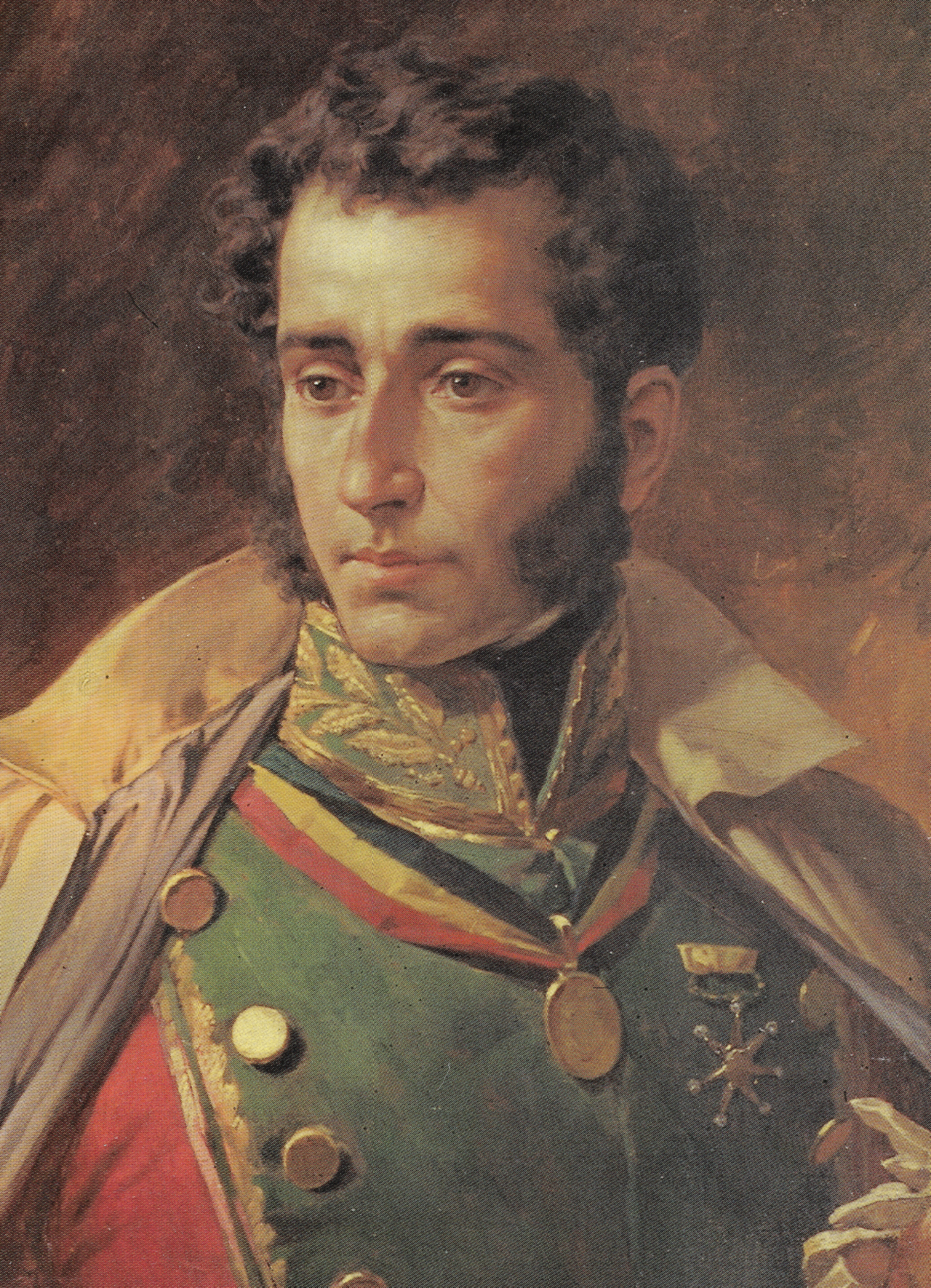
Antonio José de Sucre
Venezuelan general and first president of Bolivia.

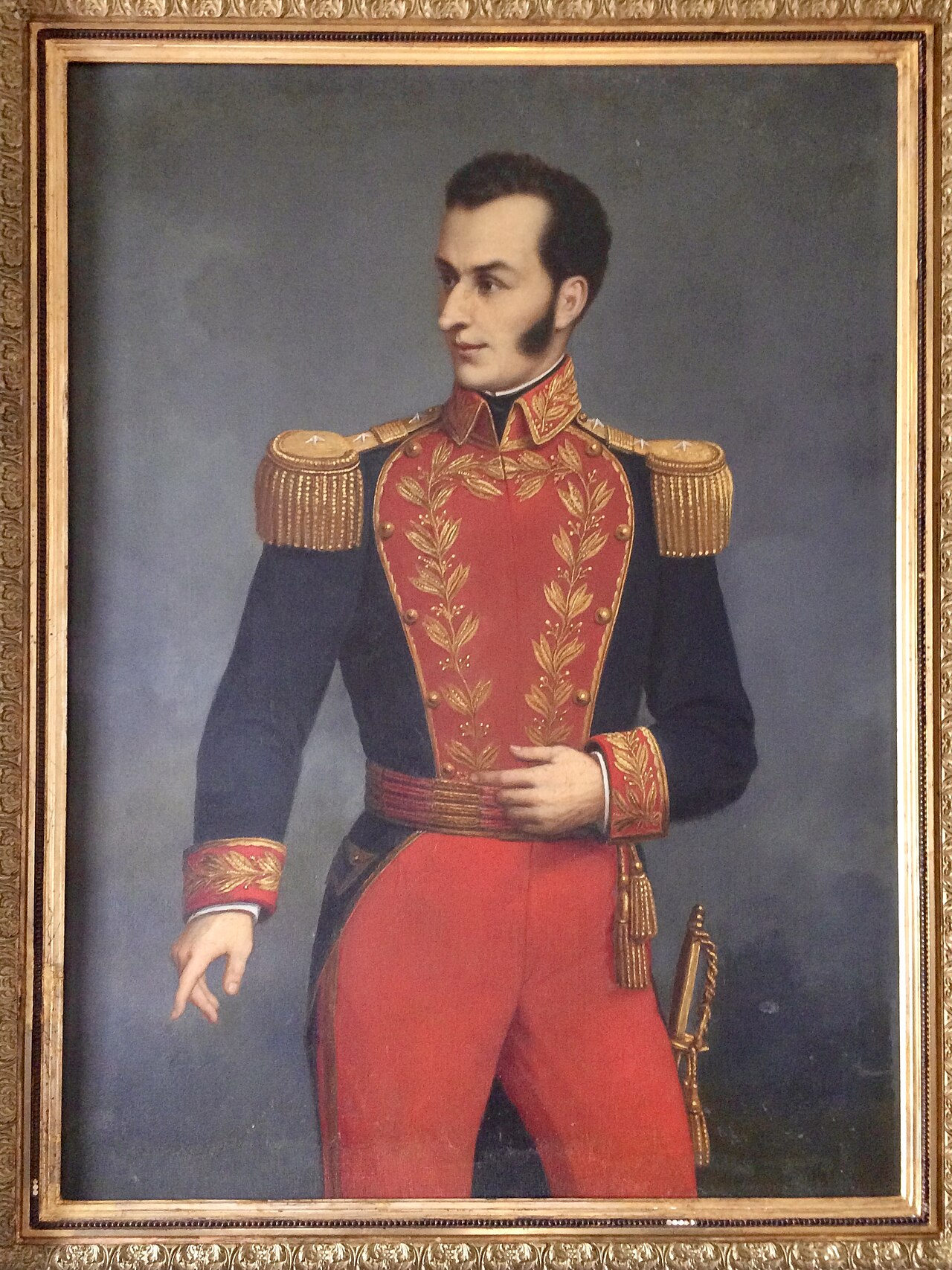
Arturo Michelena · Public domain
Antonio José de Sucre y Alcalá, often called the “Gran Mariscal de Ayacucho,” was a Venezuelan general and politician who led Bolivia as its president from 1825 to 1828. Born into an aristocratic family in Cumaná, he joined the rebellion against Spanish rule in 1814 and quickly proved himself a skilled military commander. In 1822, he commanded Patriot forces to victory at the Battle of Pichincha, freeing Quito—a region that later became Ecuador. As Simón Bolívar’s top deputy, Sucre crushed the Spanish Royalist army at the Battle of Ayacucho in 1824, a triumph that guaranteed Peru’s independence. Following Bolívar’s orders, he then moved into Upper Peru, pacified remaining Royalist resistance, and set up a government there. That territory became the independent nation of Bolivia, and when Bolívar declined the presidency, Sucre was sworn in as its first head of state.
His time as president was troubled. Popular opposition grew as people turned against Bolívar and his allies, forcing Sucre to resign in 1828. He returned to military service when the Gran Colombia–Peru War broke out, leading Colombian forces to a stalemate against the Peruvian invaders. In 1830, he was assassinated in Berruecos, Colombia. Who plotted the killing remains uncertain.
**Family** The Sucre family originally came from Flanders. Charles de Sucre y Pardo, a Flemish nobleman and son of Charles Adrian de Sucre (Marquess of Peru) and Buenaventura Carolina Isabel Garrido y Pardo, brought the line to Venezuela. After serving as a soldier in Catalonia in 1698, he was appointed Governor of Cartagena de Indias and later Captain General of Cuba. On 22 December 1779, he arrived in Cumaná as Governor of New Andalucia, an area that includes today’s Sucre State.
**Military career** Sucre entered the independence struggle in 1814. The Battle of Pichincha, fought on 24 May 1822 near Quito on the slopes of the Pichincha volcano, pitted his Patriot army against Royalist forces under Field Marshal Melchor Aymerich. The Patriot victory freed Quito and secured independence for the provinces of the Real Audiencia de Quito, the colonial jurisdiction that later became Ecuador. By late 1824, Royalists still held most of southern Peru and the Real Felipe Fort in Callao. On 9 December 1824, at Pampa de La Quinua near the town of Quinua, Sucre—acting as Bolívar’s lieutenant—defeated Viceroy José de la Serna, who was wounded. After the battle, second-in-command José de Canterac signed the Royalist army’s surrender. In recognition, the Peruvian Congress promoted Sucre to Marshal, and the Colombian legislature made him a General in Chief.
Following Ayacucho, Sucre—now Grand Marshal of Ayacucho—entered Upper Peru (modern Bolivia) on 25 February 1825, under Bolívar’s orders. His task was to install an independent administration and give legal shape to a process Upper Peruvians had already started. Royalist general Pedro Antonio Olañeta held Potosí, reinforced by the “Union” Infantry Battalion from Puno under Colonel José María Valdez. Olañeta called a war council that decided to keep fighting for King Ferdinand VII. He stationed troops at Cotagaita fortress under Colonel Medinacelli, sent Valdez to Chuquisaca with the “Union” Battalion and loyalist militias, and marched toward Vitichi with 60,000 gold pieces from Potosí’s mint. But by 1821, guerrilla warfare had already spread across Upper Peru, and the Royalist position was weak. In Cochabamba, the First Battalion of the “Ferdinand VII” Infantry Regiment, led by Colonel José Martínez, rebelled and joined the independence cause. The Second Battalion of the same regiment did the same in Vallegrande, forcing Brigadier Francisco Aguilera to resign on 12 February. Colonel José Manuel Mercado took Santa Cruz de la Sierra on 14 February, while Chayanta fell to Lieutenant Colonel Pedro Arraya with the “Santa Victoria” and “Dragones Americanos” cavalry squadrons. In Chuquisaca, the “Dragones de la Frontera” squadron under Colonel Francisco López declared for independence on 22 February. Most Royalist troops in Upper Peru then refused to fight Sucre’s army and switched sides. Colonel Medinacelli, with 300 soldiers, revolted against Olañeta. They clashed on 2 April 1825 at the Battle of Tumusla, where Olañeta was killed. A few days later, on 7 April, General José Mario Valdez surrendered.
- field
- Military and politics
- nationality
- Venezuelan
- known_for
- Gran Mariscal de Ayacucho; decisive victory at Battle of Ayacucho; first president of Bolivia
Quick Facts
- Office
- 2nd President of Bolivia
- Term Start
- 29 December 1825
- Predecessor
- Simón Bolívar
- Successor
- José María Pérez de Urdininea (acting)
- Office1
- Supreme Military Chief of Peru
- Term Start1
- 23 June 1823
- Term End1
- 17 July 1823
- Predecessor1
- José de la Riva Agüero
- Successor1
- José Bernardo de Tagle
- Birth Name
- Antonio José de Sucre y Alcalá
- Birth Date
- 1795-02-03
- Birth Place
- Cumaná, Captaincy General of Venezuela, Spanish Empire (now Cumaná, Venezuela)
Facts from the source article.
Lore & Background
After the decisive victory at Ayacucho, Sucre, acting as Bolívar’s chief lieutenant, moved into Upper Peru. His orders were to pacify the remaining Royalist resistance and establish an administration, giving legal form to a process of independence that local forces had already begun. Royalist general Pedro Antonio Olañeta attempted to continue the fight in the name of Ferdinand VII, distributing troops to key fortresses and moving gold from Potosí. However, widespread guerrilla warfare and mutinies among Royalist units—including the rebellion of the “Ferdinand VII” Infantry battalions in Cochabamba and Vallegrande—sapped his strength. Colonel Medinacelli revolted against Olañeta, and the two clashed at the Battle of Tumusla, where Olañeta was killed. Shortly after, General José Mario Valdez surrendered. With the Royalist forces defeated, the region achieved independence as Bolivia. Sucre was then inaugurated as president after Bolívar passed the duty to him. His tenure, however, was fraught with difficulties. As popular sentiment turned against Bolívar and his followers, opposition to Sucre’s rule mounted, forcing him to resign in 1828.
Reader's Guide
Antonio José de Sucre’s significance stems from his decisive military leadership during the Spanish American wars of independence and his brief but foundational political role as the first president of Bolivia. As a close associate of Simón Bolívar, Sucre commanded Patriot forces to a key victory at Pichincha, liberating Quito and securing the independence of the region that later became Ecuador. His most celebrated achievement came at Ayacucho, where he led the Patriot army to defeat the Spanish Viceroy and forced the capitulation of the Royalist forces, effectively ending Spanish control over Peru. Following Bolívar’s orders, Sucre then entered Upper Peru, pacified remaining Royalist resistance, and oversaw the establishment of an independent administration, which resulted in the creation of Bolivia. He was inaugurated as its president after Bolívar declined the role. His tenure, however, was marked by growing opposition as public sentiment turned against Bolívar’s faction, forcing Sucre to resign. He returned to military command during the Gran Colombia–Peru War, where he fought Peruvian forces to a standstill. His assassination in 1830 cut short a career that had been central to the independence movements of Venezuela, Ecuador, Peru, and Bolivia, and his legacy as the Gran Mariscal de Ayacucho endures as a symbol of the liberation struggle.
Did You Know?
- The name 'Bolivia' was derived from Simón Bolívar, and Sucre became its first president after Bolívar declined the role.
Military Career and Defining Battles
Sucre's military path began in 1814 when he joined the uprising against Spanish colonial rule, and he rapidly proved himself a formidable commander. His first major triumph came on 24 May 1822 on the volcanic slopes above Quito, where his Patriot army clashed with Royalist forces under Field Marshal Melchor Aymerich. The victory at Pichincha freed the capital and secured the independence of the old Real Audiencia de Quito, the colonial jurisdiction that would later become Ecuador. Two years later, acting as Bolívar's chief lieutenant, Sucre delivered what is widely regarded as the decisive blow of the independence war. At Pampa de La Quinua near Quinua, on 9 December 1824, his troops routed the army of Viceroy José de la Serna, who was wounded in the fighting. Second-in-command José de Canterac signed the Royalist capitulation on the viceroy's behalf. The Peruvian Congress elevated Sucre to Marshal, while the Colombian legislature made him General in Chief. He then pushed into Upper Peru in February 1825, where lingering Royalist pockets under Pedro Antonio Olañeta were dissolved through a mix of defections and the Battle of Tumusla, which ended with Olañeta's death. By early April, the last organized resistance had collapsed.
Founding Bolivia and a Turbulent Presidency
The creation of Bolivia as a sovereign republic was inseparable from Sucre's presence in Upper Peru. Following his military entry into the territory in February 1825, he reconvened the Constituent Assembly in Chuquisaca on 8 July 1825, which ultimately declared the complete independence of the region under a republican form of government. Bolívar, who had originally been expected to take on the new nation's leadership, passed the duty to his trusted lieutenant, and Sucre was inaugurated as president of the new republic. His tenure, spanning from 1825 to 1828, was marked by persistent political turbulence. As the population of the young nation grew increasingly hostile toward Bolívar and his circle of associates, opposition to Sucre's rule mounted steadily. The political climate deteriorated to the point where he was compelled to resign in 1828, ending what had been a brief and difficult chapter as head of state. Despite the challenges, his role in transforming a contested colonial province into a recognized independent nation remains a defining achievement of his career.
Aristocratic Roots and Flemish Heritage
The Sucre family's aristocratic pedigree stretches back to Flanders, and the lineage's presence in Venezuela is traced through Charles de Sucre y Franco Perez, a Flemish nobleman. His parents were Charles Adrian de Sucre, who held the title Marquess of Peru, and Buenaventura Carolina Isabel Garrido y Pardo, a woman of Spanish noble birth. The family's earlier history includes Charles de Sucre y Pardo, who served as a soldier in Catalonia in 1698 before being appointed Governor of Cartagena de Indias and Captain General of Cuba. On 22 December 1779, a member of this lineage arrived in Cumaná, Venezuela, having been named Governor of New Andalucia, a territory that encompasses present-day Sucre State. Antonio José de Sucre y Alcalá was born in that same port city on 3 February 1795, inheriting a social standing that connected his family to both Flemish and Spanish aristocratic traditions. This privileged background made his decision to join the anti-Spanish revolt in 1814 all the more remarkable, as it meant turning against the very imperial structure that had sustained his family's status for generations.
Final Years and the Mystery of His Assassination
After his resignation from the Bolivian presidency in 1828, Sucre's life took a sharp turn back toward the battlefield and then abruptly ended in violence. The outbreak of the Gran Colombia–Peru War called him back to active military duty, and he assumed command of Colombian forces to confront the Peruvian invaders. Under his leadership, the Colombian army managed to fight the Peruvian forces to a standstill, demonstrating that his tactical skill remained intact even in this later conflict. However, his story did not conclude with a peaceful retirement. On 4 June 1830, Sucre was assassinated in the town of Berruecos, Colombia, cutting short a life that had already spanned fifteen years of extraordinary military and political service. The identities of those who plotted and carried out the killing have never been definitively established, and the matter continues to be a subject of heated historical speculation. His death at the age of thirty-five left a conspicuous gap in the leadership of the young nations he had helped create, and the circumstances surrounding it remain one of the enduring mysteries of South American independence history.
Gallery
More in Political Leaders & Revolutionaries 1-24
Spotted an error? Know more?
This is a living reference — every entry is fact-audited, and reader corrections feed straight into our audit queue. Suggest an edit · See this site's audit record