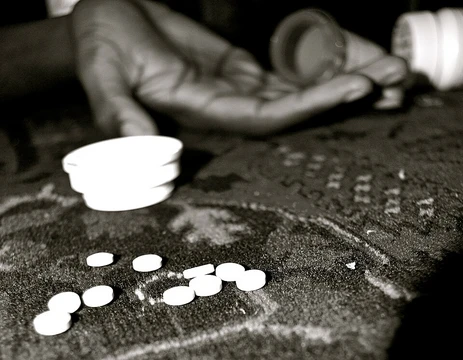
Opioid overdose
Opioid overdose is a preventable cause of respiratory depression and death.
If breathing becomes slow and shallow due to respiratory depression, this avoidable condition can be deadly because it leads to a lack of oxygen.[1] The time it takes for symptoms like pinpoint pupils and loss of consciousness to appear varies based on how the drug was taken, the amount used, and personal susceptibility.[1]
Quick Facts
- Who estimate opioid deaths
- 70% of deaths due to drug use are in relation to opioids, with 30% being due to overdose
Facts from the source article.
Key facts and history
Close to 80% of drug-related deaths are related to opioids, with about 25% of those deaths caused by opioid overdose.[2] During the COVID-19 pandemic, a further substantial increase in drug overdose deaths was reported in the USA, primarily driven by synthetic opioids.[2] Naloxone works by temporarily blocking the effects of opioids, including respiratory depression and sedation.[3] The WHO recommends that naloxone be made available to people likely to witness an opioid overdose, along with training in overdose management.[2]
A diagnosis of opioid overdose is made by looking at a person's symptoms and performing a physical exam.[4] Being highly dependent on opioids, injecting them, taking large amounts, having a mental health condition, and combining opioids with alcohol, benzodiazepines, or cocaine all increase the chance of an overdose.[4] The first steps in managing an overdose are to help the person breathe and give them oxygen to lower the danger of hypoxia.[5] After supporting breathing, administering naloxone is advised to counteract the opioid; it works just as well when sprayed into the nose as when injected into a muscle.[5]
What the cited sources add
The Penn LDI review explains that naloxone distribution to laypeople can save a life when first responders are not immediately available or when witnesses are unwilling to call 911.[6] The same source reports that Massachusetts communities with overdose education and naloxone distribution programs had lower opioid overdose death rates than communities without such programs.[6] The Penn LDI review also notes that a national program in Scotland distributing naloxone to people released from prison was associated with a 36% reduction in opioid-related deaths in the four weeks following release.[6] The Merck Manual states that the most important enzyme system of phase I drug metabolism is cytochrome P-450, a microsomal superfamily of isoenzymes that catalyzes the oxidation of many drugs.[7]
The information sheet from the World Health Organization explains that opioids are substances derived from the poppy plant, along with semi-synthetic and fully synthetic compounds that bind to opioid receptors in the brain.[2] According to the World Health Organization, men, older individuals, and those with low socioeconomic status face a greater danger of experiencing an opioid overdose.[2]
References
- Wikipedia, "Opioid overdose" (CC BY-SA 4.0), which cites: "Management of opioid analgesic overdose", The New England Journal of Medicine, July 2012, p. 146–155; "Opioids and the treatment of chronic pain: controversies, current status, and future directions", Experimental and Clinical Psychopharmacology, October 2008, p. 405–416; "Management of opioid analgesic overdose", The New England Journal of Medicine, July 2012, p. 146–155; "Medical emergencies in the dental office", Mosby, 2007; "Cellular and molecular mechanisms involved in the neurotoxicity of opioid and psychostimulant drugs", Brain en.wikipedia.org
- "Information sheet on opioid overdose", World Health Organization, November 2014. facts only, no text reused. who.int
- Wikipedia, "Opioid overdose" (CC BY-SA 4.0), which cites: "Responding to a suspected opioid overdose NIOSH CDC", www.cdc.gov, 19 July 2021; "Management of opioid analgesic overdose", The New England Journal of Medicine, July 2012, p. 146–155; "Naloxone DrugFacts", National Institute on Drug Abuse, 11 January 2022 (original not read by us) en.wikipedia.org
- Wikipedia, "Opioid overdose" (CC BY-SA 4.0), which cites: "Management of opioid analgesic overdose", The New England Journal of Medicine, July 2012, p. 146–155; "Information sheet on opioid overdose", World Health Organization, November 2014; "Understanding Risk Factors for Opioid Overdose in Clinical Populations to Inform Treatment and Policy", Journal of Addiction Medicine, 2016, p. 369–381; "Overdose Death Rates", National Institute on Drug Abuse, 20 January 2022; "Information sheet on opioid overdose", World Health Organization, November 2014; "Information sheet on opioid overdose", World en.wikipedia.org
- Wikipedia, "Opioid overdose" (CC BY-SA 4.0), which cites: "Part 12: Pediatric Advanced Life Support: 2015 American Heart Association Guidelines Update for Cardiopulmonary Resuscitation and Emergency Cardiovascular Care", Circulation, November 2015, p. S526–S542; "Part 12: Pediatric Advanced Life Support: 2015 American Heart Association Guidelines Update for Cardiopulmonary Resuscitation and Emergency Cardiovascular Care", Circulation, November 2015, p. S526–S542; "Management of opioid analgesic overdose", The New England Journal of Medicine, July 2012, p. 146–155; "Management of Suspected Opio en.wikipedia.org
- "Expanding Access to Naloxone: A Review of Distribution Strategies", Penn LDI, 29 May 2019. facts only, no text reused. ldi.upenn.edu
- "Drug Metabolism - Clinical Pharmacology", Merck Manuals Professional Edition. facts only, no text reused. merckmanuals.com
Each numbered sentence above was checked against the source it cites before publication. Sentences citing Wikipedia adapt text from the English Wikipedia article Opioid overdose (contributors), used under CC BY-SA 4.0; this entry is available under the same licence. Other sources were used for facts only; no text or images are copied from them.
More in Poisoning by Drugs, Medicaments and Biological Substances
Spotted an error? Know more?
Reader corrections go straight into our review queue. Suggest an edit · How this site is sourced