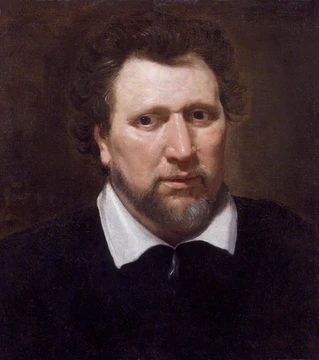
Robert Graves
English poet, novelist, and critic known for I, Claudius and The White Goddess.
Last updated
His poems, translations, and analysis of Greek myths, along with his memoir Good-Bye to All That (1929) and The White Goddess (1948), have never been out of print.[1] The English poet, novelist and critic Robert Ranke Graves, whose second name is sometimes given as von Ranke, was born on 24 July 1895 and died on 7 December 1985, and authored over 140 works.[2][1]
Key facts and history
At age seven, double pneumonia following measles almost took his life, the first of three serious lung afflictions.[3] After the war, he took up his place at Oxford in October 1919, later changing to English Language and Literature.[4] Graves's parents were Alfred Perceval Graves and Amalie Elisabeth Sophie von Ranke; he was the eighth of ten children and grew up in an upper-middle-class household in Wimbledon.[5] His first poetry collection, Over the Brazier, came out in 1916, and he gained an early reputation as a war poet.[6][7]
His most commercially successful work, I, Claudius, was published in 1934; for classical correctness he relied on the advice of classics scholar Eirlys Roberts.[8][9] Heart failure caused his death on 7 December 1985 at age 90, and the following morning his body was buried in the churchyard on a hill at Deià.[10]
What the cited sources add
A 2024 article by Korda notes that Graves was an active homosexual who bridged both worlds as a published poet and an officer, and that he both impressed and frightened Wilfred Owen.[11] The Scotsman obituary of Eirlys Roberts states that her first job was as classical adviser to Graves, working with him on Majorca for several years when he was writing I, Claudius.[9] The Guardian obituary of Beryl Graves notes that when she met Graves, he had achieved international recognition through Goodbye To All That and the two Claudius novels.[12] The same obituary states that Graves's poetry was fuelled by emotional turmoil which a settled home did not provide.[12]
The Green Man Review describes The White Goddess as a massive study of the mythic basis of poetry, taking the Beth-Luis-Nion tree alphabet as its framework.[13]
References
- Wikipedia, "Robert Graves" (CC BY-SA 4.0), which cites: "Robert Graves, The White Goddess – A Historical Grammar of Poetic Myth", Green Man Review (we also read that source) en.wikipedia.org
- Wikipedia, "Robert Graves" (CC BY-SA 4.0), which cites: "National Portrait Gallery – Person – Robert Ranke Graves", Npg.org.uk; "Graves, Robert Ranke", FreeBMD; Graves, "Graves, Robert von Ranke (1895–1985)", Oxford Dictionary of National Biography, September 23, 2004 (original not read by us) en.wikipedia.org
- Wikipedia, "Robert Graves" (CC BY-SA 4.0), which cites: Graves (1960) p. 234. (original not read by us) en.wikipedia.org
- Wikipedia, "Robert Graves" (CC BY-SA 4.0), which cites: Graves (1960) pp. 238–42.; India's prisoner: a biography of Edward John Thompson, 1886–1946 (original not read by us) en.wikipedia.org
- Wikipedia, "Robert Graves" (CC BY-SA 4.0), which cites: Boylan, "A Dictionary of Irish Biography, 3rd Edition", Gill and MacMillan, 1998, p. 152 (we also read that source) en.wikipedia.org
- Wikipedia, "Robert Graves" (CC BY-SA 4.0), which cites: ; ; ; ; Graves (1960) p. 172.; Graves (1960) p. 281. (original not read by us) en.wikipedia.org
- Wikipedia, "Robert Graves" (CC BY-SA 4.0), which cites: Seymour (1995) p. 54.; Seymour (1995) pp. 58–60. (original not read by us) en.wikipedia.org
- Wikipedia, "Robert Graves" (CC BY-SA 4.0), which cites: "Obituary: Eirlys Roberts", The Scotsman, 9 April 2008 (we also read that source) en.wikipedia.org
- "Obituary: Eirlys Roberts", The Scotsman, 9 April 2008. facts only, no text reused. web.archive.org
- Wikipedia, "Robert Graves" (CC BY-SA 4.0), which cites: Graves, "Graves, Robert von Ranke (1895–1985)", Oxford Dictionary of National Biography, September 23, 2004; Rourke, "Beryl Graves, 88; wife, aide and muse of British poet and novelist", Los Angeles Times, October 31, 2003 (original not read by us) en.wikipedia.org
- Korda, "How Wilfred Owen and Siegfried Sassoon Forged a Literary and Romantic Bond", Literary Hub, 16 April 2024. facts only, no text reused. lithub.com
- "Obituary – Beryl Graves", The Guardian, 1 November 2003. facts only, no text reused. theguardian.com
- "Robert Graves, The White Goddess – A Historical Grammar of Poetic Myth", Green Man Review. facts only, no text reused. web.archive.org
Each numbered sentence above was checked against the source it cites before publication. Sentences citing Wikipedia adapt text from the English Wikipedia article Robert Graves (contributors), used under CC BY-SA 4.0; this entry is available under the same licence. Other sources were used for facts only; no text or images are copied from them.
More in Playwrights And Dramatists
Test yourself
Three questions drawn from this entry’s sources. Pick an answer to check it.
Answers checked against the source article
Sources
Compiled from Wikipedia and the sources listed below. Text from Wikipedia is available under CC BY-SA 4.0; this entry is adapted from it.
- Wikipedia: Robert Graves (CC BY-SA 4.0).
Spotted an error? Know more?
Reader corrections go straight into our review queue. Suggest an edit · How this site is sourced