Henry IV, Part 1
Shakespeare's history play of rebellion, honor, and Prince Hal's coming-of-age.

James Neagle / After Robert Smirke / John & Josiah Boydell · CC0
Henry IV, Part 1, a play by William Shakespeare, was likely written in the mid-1590s and first appeared in a 1598 quarto edition. It was created during the later years of Elizabeth I’s reign, a time when succession and political stability were major concerns. The action takes place in early 15th-century England under King Henry IV, following a rebellion against the crown and the growth of Prince Hal, the future Henry V. The play explores ideas of leadership and how an heir to the throne is shaped. In Shakespeare’s day, it was one of his most popular works, shown by several early printings and the appeal of the character John Falstaff. It has stayed a frequently performed play, valued for blending political drama with comedy and for its look at leadership and public image.
The story follows three groups that start out barely connected but come together at the Battle of Shrewsbury. One group centers on King Henry IV and his advisors, working to put down a growing revolt. Another consists of rebel lords, led by Thomas Percy, Earl of Worcester, and including his brother the Earl of Northumberland and his fiery nephew Harry Percy, called Hotspur. They are joined by the Scottish Earl of Douglas, the Welshman Owen Glendower, and Edmund Mortimer. The third group, the comic heart of the play, is made up of Prince Hal and his friends: Falstaff, Poins, Bardolph, and Peto.
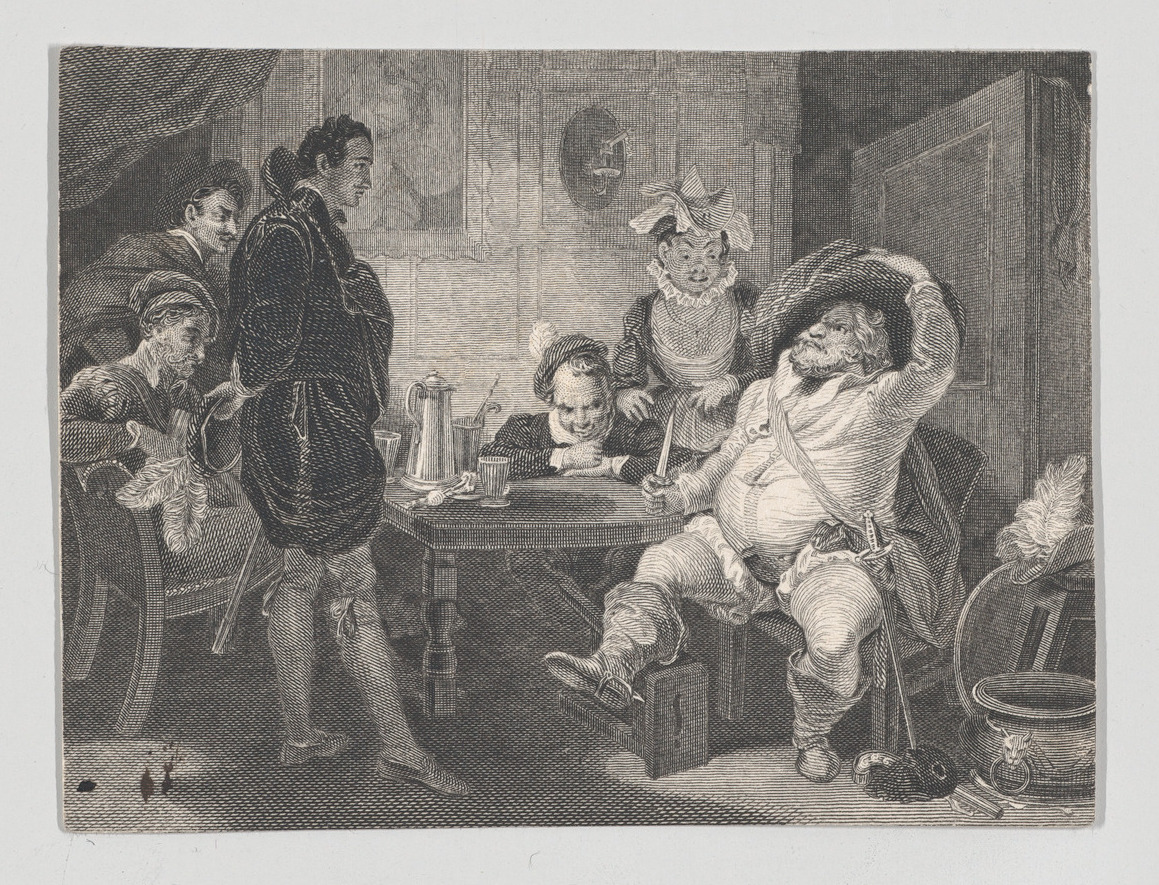
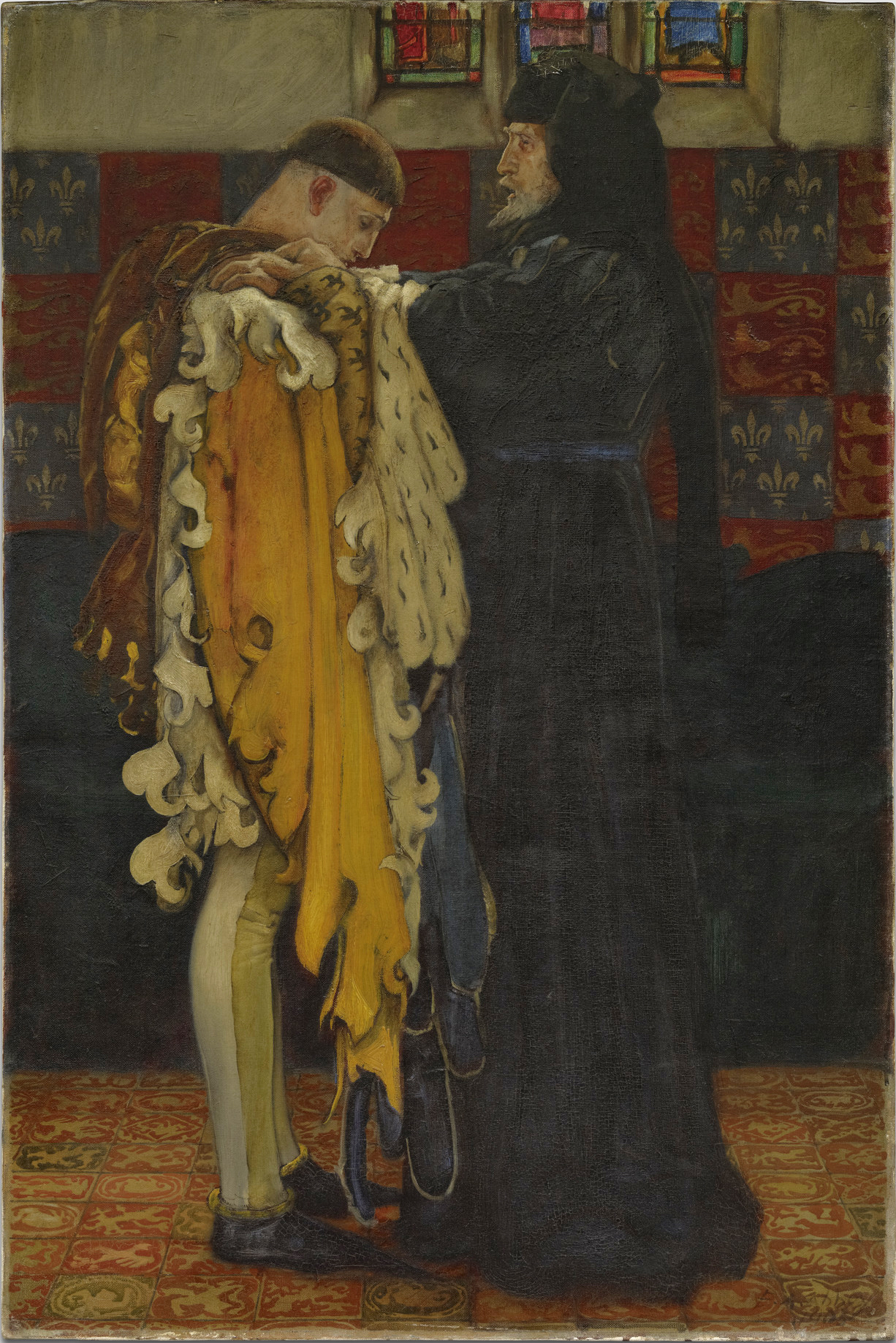
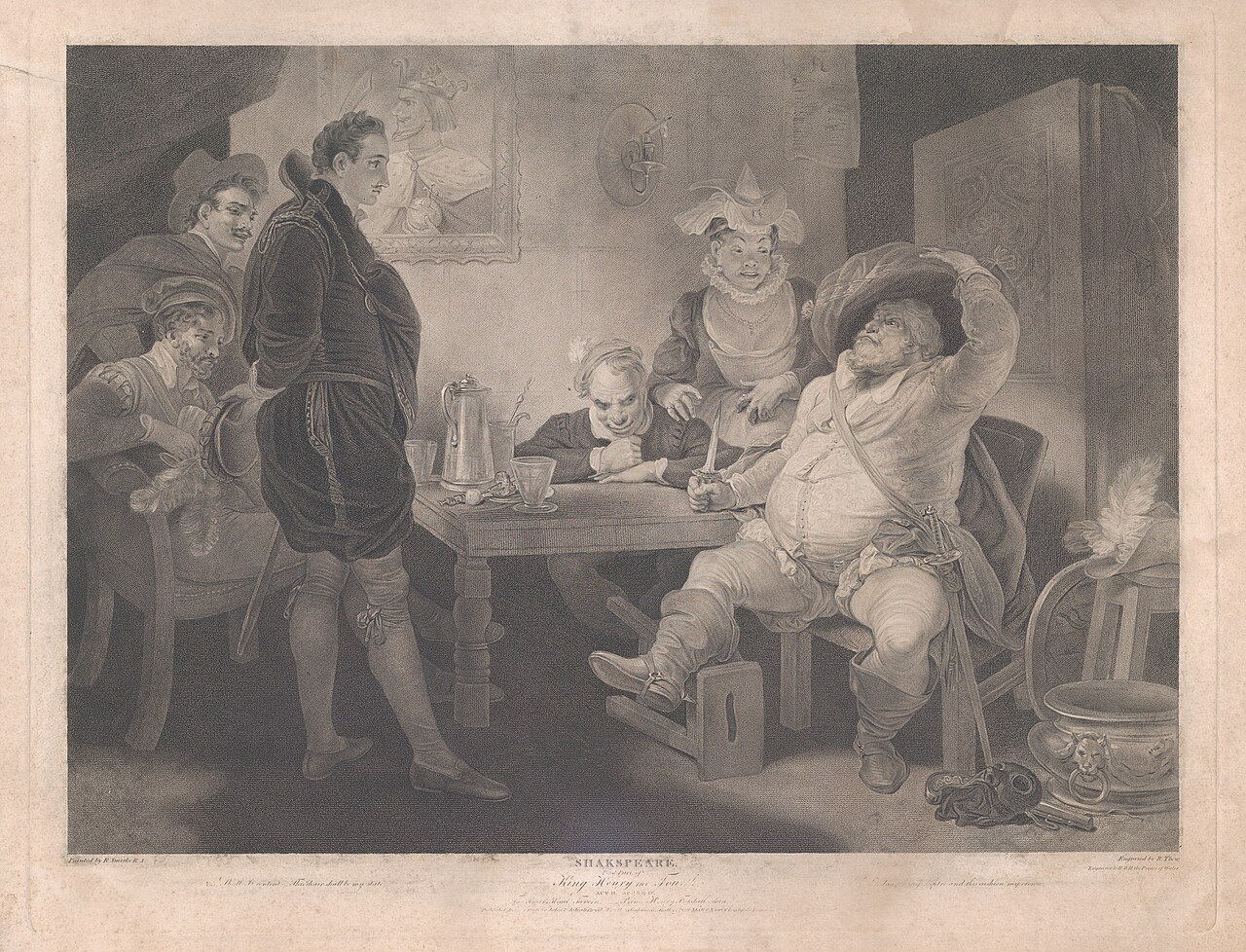
From the start, Henry IV’s rule is troubled. He is uneasy about having taken the throne from Richard II and hopes to ease this by a crusade to the Holy Land, but conflicts with Scotland and Wales prevent it. He also clashes with the Percy family, who helped him become king, and with Edmund Mortimer, Richard II’s chosen successor. The king is further upset by his son Hal, who avoids court to drink in taverns with lowborn, disreputable companions. This behavior makes the nobles scorn Hal and threatens his standing as heir; early on, the king laments that he sees “riot and dishonor stain the brow of young Harry.” Hal’s closest friend is Sir John Falstaff, a cowardly, drunken, but witty knight whose charm and love of life captivate the prince.
In the first act, the political plot begins. King Henry and Hotspur fall out over hostages: Hotspur refuses to hand over prisoners taken at the Battle of Homildon Hill, against the king’s orders, while Henry refuses to pay a ransom for Edmund Mortimer, Hotspur’s brother-in-law, who is held by the Welsh rebel Glendower. This quarrel, along with the king’s harsh treatment of the Percy family, drives them to ally with the Welsh and Scots and plan to overthrow “this ingrate and cankered Bolingbroke.” Meanwhile, Hal meets Falstaff and his crew at the Boar’s Head Tavern. They are close, but Hal enjoys mocking Falstaff, and in a soliloquy he reveals he does not plan to keep up his current lifestyle forever. He intends to return to court by proving himself to his father, reasoning that a sudden change will win him more favor than behaving properly all along. Still, he joins a plot to trick Falstaff: after Hal and Poins help Falstaff rob some travelers, they slip away, disguise themselves, and rob Falstaff for the fun of hearing him lie about it later, then return the money. The trick works.
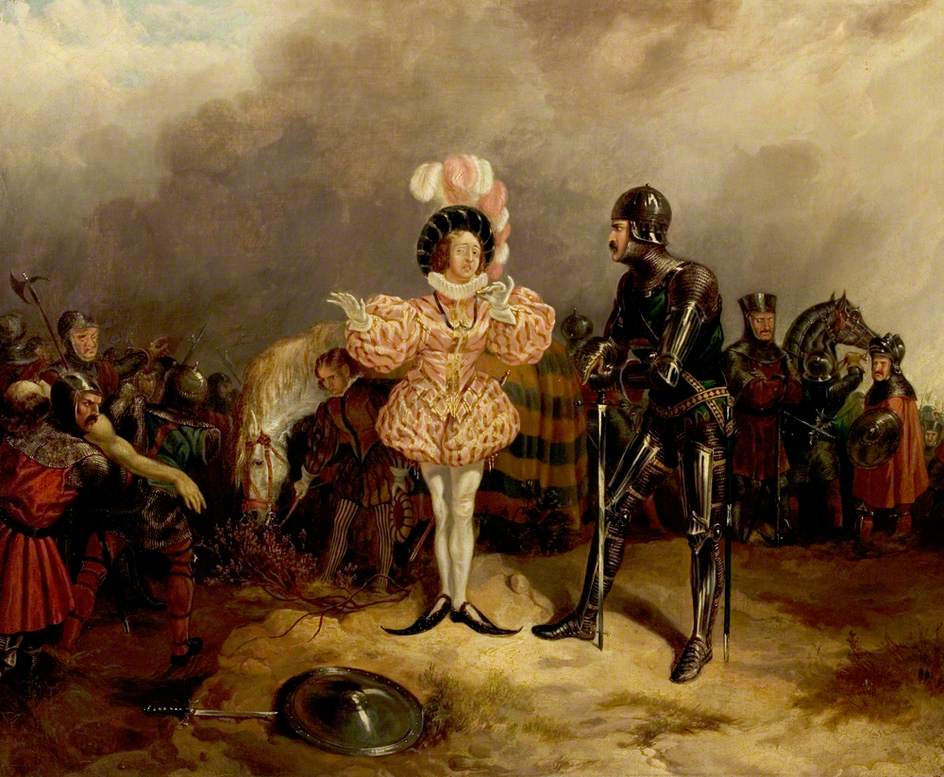
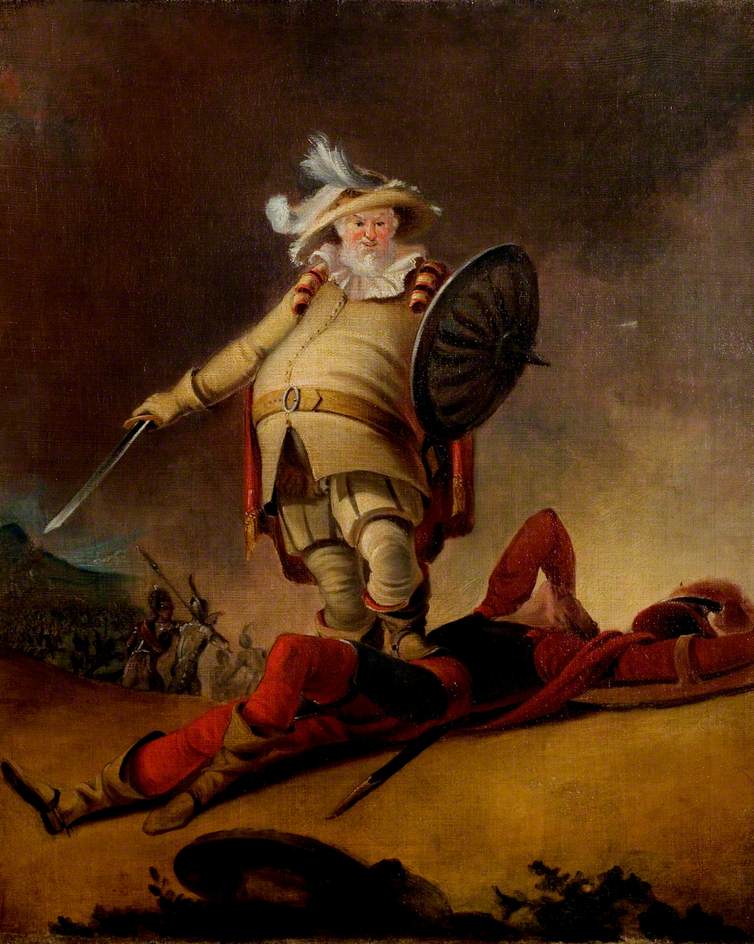
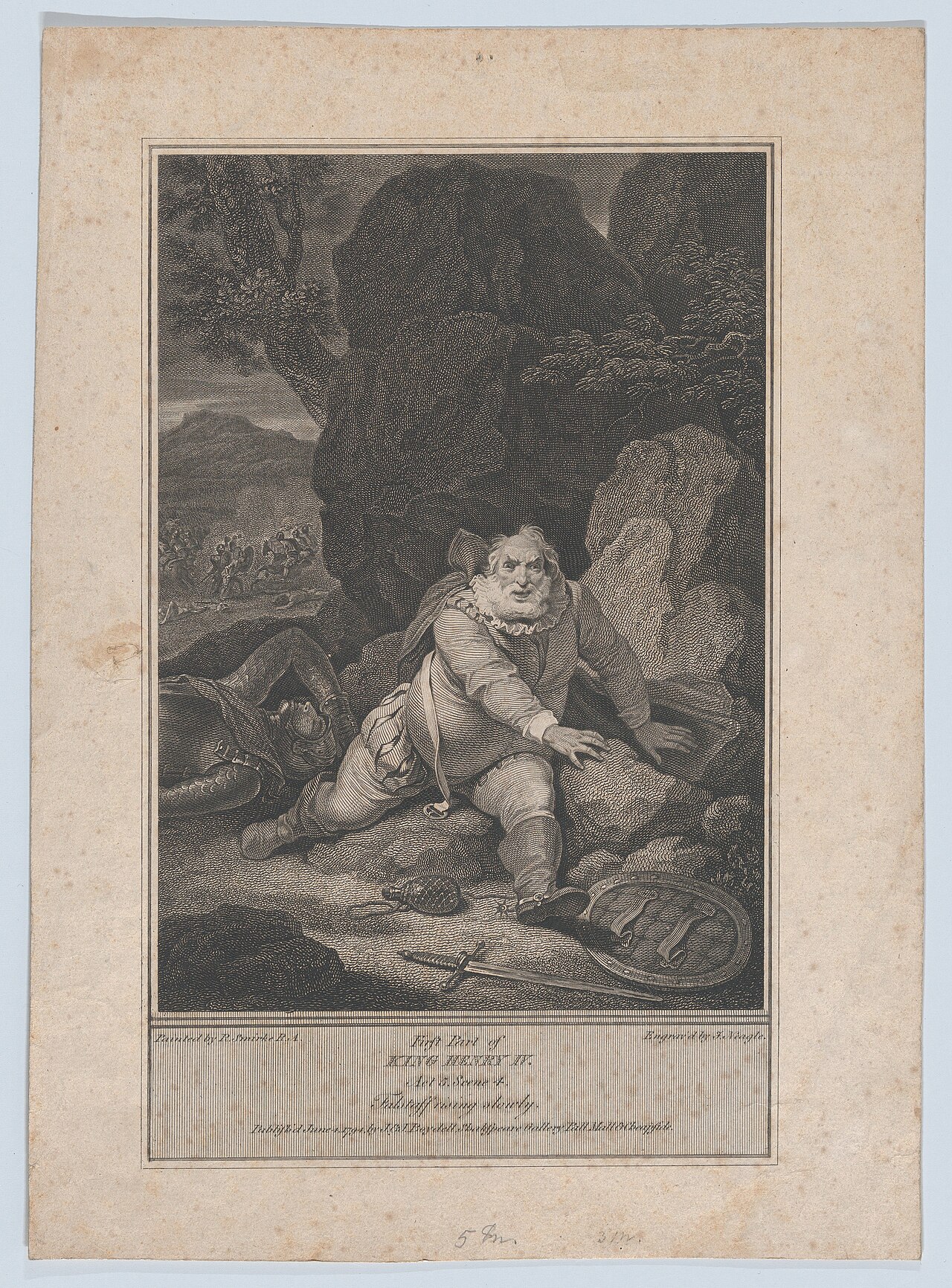
As the rebellion grows, Hal reconciles with his father and is given command of an army. He vows to kill Hotspur and orders Falstaff to recruit foot soldiers. Falstaff uses the job to take bribes from men who want to avoid service, and ends up with only the poorest recruits, whose pay he keeps. All sides meet at the Battle of Shrewsbury, a critical moment: if the rebels lose, they are finished; if they win or draw, they can call on reinforcements from Northumberland, Glendower, Mortimer, and the Archbishop of York. Though Henry has more men, Hotspur leads his army fiercely. During the battle, the king is chased by Douglas. Hal duels Hotspur and kills him, a key act of noble virtue. Falstaff, left alone, fakes death to avoid Douglas. After Hal leaves Hotspur’s body, Falstaff revives, stabs the corpse in the thigh, and claims the kill. Hal lets him take the credit. Falstaff then says he wants to reform and “live cleanly as a nobleman should do.”
The play ends at Shrewsbury after the battle. Hotspur’s death is a heavy blow to the rebels. King Henry is pleased, especially because he can execute Thomas Percy, a former friend turned enemy. Hal shows mercy by freeing the captured Douglas without ransom. Still, the rebellion continues.
- Type
- Play
- Author
- William Shakespeare
- Composition Period
- Mid-1590s
- Setting
- England, early 1400s
- Genre
- History play
- Notable Character
- Sir John Falstaff
Lore & Background
The play follows three groups of characters who initially interact only indirectly. These groups grow closer as the play progresses, coming together at the climax during the Battle of Shrewsbury. The first is centred around King Henry IV and his immediate council, who contrive to suppress a growing rebellion. The second is the group of rebel lords, led by Thomas Percy, Earl of Worcester, and including his brother, the Earl of Northumberland, and energetic nephew, Harry Percy ("Hotspur"). The Scottish Earl of Douglas, the Welshman Owen Glendower, and Edmund Mortimer also join. The third group, the comic centre of the play, consists of the young Prince Hal (King Henry's eldest son) and his companions, Falstaff, Poins, Bardolph, and Peto. From the play's outset, Henry IV's reign is beset by problems: His personal disquiet at having usurped the throne from Richard II would be solved by a crusade to the Holy Land, but trouble on his borders with Scotland and Wales make such an act impossible. Moreover, he is increasingly at odds with the Percy family, who helped him to his throne, and with Edmund Mortimer, Richard II's chosen heir. King Henry is also troubled by the behaviour of his eldest son and heir, Hal (the future Henry V). Hal spends little time in the royal court, preferring instead to drink in taverns with lowborn and dishonourable companions. This makes him an object of scorn to the nobles and jeopardises his legitimacy as heir; early in the play, King Henry laments that he can "See riot and dishonour stain the brow of young Harry." Hal's chief friend is Sir John Falstaff, a cowardly, drunken, but quick-witted knight whose charisma and zest for life captivate the Prince.
Reader's Guide
Henry IV, Part 1 is the first of Shakespeare's two history plays that deal with the reign of Henry IV (the other being Henry IV, Part 2), and the second play in the Henriad, a modern designation for the tetralogy of plays that deal with the successive reigns of Richard II, Henry IV, and Henry V. At its first publication in 1597 or 1598, the play was titled The History of Henrie the Fourth, and its title page advertised only the presence of Henry Percy and the comic Sir John Falstaff; Prince Hal was not mentioned. Indeed, throughout most of the play's performance history, Hal has been staged as a secondary figure, and popular actors, beginning with James Quin and David Garrick, often preferred to play Hotspur. It was only in the twentieth century that readers and performers began to see the central interest as the coming-of-age story of Hal, who is now seen as the starring role. The play's enduring popularity stems from its combination of political drama and comic scenes, its treatment of leadership and public identity, and the charismatic figure of Falstaff. The Dering Manuscript, the earliest extant manuscript text of any Shakespeare play, provides a single-play version of both Part 1 and Part 2 of Henry IV, though scholarly consensus views it as a later redaction.
Did You Know?
- The earliest recorded performance of Henry IV, Part 1 occurred on the afternoon of 6 March 1600, when the play was acted at court before the Flemish Ambassador.
- The play was entered into the Register of the Stationers Company on 25 Feb. 1598 and first printed in quarto later that year by stationer Andrew Wise.
- The Dering Manuscript, the earliest extant manuscript text of any Shakespeare play, provides a single-play version of both Part 1 and Part 2 of Henry IV.
- At its first publication, the play was titled The History of Henrie the Fourth, and its title page advertised only the presence of Henry Percy and the comic Sir John Falstaff; Prince Hal was not mentioned.
- Shakespeare's primary source for the play was the second edition (1587) of Raphael Holinshed's Chronicles.
Political Turmoil and the Question of Kingship
The play was composed in the later years of the reign of Elizabeth I, when questions of succession and political stability were prominent. Set in England in the early 1400s during the reign of Henry IV, the play depicts rebellion against the crown. From the play's outset, Henry IV's reign is beset by problems: His personal disquiet at having usurped the throne from Richard II would be solved by a crusade to the Holy Land, but trouble on his borders with Scotland and Wales make such an act impossible. Moreover, he is increasingly at odds with the Percy family, who helped him to his throne, and with Edmund Mortimer, Richard II's chosen heir. In the first act, the political action of the play is set in motion. King Henry and Hotspur fall out after a disagreement over the treatment of hostages: Hotspur withholds, against the King's orders, hostages taken in recent action against the Scots at the Battle of Homildon Hill, while King Henry refuses to pay Owen Glendower (a Welsh rebel) the ransom for Hotspur's brother-in-law, Edmund Mortimer. This disagreement, and the King's harsh treatment of the House of Percy generally, drives them to ally with Welsh and Scot rebels, resolving to depose "this ingrate and cankered Bolingbroke." The play examines themes of leadership and the formation of the heir apparent.
The Prince and the Knight: Friendship as Performance
Prince Hal's relationship with Sir John Falstaff is central to the play. The young heir spends his evenings at the Boar's Head Tavern among lowborn companions, a habit that draws the contempt of the nobility and threatens his standing as heir to the throne. His father's grief is palpable when he laments that he can "See riot and dishonour stain the brow of young Harry." Yet Hal's attachment to Falstaff—cowardly, drunk, yet radiating wit and an irrepressible love of life—is neither simple indulgence nor mere rebellion. In a soliloquy, Hal makes it clear that he does not plan to continue in his present lifestyle forever: Hal aims to re-assume his high place in court by proving himself to his father. Indeed, Hal reasons that by suddenly changing his ways he will be even more popular among the nobility than if he had behaved conventionally all his life. Even so, he is happy to carry out a plot against Falstaff: after performing a highway robbery, Hal and Poins will slip away from Falstaff, disguise themselves, and rob Falstaff, purely for the fun of hearing the older man lie about it later, after which Hal will return the stolen money. The plot is carried out successfully. When the moment comes at Shrewsbury to let Falstaff claim credit for Hotspur's death, Hal's generosity underscores a deeper truth: the prince is already performing the identity he intends to become.
Convergence at Shrewsbury
The play's architecture brings three initially separate worlds into a single, decisive collision. The king's council, the rebel lords under Hotspur, and the tavern company of Hal and Falstaff each orbit their own concerns until the Battle of Shrewsbury forces them into shared space. The stakes are existential: if the rebels are not defeated outright, they will gain a considerable advantage; other forces (under Northumberland, Glendower, Mortimer, and the Archbishop of York) can be called upon in the event of a stalemate or a victory for the rebels. Though Henry outnumbers the rebels, Hotspur, wild and skilled in battle, leads the opposing army personally. As the battle drags on, the king is hunted by Douglas. Prince Hal and Hotspur duel, and, in an important moment of noble virtue for the young prince, Hal prevails, killing Hotspur in single combat. Left on his own during Hal's battle with Hotspur, Falstaff dishonourably feigns death to avoid an attack by Douglas. After Hal leaves Hotspur's body on the field, Falstaff revives in a mock miracle. Seeing he is alone, he stabs Hotspur's corpse in the thigh and claims credit for the kill. Hal allows Falstaff to claim the honour of the kill. Soon after Hal's generous gesture, Falstaff states that he wants to amend his life and begin "to live cleanly as a nobleman should do." The play ends at Shrewsbury, after the battle. The loss of Hotspur and the fight has dealt a serious blow to the rebel cause. King Henry is pleased with the outcome, not least because it gives him a chance to execute Thomas Percy, the Earl of Worcester, one of his chief enemies (though previously one of his greatest friends). Meanwhile, Hal demonstrates his mercy by ordering Douglas—now a prisoner of war—to be released without ransom. However, the rebellion continues, now led by the Archbishop of York and the Earl of Northumberland. This inconclusive ending sets the stage for Henry IV, Part 2.
Enduring Stage Life and Source Material
Shakespeare's chronicle play achieved remarkable popularity during his own lifetime, a fact attested by the multiple early printings it received, the first appearing in quarto form in 1598. The character of Falstaff proved especially magnetic to audiences, and the play's blend of grave political intrigue with robust comic scenes has kept it among the most frequently performed works in the Shakespearean canon. Critics and audiences alike have long noted how the drama treats leadership, public identity, and the gap between a man's private self and his political role. In terms of textual origins, Shakespeare drew primarily on the 1587 second edition of Raphael Holinshed's Chronicles, which itself drew upon Edward Hall's The Union of the Two Illustrious Families of Lancaster and York. Scholars also believe Shakespeare was acquainted with Samuel Daniel's verse treatment of the same historical period. The play's deliberately open conclusion—rebellion still smouldering under the Archbishop of York and Northumberland—was designed to feed directly into the sequel, Henry IV, Part 2, creating a two-part narrative arc that was unusual for the stage of the time.
Gallery
Frequently Asked Questions
What is Henry IV, Part 1?
It is a history play by William Shakespeare, set in early-15th-century England under King Henry IV's rule. The drama weaves together a baronial rebellion and the transformation of Prince Hal from a carefree youth into a credible heir to the throne.
What is Henry IV, Part 1 about?
King Henry IV struggles to hold his crown against Hotspur and the Percy faction while his son, Prince Hal, swings between tavern debauchery and battlefield heroism. The play interrogates what true honor, legitimate authority, and a fit successor actually look like.
How does Henry IV, Part 1 end?
Prince Hal kills Hotspur in single combat at the Battle of Shrewsbury, cementing his reputation as a warrior, but the broader revolt is not fully quelled because Northumberland and other rebels slip away. The curtain falls with Henry IV still on the throne and the unrest unresolved, pointing directly toward Part 2.
Why is Henry IV, Part 1 important in Shakespeare's canon?
It serves as the crucial bridge between Richard II and Henry V, giving audiences the full arc of how a wayward prince becomes a king. The play is also among the most frequently staged of Shakespeare's histories and remains a go-to text for exploring father-son conflict, political legitimacy, and the cost of rebellion.
More in Plays & Drama 1-18
Spotted an error? Know more?
This is a living reference — every entry is fact-audited, and reader corrections feed straight into our audit queue. Suggest an edit · See this site's audit record