Chubby Checker
Singer and dancer who popularized the Twist.

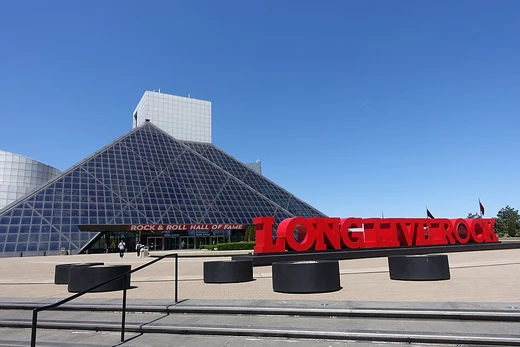
Chubby Checker, born Ernest Evans on October 3, 1941, in Spring Gully, South Carolina, was raised in the projects of South Philadelphia with his parents and two brothers. By age eleven, he had formed a street-corner harmony group, and later learned piano at Settlement Music School. At South Philadelphia High School, he entertained classmates with vocal impressions of Jerry Lee Lewis, Elvis Presley, and Fats Domino, and was a classmate of future pop star Fabian Forte. After school, he worked at Fresh Farm Poultry and the Produce Market, where his boss Anthony Tambone nicknamed him "Chubby." The poultry owner, Henry Colt, arranged for him to record privately for Dick Clark; Clark’s wife suggested the stage name "Chubby Checker" as a nod to Fats Domino. In December 1958, Checker recorded a novelty single for Clark, "The Class," which featured impressions of multiple performers singing "Mary Had a Little Lamb." The song became his first release, charting at No. 38 in spring 1959. At age eighteen, in July 1960, he introduced his version of "The Twist" in Wildwood, New Jersey. The song topped the Billboard Hot 100 twice—first in 1960 driven by teens, and again in late 1961 after a performance on *The Ed Sullivan Show* reached over ten million viewers. Checker’s follow-up "Pony Time" became his second No. 1 single. "Let's Twist Again" won the 1962 Grammy for Best Rock and Roll Recording. He also popularized "Limbo Rock" by adding lyrics and the limbo dance to a previous instrumental hit, and introduced other dances like the Fly. His last top 40 hit came in 1965 with "Let's Do the Freddie." In September 2008, "The Twist" topped *Billboard*’s list of the most popular Hot 100 singles since 1960, a position it maintained in August 2013. Checker was inducted into the National Rhythm & Blues Hall of Fame in 2014 and selected for the Rock and Roll Hall of Fame in 2025.
- field
- Singer, dancer
- nationality
- American
- known_for
- Popularizing the Twist and other dance styles
Verified Timeline
Lore & Background
Chubby Checker, born Ernest Evans in 1941, is an American rock and roll singer and dancer who became a defining figure of early 1960s pop culture by popularizing a series of dance crazes. His appearance is not described in the source, but his defining characteristic is his role as a dance demonstrator and vocalist. His range of influence was national and international, with major hits in the United States and the United Kingdom. His habitat was the recording studio and television stage, particularly through frequent appearances on Dick Clark's *American Bandstand* and a landmark performance on *The Ed Sullivan Show* that reached over ten million viewers. His most significant defining characteristic is his association with "The Twist," a song he covered at age 18 in 1960 that topped the Billboard Hot 100 in two separate chart runs, first driven by teens and later by older audiences. This unprecedented double number-one ranking was aided by his live television exposure. He also popularized the Pony with "Pony Time," his second number-one single, and introduced other dances including the Fly, the Limbo (adding lyrics to an instrumental hit), and the Hucklebuck. His follow-up "Let's Twist Again" won a Grammy for Best Rock and Roll Recording in 1962. Despite his success, Checker later expressed frustration that "The Twist" overshadowed his broader talent as a nightclub performer. His hit-making career ended by 1965 due to changing public tastes from the British Invasion, though he continued touring in Europe. He was inducted into the National Rhythm & Blues Hall of Fame in 2014 and selected for the Rock and Roll Hall of Fame in 2025.
Reader's Guide
Chubby Checker’s career is defined by his role as a catalyst for dance crazes that swept early 1960s America. His 1960 cover of “The Twist,” originally an R&B song by Hank Ballard & The Midnighters, became a phenomenon after he introduced the dance at a New Jersey club. The single topped the Billboard Hot 100 twice—first driven by teenagers, then by older audiences after a performance on *The Ed Sullivan Show* seen by millions. This dual chart run was unprecedented for the era, and the song sold over 15 million copies by 1965. Checker followed with other dance-oriented hits, including “Pony Time” (his second number one), “Let’s Twist Again” (which won a Grammy for Best Rock and Roll Recording in 1962), and “Limbo Rock,” where he added lyrics and the limbo dance to an instrumental hit. He also introduced the Fly and the Hucklebuck to mainstream audiences. His work established the dance record as a commercial force, influencing pop music’s shift toward participatory, choreographed trends. In 2008 and again in 2013, “The Twist” was ranked by *Billboard* as the most popular single in Hot 100 history. Checker was inducted into the National Rhythm & Blues Hall of Fame in 2014 and selected for the Rock and Roll Hall of Fame in 2025. Though his hit-making run ended by 1965 due to the British Invasion, his legacy as a dance innovator remains central to the field of early rock and roll.
Did You Know?
- Chubby Checker entertained classmates with vocal impressions of Jerry Lee Lewis, Elvis Presley, and Fats Domino.
- In December 1958, Checker recorded a novelty single for Clark, "The Class," which became his first release, charting at No. 38 in August 1959.
- In the 1970s, Checker recorded a psychedelic album that flopped and later an album of re-creations of his hits.
Frequently Asked Questions
What other dances did Chubby Checker introduce?
Beyond the Twist, Checker brought the Pony, the Fly, and the Limbo into the national spotlight during his television appearances and live shows. These moves became part of the broader dance culture of the early 1960s.
Why is Chubby Checker considered a pioneer of rock & roll?
Checker bridged the gap between the music and the audience by making dancing a central part of the rock & roll experience. His energetic performances turned passive listening into a physical, participatory activity for millions of young fans.
More in Pioneers Of Rock & Roll 1-23
Related in Pioneers Of Rock & Roll
Links follow this subject's own source article.
Spotted an error? Know more?
This is a living reference — every entry is fact-audited, and reader corrections feed straight into our audit queue. Suggest an edit · See this site's audit record