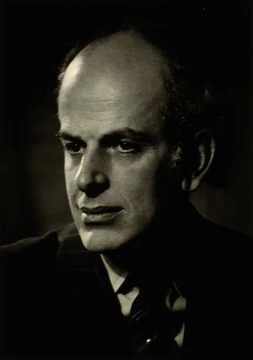
Katalin Karikó
Biochemist who enabled mRNA vaccines through discoveries on nucleoside modifications.

Katalin Karikó, a Hungarian-American biochemist, is known for her work on RNA-mediated mechanisms, particularly in vitro-transcribed messenger RNA for protein replacement therapy. Her research laid the scientific foundation for mRNA vaccines, which she pursued despite significant skepticism and institutional resistance. In 2023, she shared the Nobel Prize in Physiology or Medicine with American immunologist Drew Weissman.
Karikó co-founded RNARx and served as its CEO from 2006 to 2013. She then worked at BioNTech RNA Pharmaceuticals from 2013 to 2022, starting as a vice president and becoming senior vice president in 2019. She left BioNTech in 2022 to focus more on research. In 2021, she received an honorary doctorate from the University of Szeged in Hungary, where she later became a professor. Although she was also associated with the University of Pennsylvania, which would eventually benefit financially from her discovery, the university actively discouraged her mRNA research through underfunding and deprioritization. After being demoted in 1995, Karikó was never granted tenure, and the university declined to reinstate her before she joined BioNTech in 2013.
Her scientific work includes research on RNA-mediated immune activation, leading to the co-discovery with Weissman of nucleoside modifications that suppress RNA’s immunogenicity. This advance is considered a key contribution to the therapeutic use of mRNA. Together, they hold U.S. patents for non-immunogenic, nucleoside-modified RNA. This technology was licensed by BioNTech and Moderna for protein replacement therapies and later used in their COVID-19 vaccines.
The mRNA technology developed by Karikó, and the two highly effective vaccines based on it—BioNTech/Pfizer and Moderna—became central to the global fight against SARS-CoV-2 and helped contain the COVID-19 pandemic. Alongside the Nobel, Karikó and Weissman received numerous other honors, including the Lasker–DeBakey Clinical Medical Research Award, Time Magazine’s Hero of the Year in 2021, and the Tang Prize Award in Biopharmaceutical Science in 2022.
Katalin Karikó was born in Szolnok, Hungary, and grew up in Kisújszállás, in a small home without running water, a refrigerator, or a television. Her father was a butcher, and her mother was a bookkeeper. Her father was punished for taking part in the 1956 revolt. She excelled in science early on, placing third in Hungary in a biology competition. A 2024 retrospective from the University of Szeged notes that her early passion for chemistry and biology was fostered through academic competitions, where she achieved top national rankings by eighth grade, a foundation seen as key to her later breakthroughs.
She earned a BSc in biology in 1978 and a PhD in biochemistry in 1982, both from the University of Szeged. She worked with Jenő Tomasz and continued postdoctoral research at the Institute of Biochemistry, Biological Research Centre (BRC) of Hungary. From 1978 to 1985, she was listed as an intelligence asset by the Communist Hungarian secret police. Karikó says she was blackmailed into this out of fear for her career or reprisals against her father, and claims she never provided information or acted as an agent.
In 1985, her lab at the BRC lost funding, and she sought work abroad. After being offered a research position by Robert J. Suhadolnik at Temple University, she left Hungary for the United States with her husband and two-year-old daughter, carrying her daughter’s teddy bear stuffed with £900 from selling their car and exchanging currency on the black market.
From 1985 to 1988, Karikó was a postdoctoral fellow at Temple University in Philadelphia. She participated in a clinical trial treating patients with AIDS, hematologic diseases, and chronic fatigue syndrome with double-stranded RNA. This was considered groundbreaking, as the molecular mechanism of interferon induction by dsRNA was unknown, though the antiviral and antineoplastic effects of interferons were well-documented.
In 1988, she accepted a job at Johns Hopkins University without first informing Suhadolnik of her departure, as recounted in Gregory Zuckerman’s 2021 book *A Shot to Save the World*. Suhadolnik told her he would have her deported and reported her to U.S. immigration authorities, claiming she was illegally in the country. While she successfully challenged the resulting extradition order, Johns Hopkins withdrew the job offer. Suhadolnik continued to speak negatively about her, making it difficult to find another position, until she met a researcher at Bethesda Naval Hospital who had his own difficult history with Suhadolnik. Karikó later confirmed the incident but emphasized her gratitude to Suhadolnik for the opportunity to work in his lab and for the science she learned from him. From 1988 to 1989, she worked at the Uniformed Services University of the Health Sciences in Bethesda, Maryland, studying signal protein interferons. In 1989, she was hired by the University of Pennsylvania.
- field
- Biochemistry
- nationality
- Hungarian and American
- known_for
- Nucleoside modifications that suppress immunogenicity of RNA; foundational work
Verified Timeline
Lore & Background
Katalin Karikó was born in Szolnok and grew up in Kisújszállás, Hungary, in a small home without running water, a refrigerator, or television. Her father was a butcher and her mother a bookkeeper. She excelled in science, earning third place in Hungary in a biology competition.
Reader's Guide
Katalin Karikó's significance lies in her foundational work that enabled the development of mRNA vaccines. This technology was licensed by BioNTech and Moderna for protein replacement and COVID-19 vaccines. The two most effective vaccines based on her work—BioNTech/Pfizer and Moderna—contributed significantly to containing the COVID-19 pandemic. Despite facing institutional discouragement, underfunding, and demotion at the University of Pennsylvania, Karikó persisted, eventually receiving the Nobel Prize in 2023. Her career illustrates how perseverance in the face of skepticism can yield transformative medical advances. Her work also highlights the importance of basic research in RNA biology, which ultimately saved millions of lives globally.
Did You Know?
- Katalin Karikó earned third place in Hungary in a biology competition as a student.
- Karikó received the Nobel Prize in Physiology or Medicine in 2023 along with Drew Weissman.
- Her discovery of nucleoside modifications to suppress RNA immunogenicity enabled the development of mRNA vaccines.
- The technology she helped develop was licensed by BioNTech and Moderna for COVID-19 vaccines.
More in Pioneers Of Modern Medicine 1-19
Spotted an error? Know more?
This is a living reference — every entry is fact-audited, and reader corrections feed straight into our audit queue. Suggest an edit · See this site's audit record