Peter Piot
Microbiologist who co-discovered Ebola and led AIDS research.

Unknown author · Public domain
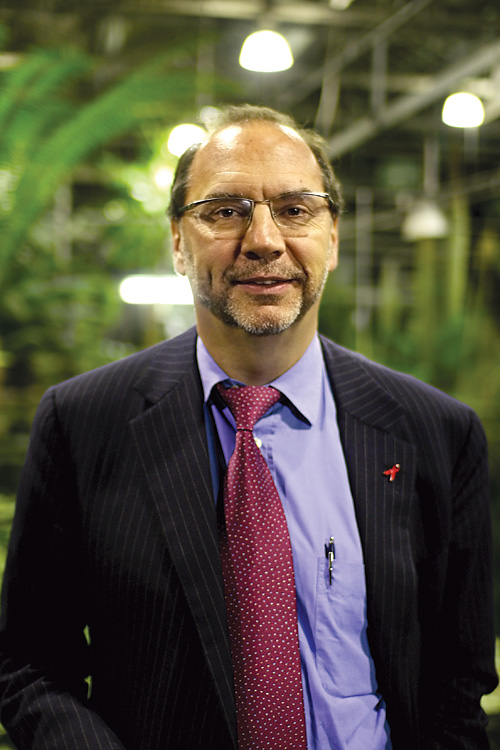
Sir Peter Karel, Baron Piot (born 17 February 1949) is a Belgian-British microbiologist whose work focused on Ebola and AIDS. In 1976, he was part of the team that identified the Ebola virus and helped stop the first known Ebola outbreak. He later became a leading figure in AIDS research. Over his career, Piot held senior roles at the United Nations and the World Health Organization, overseeing AIDS research and management, and taught at universities around the world. He has written 16 books and more than 600 scientific articles. Piot grew up in Keerbergen, Belgium, the oldest of three children. His father worked as a civil servant in agricultural exports, and his mother ran a construction company. He began studying physics at Ghent University’s School of Engineering and Physics before switching to medicine. While in medical school, he earned a Diploma in Tropical Medicine from the Institute of Tropical Medicine Antwerp. He received his MD from Ghent University in 1974 and a PhD in clinical microbiology from the University of Antwerp in 1980. In 1976, while at the Institute of Tropical Medicine, Piot was on a team that examined a blood sample from a sick nun in Zaire and found a virus similar to Marburg. He and colleagues then traveled to Zaire as part of an International Commission set up by the Zaire government to control the outbreak. The Commission discovered how the virus spread, moving from village to village to share information and quarantine the sick and their contacts. The epidemic was already fading when they arrived, thanks to local and national efforts, and ended after three months, killing nearly 300 people. The events were dramatised on BBC Radio 4 in December 2014, with Piot narrating. Most credit for discovering Ebola has gone to Piot, because in 1976 he was said to have received the blood samples in his Antwerp lab. The samples were reportedly sent by Dr. Jean-Jacques Muyembe-Tamfum, a Congolese doctor who collected them from patients with a mysterious illness in Zaire. In his 2012 memoir *No Time to Lose*, Piot mentions Muyembe only briefly, not as a co-discoverer. A 2016 article in the *Journal of Infectious Disease*, co-signed by most involved in the first outbreak—including Piot and Muyembe—refuted both men’s claims to a major role in the early discovery. Piot said in 2019 that his book was a personal account, not a history of Ebola. During the 1980s, Piot worked on collaborative projects in Burundi, Côte d'Ivoire, Kenya, Tanzania, and Zaire. Project SIDA in Kinshasa, Zaire, was the first international AIDS project in Africa and is widely seen as laying the groundwork for understanding HIV infection on the continent. He held professorships in microbiology and public health at the Prince Leopold Institute of Tropical Medicine in Antwerp, the University of Nairobi, Vrije Universiteit Brussel, and the University of Lausanne, and was a visiting professor at the London School of Economics. He also served as a senior fellow at the University of Washington, a scholar in residence at the Ford Foundation, and a senior fellow at the Bill & Melinda Gates Foundation. From 1991 to 1994, Piot was president of the International AIDS Society. In 1992, he became assistant director of the World Health Organization’s Global Programme on HIV/AIDS. On 12 December 1994, he was appointed executive director of the Joint United Nations Programme on HIV/AIDS (UNAIDS) and Assistant-Secretary-General of the United Nations. From 2009 to 2010, he directed the Institute for Global Health at Imperial College London. In October 2010, Piot became director of the London School of Hygiene & Tropical Medicine. He is a member of the U.S. Institute of Medicine, the Royal Academy of Medicine of Belgium, a Fellow of the Royal College of Physicians, and a Fellow of the Academy of Medical Sciences. In 2011, Amy Gutmann appointed him to the International Research Panel at the Presidential Commission for the Study of Bioethical Issues. During the 2014 Ebola epidemic in West Africa, Piot and other scientists called for emergency use of the experimental ZMapp vaccine before human clinical trials. That year, WHO Director General Margaret Chan appointed him to the Advisory Group on the Ebola Virus Disease Response, co-chaired by Sam Zaramba and David L. Heymann. He also chaired an independent panel convened by Harvard Global Health Institute and LSHTM that sharply criticised the WHO’s response and proposed ten reforms. In February 2020, he criticised the delay in declaring the COVID-19 outbreak a Public Health Emergency of International Concern and advocated for a five-point scale for outbreaks instead of the binary emergency/no-emergency system.
- born
- 17 February 1949
- field
- Microbiology
- nationality
- Belgian-British
- known_for
- Discovery of Ebola virus, AIDS research
Verified Timeline
Lore & Background
Piot was born in Keerbergen, Belgium, the oldest of two brothers and a sister. In 1976, while at the Institute of Tropical Medicine, he was part of a team that observed a Marburg-like virus in a blood sample from a sick nun in Zaire. He traveled to Zaire with an International Commission that made key discoveries about how the virus spread, helping to contain the outbreak that killed almost 300 people.
Reader's Guide
Peter Piot's significance lies in his dual role in the discovery of Ebola and his pioneering work on AIDS in Africa. He held key leadership positions, including executive director of UNAIDS and assistant director of the WHO's Global Programme on HIV/AIDS. Later, as director of the London School of Hygiene & Tropical Medicine, he criticized the WHO's response to the 2014 Ebola epidemic and advocated for changes in outbreak alert systems. His career reflects the evolution of global health responses to emerging infectious diseases.
Did You Know?
- Piot was ennobled with the title of Baron for life in the Nobility of Belgium by King Albert II in 1995.
- He is fluent in English, French, and Dutch.
- In May 2020, Piot disclosed that he had had COVID-19.
- He was appointed to the European Commission's advisory panel on COVID-19 in 2020.
Gallery
Frequently Asked Questions
Who is Peter Piot?
Sir Peter Karel, Baron Piot is a Belgian-British microbiologist born in February 1949 who became a leading global figure in the study of viral diseases, especially Ebola and HIV/AIDS. He has held senior roles in international health organizations and taught at multiple universities around the world.
What did Peter Piot discover?
In 1976 he was part of the research team that first identified the Ebola virus in the Democratic Republic of the Congo. He then helped coordinate the response to what became the very first documented Ebola outbreak.
What was Peter Piot's role in the AIDS fight?
After his early Ebola work, he shifted his focus to HIV and took on senior leadership positions within the United Nations and the World Health Organization. In those roles he helped shape global strategies for AIDS research, prevention, and treatment access.
What is Peter Piot's nationality and background?
He holds dual Belgian-British citizenship and was born in Belgium on 17 February 1949. His academic and professional career has spanned multiple countries, with professorships at several universities worldwide.
Why is Peter Piot considered a pioneer in medicine?
He sits at the intersection of two of the twentieth century's most devastating viral crises, having helped identify Ebola and then directed the international scientific response to AIDS. That combination of frontline discovery and large-scale public-health leadership makes him a defining figure in modern infectious-disease science.
More in Pioneers In Medicine And Physiology 1-19
Related in Pioneers In Medicine And Physiology
Links follow this subject's own source article.
Spotted an error? Know more?
This is a living reference — every entry is fact-audited, and reader corrections feed straight into our audit queue. Suggest an edit · See this site's audit record