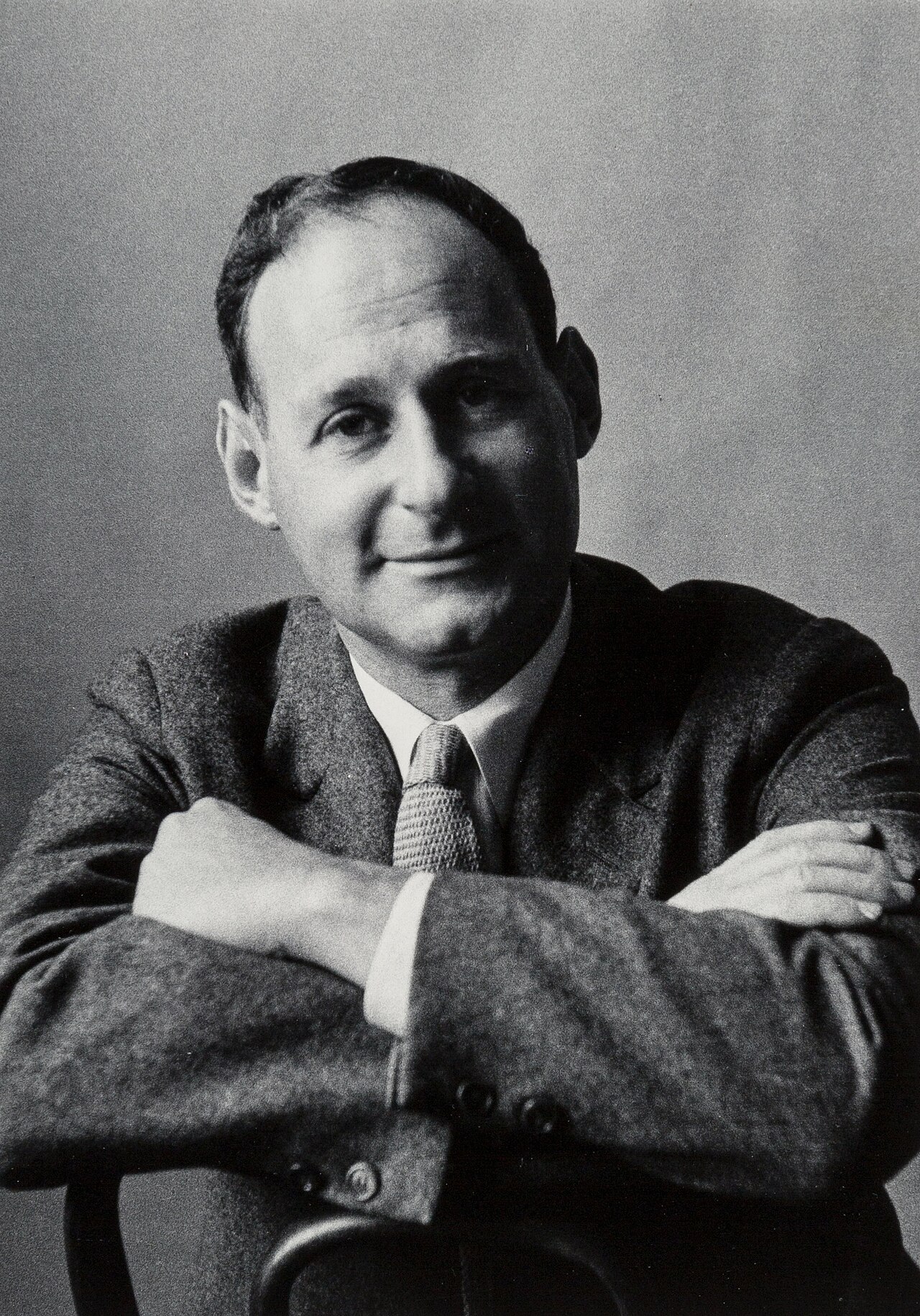
Irving Penn
American photographer known for fashion, portraits, and still lifes.

via Wikipedia: Irving Penn · see source
Irving Penn (June 16, 1917 – October 7, 2009) was an American photographer celebrated for his fashion work, portraiture, and still lifes. He spent much of his career at *Vogue* and also took on independent advertising assignments for brands like Issey Miyake and Clinique. His photographs have been shown around the world and continue to influence photography as an art form.
Penn was born in Plainfield, New Jersey, to Harry Penn and Sonia Greenberg, a Russian Jewish family. His younger brother, Arthur Penn, born in 1922, became a noted film director and producer. Penn studied graphic design under Leon Friend at Abraham Lincoln High School. In 1938, he earned a diploma from the Pennsylvania Museum School of Industrial Art (now the University of the Arts), where he studied drawing, painting, graphics, and industrial arts under Alexey Brodovitch. While still a student, he worked for Brodovitch at *Harper’s Bazaar*, which published several of his drawings.
After school, Penn worked as a freelance designer for three years and took his first amateur photographs. In 1940, he took over Brodovitch’s former role as art director at Saks Fifth Avenue. He stayed for a year, then left to spend a year painting and photographing in Mexico and across the United States. Upon returning to New York, Alexander Liberman hired him as an associate in *Vogue*’s Art Department. Penn worked on layouts until Liberman asked him to try photography. His first photographic cover for *Vogue* appeared in October 1943. He was offered a job as an “artist-photographer” with the Office of War Information in London, but instead volunteered with the American Field Service. In November 1944, he arrived in Naples with American troops and drove an ambulance for the British Eighth Army through a harsh winter in the Italian Apennines. In July 1945, he was transferred to India, where he photographed soldiers, medical operations, and camp life for the AFS, as well as various subjects while stationed there. He returned to New York in November 1945.
Penn remained at *Vogue* for the rest of his career, shooting covers, portraits, still lifes, fashion, and photographic essays. In the 1950s, he opened his own New York studio and began making advertising photographs. His client list eventually included General Foods, De Beers, Issey Miyake, and Clinique. He married his first wife, Nonny Gardner from England, in 1940; they had met as students at the Pennsylvania Museum School of Industrial Art. They divorced in 1943. In 1947, Penn met Swedish fashion model Lisa Fonssagrives at a photo shoot. They married in 1950 at Chelsea Register Office, and their son, Tom Penn, was born two years later. Tom became a metal designer. Lisa died in 1992. Penn died at age 92 on October 7, 2009, at his Manhattan home.
Though best known for fashion photography, Penn’s work also included portraits of creative figures, ethnographic photographs from around the world, Modernist still lifes of food, bones, bottles, metal, and found objects, and photographic travel essays. He was one of the first photographers to pose subjects against a simple gray or white backdrop, using that starkness to his advantage. During his early years as *Vogue*’s art director, he developed a bold graphic style that complemented his chic images and embodied modern taste. His use of black, white, or gray backgrounds gave him full control over natural light and heightened the visual simplicity of his pictures. At a time when elaborate artificial lighting was standard, his approach stood out and influenced later fashion photography. He also built a set of upright angled backdrops to create a sharp, acute corner, using this setup for portraits of subjects including John Hersey, Martha Graham, Marcel Duchamp, Pablo Picasso, Georgia O’Keeffe, W. H. Auden, and Igor Stravinsky.
Starting in 1964, Penn experimented with platinum printing. Until then, his photographs were mostly seen in reproduction in magazines and in his 1960 book *Moments Preserved*. He wanted to create prints that surpassed the limits of reprographic media and offered a richer visual experience. He was drawn to the old platinum process for its long grayscale—its ability to show a vast range of gradations between pure white and absolute black. Because platinum printing requires direct contact with the negative without enlargement, Penn first had to make flawless negatives the same size as the final print. He hand-coated paper with platinum emulsion, let it dry, then sandwiched it with the negative and exposed it to light before processing. Through careful experimentation, he found that recoating a print with a second emulsion and making a second or third exposure on the same sheet produced greater depth and subtlety. To align the negative and print surface over multiple exposures, he borrowed a technique from graphic arts: mounting the paper on an aluminum sheet with registration guides along the top edge. Penn kept his emulsion formulas secret, and his precise mixtures varied, often including palladium and iron salts to achieve specific effects.
His still life compositions are sparse and highly organized.
- born
- June 16, 1917, Plainfield, New Jersey
- died
- October 7, 2009, Manhattan, New York
- field
- Photography
- nationality
- American
- known_for
- Fashion photography, portraits, still lifes, platinum printing
Verified Timeline
Lore & Background
Irving Penn was born to a Russian Jewish family on June 16, 1917, in Plainfield, New Jersey, to Harry Penn and Sonia Greenberg. His younger brother, Arthur Penn, born in 1922, became a film director and producer. Penn attended Abraham Lincoln High School where he studied graphic design with Leon Friend. He earned a diploma in 1938 from the Pennsylvania Museum School of Industrial Art, where he studied drawing, painting, graphics, and industrial arts under Alexey Brodovitch. While still a student, Penn worked under Brodovitch at Harper's Bazaar, which published several of Penn's drawings. Penn worked as a freelance designer for three years, taking his first amateur photographs before assuming Brodovitch's position as art director at Saks Fifth Avenue in 1940. He remained there for a year before leaving to spend a year painting and taking photographs in Mexico and across the US. When Penn returned to New York, Alexander Liberman offered him a position as an associate in Vogue magazine's Art Department. Penn worked on layout before Liberman asked him to try photography. His first photographic cover for Vogue appeared in October 1943. During World War II, he volunteered with the American Field Service, driving an ambulance in support of the British Eighth Army in Italy, and later photographed soldiers, medical operations, and camp life for the AFS while bivouacked in India. He sailed back to New York in November 1945. Penn continued to work at Vogue throughout his career, photographing covers, portraits, still lifes, fashion, and photographic essays. In the 1950s, he founded his own studio in New York and began making advertising photographs. His clients grew to include General Foods, De Beers, Issey Miyake, and Clinique. Penn met his first wife, Nonny Gardner from England, while both were students at the Pennsylvania Museum School of Industrial Art; they married in 1940 and divorced in 1943. Penn met Swedish fashion model Lisa Fonssagrives at a photo shoot in 1947. In 1950, the two married at Chelsea Register Office, and two years later Lisa gave birth to their son, Tom Penn, who became a metal designer. Lisa Fonssagrives died in 1992. Penn died aged 92 on October 7, 2009 at his home in Manhattan.
Reader's Guide
Irving Penn's significance lies in his enduring influence on fashion photography and fine-art photography. He was among the earliest photographers to pose subjects against grey or white backdrops, using simplicity and monochromatic backgrounds to control natural lighting and enhance visual clarity. In an era when elaborate artificial lighting was the norm, his work stood out and influenced subsequent fashion photography. He also constructed a set of upright angled backdrops to form a stark, acute corner, used for portraits of subjects including John Hersey, Martha Graham, Marcel Duchamp, Pablo Picasso, Georgia O'Keeffe, W. H. Auden, and Igor Stravinsky. Beginning in 1964, Penn began experimenting with platinum printing, seeking to surpass the technical limitations of magazine reproduction. He hand-coated paper with platinum emulsion, used contact printing without enlargement, and developed techniques such as recoating a print with a secondary emulsion and making a second or third exposure on a single sheet to achieve greater depth and subtlety. He frequently introduced palladium and iron salts into his coatings. His still life compositions are sparse and highly organized, and his black-and-white prints are notable for deep contrast. Penn also ventured beyond creative boundaries with series such as Earthly Bodies, consisting of posed nudes taken in 1949 and 1950 but not exhibited until 1980. He continued to capture collections by favorite designers such as John Galliano for Dior, Karl Lagerfeld for Chanel, and Christian Lacroix for Vogue.
Did You Know?
- Penn's first photographic cover for Vogue appeared in October 1943.
- During World War II, Penn drove an ambulance in support of the British Eighth Army in Italy.
- Penn met his second wife, Swedish fashion model Lisa Fonssagrives, at a photo shoot in 1947.
- Beginning in 1964, Penn experimented with platinum printing, hand-coating paper with platinum emulsion.
- His series Earthly Bodies, consisting of posed nudes, was taken in 1949 and 1950 but not exhibited until 1980.
Gallery
Frequently Asked Questions
Who is Irving Penn?
Irving Penn was an American photographer who lived from 1917 to 2009. He built his reputation across fashion photography, portraiture, and still-life work.
What is Irving Penn most known for?
Penn is widely recognized for his fashion photography, striking portraits, and meticulously composed still lifes. He was also a noted practitioner of platinum printing as a fine-art medium.
Where was Irving Penn born and where did he pass away?
He was born in Plainfield, New Jersey, on June 16, 1917, and died in Manhattan, New York, on October 7, 2009.
What was Irving Penn's role at Vogue magazine?
Penn worked as a photographer for Vogue, producing iconic fashion imagery that helped define the publication's visual identity. Outside of Vogue he also handled independent advertising projects for brands such as Issey Miyake and Clinique.
Why is Irving Penn considered important to photography?
His clean, precise compositions and mastery of light set a benchmark that still shapes how photographers approach fashion, portraiture, and still-life work. His body of work has been shown in galleries worldwide and remains a touchstone for the craft.
More in Photographers 1-24
Spotted an error? Know more?
This is a living reference — every entry is fact-audited, and reader corrections feed straight into our audit queue. Suggest an edit · See this site's audit record