Edward S. Curtis
Photographer and ethnologist who documented Native American cultures.

via Wikipedia: Edward S. Curtis · see source
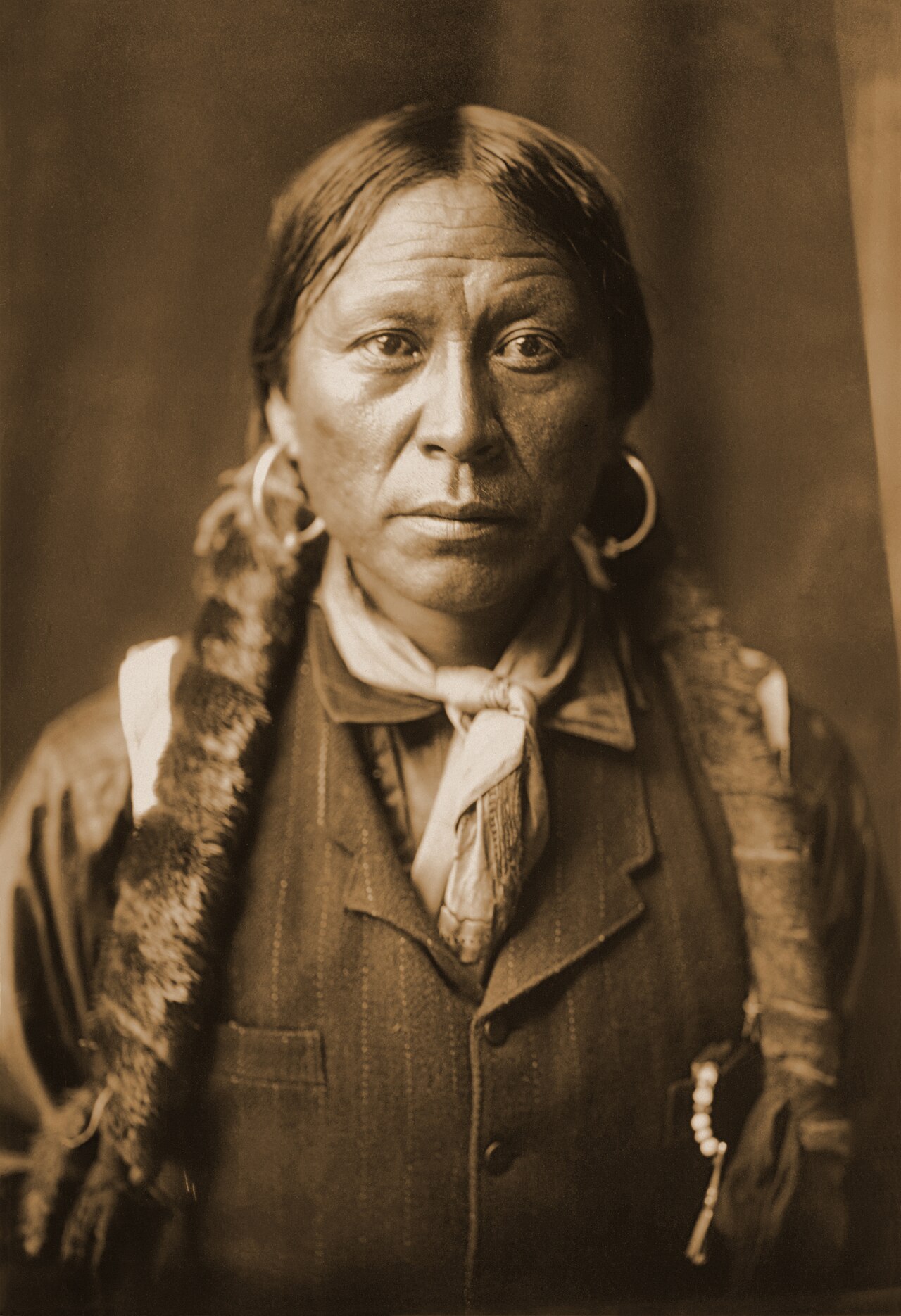
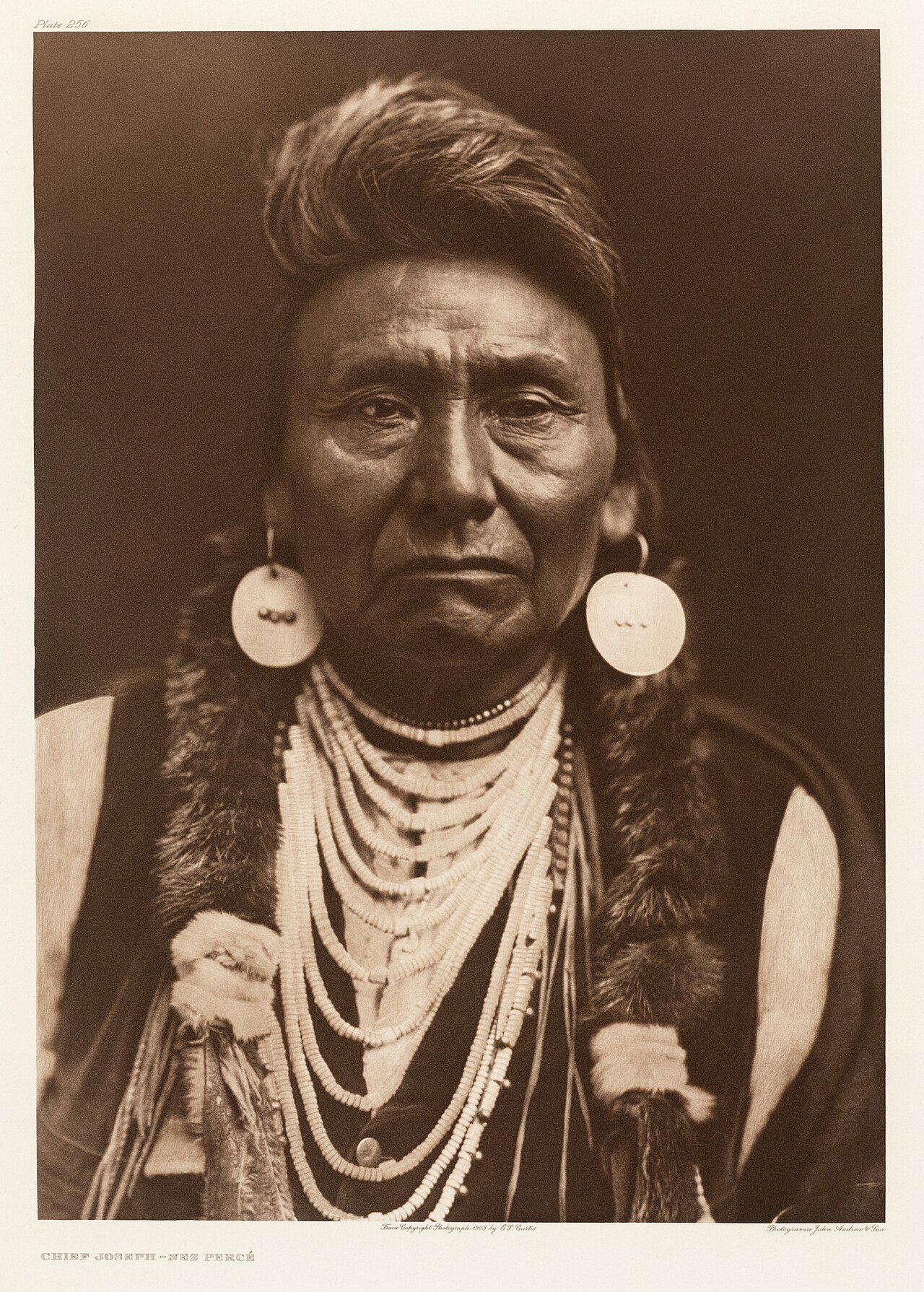
Edward Sheriff Curtis (February 19, 1868 – October 19, 1952), also known as Edward Sherriff Curtis, was an American photographer and ethnologist. He focused on the American West and Native American people, earning the nickname "Shadow Catcher" as he traveled across the United States to capture the fading traditions of various native tribes through both photographs and audio recordings.
Curtis was born on a farm in Cold Spring Township, north of Whitewater, Wisconsin. His father, Reverend Ashen "Johnson" Curtis, was a minister, farmer, and Civil War veteran from Ohio; his mother, Ellen Sheriff, was from Pennsylvania. He had siblings named Raphael (or Ray), Edward (or Eddy), Eva, and Asahel. Johnson Curtis struggled to manage the farm due to his war experiences, leaving the family in hardship. Around 1874, they moved to Minnesota to join Johnson's father, Asahel Curtis, who ran a grocery store and served as postmaster in Le Sueur County. Curtis left school after the sixth grade and soon built his own camera.
At 17, in 1885, Curtis apprenticed with a photographer in St. Paul, Minnesota. In 1887, his family relocated to Seattle, Washington, where he bought a new camera and partnered with Rasmus Rothi in an existing studio, paying $150 for a half share. After about six months, he left Rothi and formed a new partnership with Thomas Guptill, opening Curtis and Guptill, Photographers and Photoengravers. In 1895, he met and photographed Princess Angeline (Kickisomlo), daughter of Chief Seattle—his first portrait of a Native American. Three of his images were selected for a National Photographic Society exhibition in 1898: two of Princess Angeline ("The Mussel Gatherer" and "The Clam Digger") and one of Puget Sound ("Homeward"), which won the grand prize and a gold medal. That same year, while photographing Mount Rainier, he encountered a group of lost scientists, including George Bird Grinnell, a noted expert on Native Americans. This meeting likely led to Curtis being appointed official photographer for the Harriman Alaska Expedition of 1899. Despite little formal education, he learned much from lectures given aboard the ship each evening. Grinnell later invited Curtis to join an expedition to photograph the Blackfoot Confederacy in Montana in 1900.
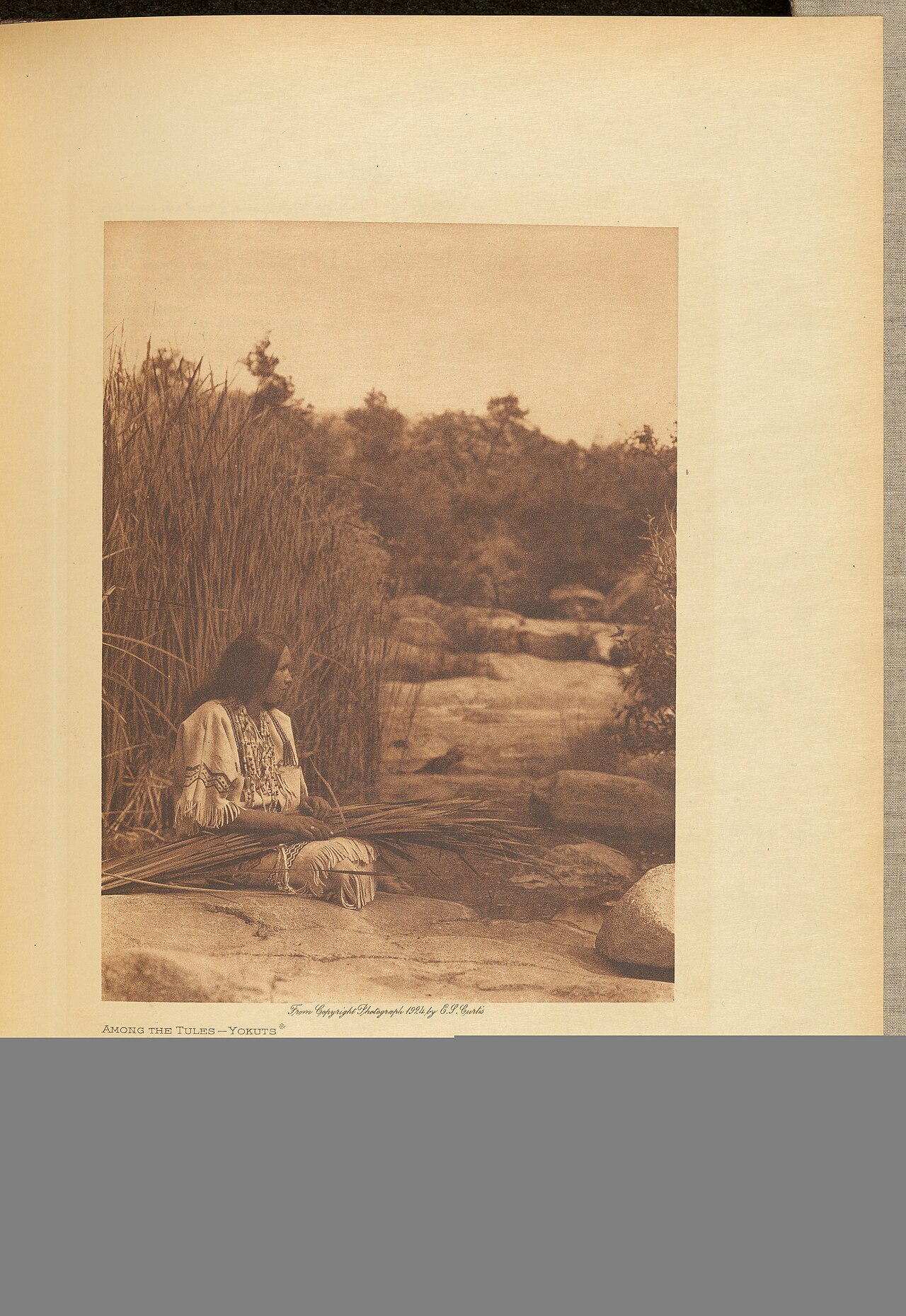
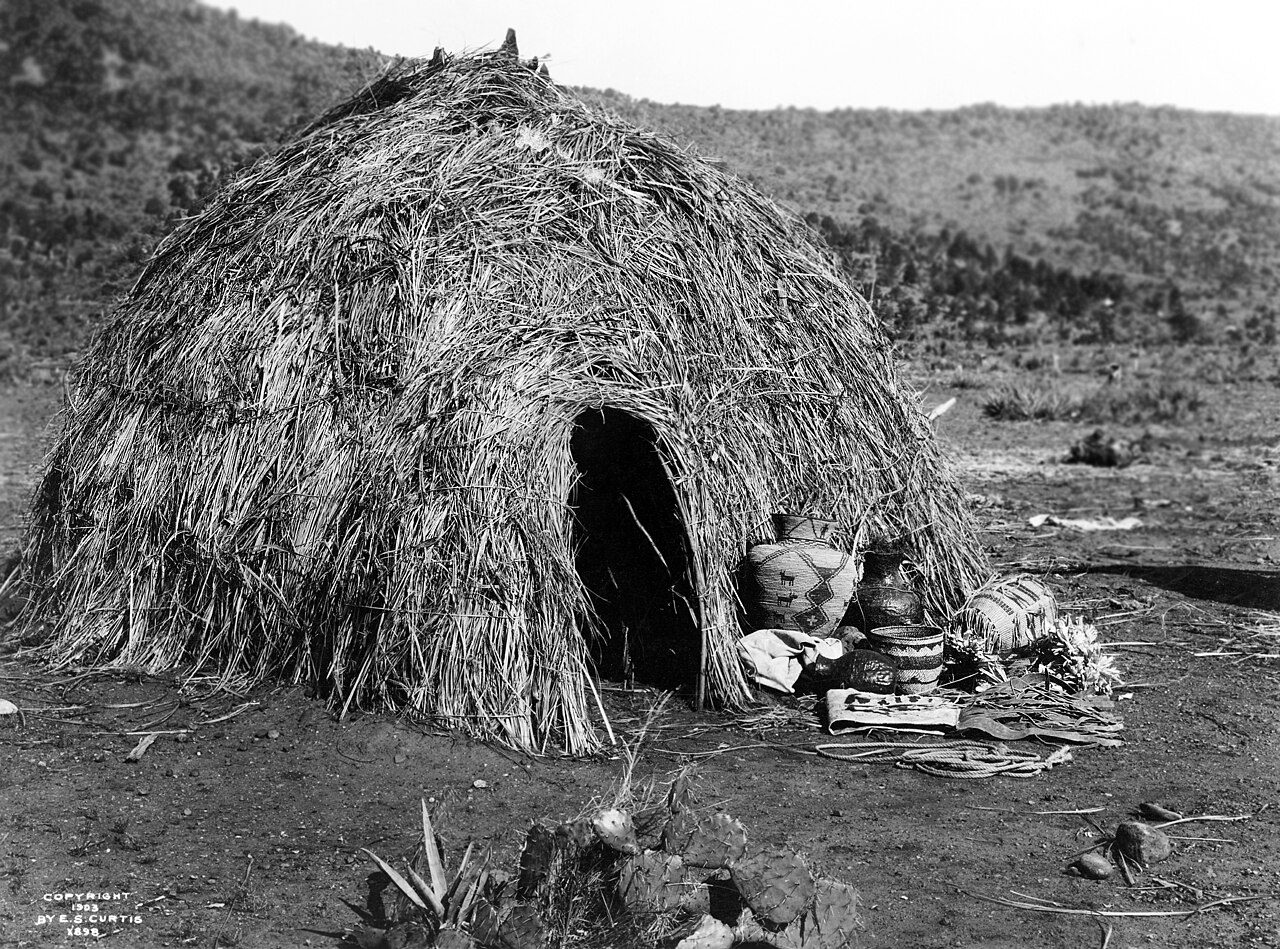
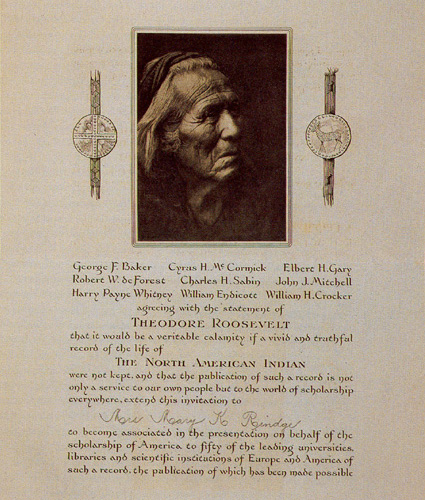
In 1906, after an introduction through Belle de Costa Greene, J. P. Morgan provided Curtis with $75,000 to produce a series on Native Americans, to be published in 20 volumes with 1,500 photographs. The funds were to be disbursed over five years and covered only fieldwork, not writing, editing, or production. Curtis received no salary for the project, which lasted over 20 years. Under the terms, Morgan would receive 25 sets and 500 original prints as repayment. Curtis hired several employees: former journalist William E. Myers for writing and language recording; University of Washington graduate Bill Phillips for logistics; Alexander B. Upshaw, a member of the Apsáalooke tribe, for fieldwork; and Smithsonian anthropologist Frederick Webb Hodge as editor. Eventually, 222 complete sets of photographs were published. Curtis aimed to document Native American life before colonization, writing in his first volume in 1907 that the information must be collected immediately or the opportunity would be lost. He made over 10,000 wax cylinder recordings of language and music, took over 40,000 photographs of members of over 80 tribes, recorded tribal lore and history, described traditional foods, housing, garments, recreation, ceremonies, and funeral customs, and wrote biographical sketches of tribal leaders. His work was exhibited at the Rencontres d'Arles festival in France in 1973.
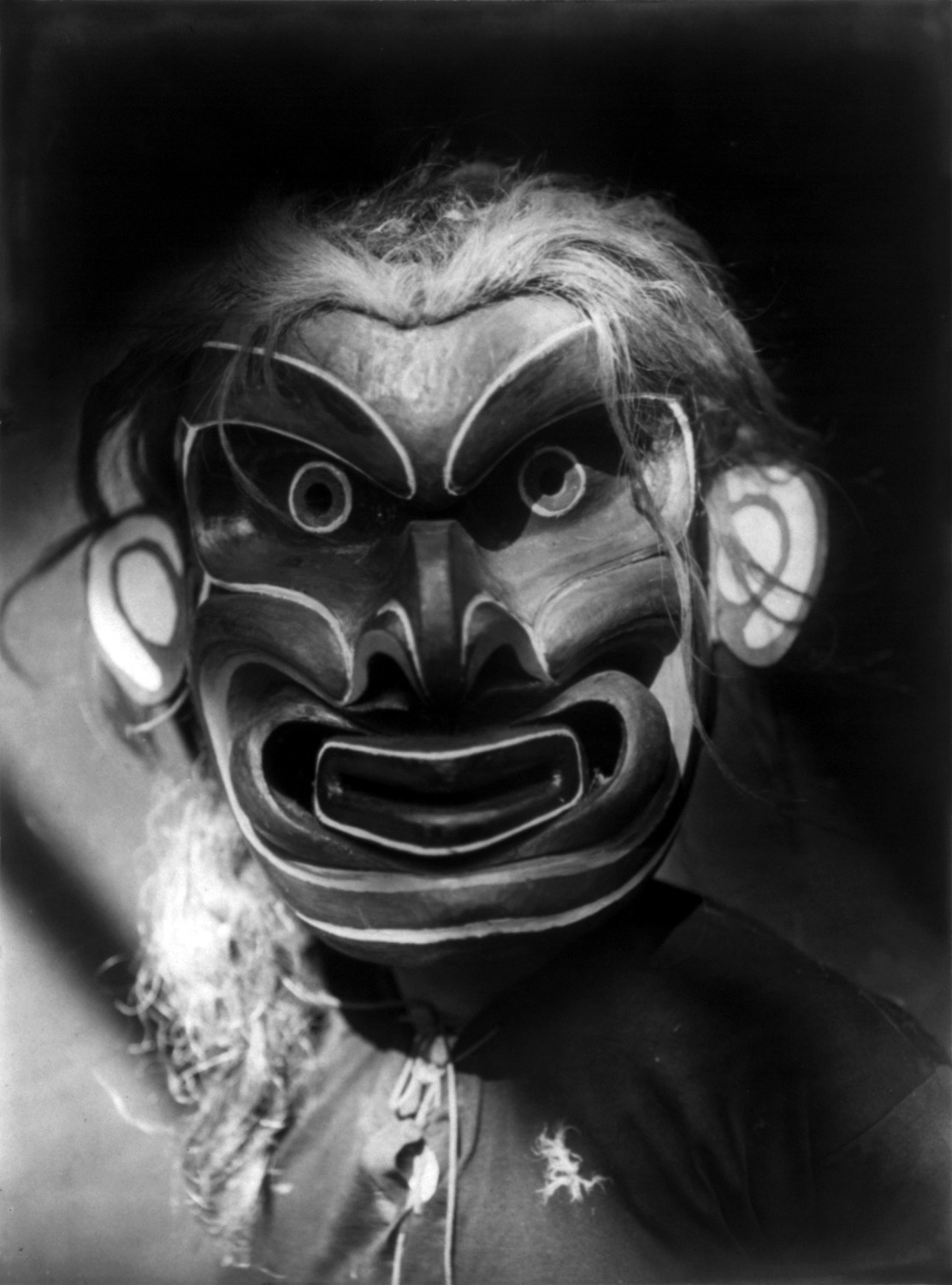
Curtis had been using motion picture cameras in fieldwork for *The North American Indian* since 1906. He worked extensively with ethnographer George Hunt in 1910, inspiring his work with the Kwakwakaʼwakw, though much of their collaboration remains unpublished. By the end of 1912, Curtis decided to create a feature film depicting Native American life, partly to improve his finances and partly because film technology had advanced enough for longer films. He chose the Kwakwakaʼwakw of the Queen Charlotte Strait region in British Columbia, Canada, as his subject. *In the Land of the Head Hunters* was the first feature-length film with an entirely Indigenous North American cast. It premiered simultaneously at the Casino Theatre in New York and the Moore Theatre in Seattle on December 7, 1914, with a score by John J. Braham.
- born
- February 19, 1868
- died
- October 19, 1952
- field
- Photography, ethnology
- nationality
- American
- known_for
- The North American Indian series, photographs and wax cylinder recordings of Nat
Verified Timeline
Lore & Background
Curtis was born on a farm in Cold Spring Township north of Whitewater, Wisconsin. He left school in the sixth grade and soon built his own camera. In 1885, at 17, he became an apprentice photographer in St. Paul, Minnesota. In 1887 the family moved to Seattle, Washington, where he purchased a new camera and became a partner with Rasmus Rothi in a photographic studio. After about six months he left Rothi and formed a new partnership with Thomas Guptill, establishing Curtis and Guptill, Photographers and Photoengravers. In 1895, Curtis met and photographed Princess Angeline, also known as Kickisomlo, the daughter of Chief Seattle—his first portrait of a Native American. In 1898, three of his images were chosen for an exhibition sponsored by the National Photographic Society; one, "Homeward", won the exhibition's grand prize and a gold medal. That same year, while photographing Mount Rainier, he met George Bird Grinnell, who invited him to photograph the Blackfoot Confederacy in Montana in 1900. In 1906, after seeking an introduction through Belle de Costa Greene, J. P. Morgan provided Curtis with $75,000 to produce a series on Native Americans in 20 volumes with 1,500 photographs. Curtis hired William E. Myers, Bill Phillips, Alexander B. Upshaw, and editor Frederick Webb Hodge. He made over 10,000 wax cylinder recordings of Native American language and music and took over 40,000 photographs of members of over 80 tribes. In 1914 he released the feature film *In the Land of the Head Hunters*, the first feature-length film whose cast was composed entirely of Indigenous North Americans. The film was praised by critics but made only $3,269.18 in its initial run. Curtis later sold the rights to the film to the American Museum of Natural History for $1,500. In 1928, desperate for cash, he sold the rights to his project to J. P. Morgan Jr. The concluding volume of *The North American Indian* was published in 1930. In 1935, the Morgan estate sold the rights and remaining unpublished material to the Charles E. Lauriat Company for $1,000.00 plus a percentage of future royalties. The material remained untouched in the Lauriat basement until rediscovered in 1972.
Reader's Guide
Edward S. Curtis's significance lies in his vast, systematic documentation of Native American cultures at a time when many traditional ways of life were disappearing. His work, *The North American Indian*, comprises 20 volumes with 1,500 photographs, along with over 10,000 wax cylinder recordings of language and music. He took over 40,000 photographs of members of over 80 tribes, recording tribal lore, history, traditional foods, housing, garments, recreation, ceremonies, and funeral customs, and wrote biographical sketches of tribal leaders. Though criticized by the ethnographic community for lack of authenticity in his film *In the Land of the Head Hunters*—the Kwakwakaʼwakw cast was dressed up by the director and the plot enriched with exaggerated elements—his archive remains an irreplaceable record. Curtis's work was exhibited at the Rencontres d'Arles festival in France in 1973. His project, though financially ruinous for him, endures as a vast visual and auditory chronicle of Indigenous North American life.
Did You Know?
- Curtis left school in the sixth grade and soon built his own camera.
- In 1898, his photograph 'Homeward' won the grand prize and a gold medal at a National Photographic Society exhibition.
- J. P. Morgan provided Curtis with $75,000 in 1906 to produce the 20-volume series *The North American Indian*.
- Curtis made over 10,000 wax cylinder recordings of Native American language and music.
- His film *In the Land of the Head Hunters* (1914) was the first feature-length film whose cast was composed entirely of Indigenous North Americans.
Gallery
Frequently Asked Questions
Who is Edward S. Curtis?
Edward S. Curtis was an American photographer and ethnologist born in 1868 who spent decades traveling across the western United States to document Native American tribes. He is best remembered for his sweeping visual and audio records of indigenous cultures that were rapidly changing in the early 1900s.
What is The North American Indian?
The North American Indian is a massive multi-volume photographic and ethnographic set that Curtis produced over roughly two decades. It captures the lives, ceremonies, and landscapes of more than 80 distinct tribes and stands as one of the most ambitious documentation projects of its era.
Who funded Edward S. Curtis's work?
The financier J. P. Morgan bankrolled Curtis's enormous publishing project, covering the costs of printing, binding, and distribution of The North American Indian. Morgan's patronage gave Curtis the resources to produce a work of unprecedented scale and quality.
Why was Edward S. Curtis called the 'Shadow Catcher'?
The nickname reflected his distinctive approach to natural-light photography, where he worked with the soft, directional light of the sun rather than artificial studio illumination. His ability to render delicate tonal gradations and atmospheric detail earned him that poetic moniker among contemporaries.
Did Edward S. Curtis record sound as well as images?
Yes—alongside his photographs, Curtis made wax cylinder recordings capturing the voices, songs, and spoken words of the people he photographed. These audio documents add a crucial aural layer to his visual archive and are now preserved in major collections.
More in Photographers 1-24
Spotted an error? Know more?
This is a living reference — every entry is fact-audited, and reader corrections feed straight into our audit queue. Suggest an edit · See this site's audit record