
Ancient philosophy
Ancient philosophy spans multiple cultures from the Axial Age to early medieval thought.

John Burnet (1863-1928) · Public domain
Ancient philosophy refers to the body of thought that developed up to around 600 CE, just before the early medieval period. Around the 7th to 3rd centuries BCE, many cultures independently produced original philosophical ideas—a period Karl Jaspers called the Axial Age. In the West, the rise of Christianity within the Roman Empire brought Hellenistic philosophy to a close and opened the door to medieval thought. Meanwhile, in the Middle East, the expansion of Islam across the Arab Empire ended Old Iranian philosophy and gave way to early Islamic philosophy.
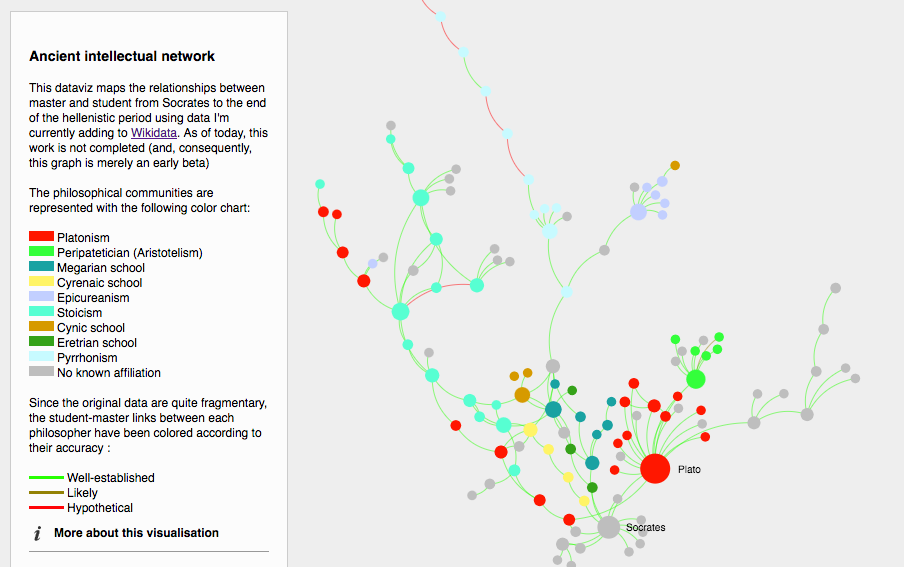
Ancient Greek and Roman philosophy includes a long list of thinkers and schools. The Pre-Socratics, such as Thales, Pythagoras, Heraclitus, and Democritus, came from various traditions like the Milesian, Pythagorean, Eleatic, and Atomist schools. The Sophists, including Protagoras and Gorgias, also flourished before Socrates. Classical Greek philosophers like Socrates, Plato, and Aristotle are central, along with their followers and contemporaries such as Euclid of Megara, Antisthenes, and Diogenes of Sinope. Hellenistic philosophy brought figures like Pyrrho, Epicurus, Zeno of Citium, and Chrysippus, and schools such as Stoicism, Epicureanism, Cynicism, and Skepticism. Roman-era thinkers include Cicero, Seneca, Epictetus, Marcus Aurelius, Plotinus, and Augustine of Hippo, among many others.
Ancient Iranian philosophy has deep roots in the Indo-Iranian tradition, with the Avesta and Vedas sharing ancient connections. Zoroastrian thought, attributed to Zarathustra, influenced early Persian philosophy, as seen in works like the Shikand-gumanic Vichar and the Gathas. Schools of thought include Zoroastrianism, Manichaeism (founded by Mani), Mazdakism, and Zurvanism. Political philosophy also emerged, with figures like Tansar and the University of Gundishapur playing roles in the empire.
Ancient Jewish philosophy includes texts and thinkers from the Hebrew Bible period onward. Works like Qohelet, Ben Sira, and the Wisdom of Solomon, along with philosophers such as Philo of Alexandria and Rabbi Akiva, represent this tradition.
Ancient Indian philosophy blends two ancient streams: the Vedic tradition and the śramaṇa tradition. Vedic philosophy begins with the Vedas, which explore questions about nature, the universe, and cosmic order.
- label_1
- Period
- label_2
- Key Regions
- value_2
- Greece, Rome, Iran, India, Judea
- label_3
- Major Schools (Greek)
- value_3
- Pre-Socratic, Classical Greek, Hellenistic (Stoicism, Epicureanism, Skepticism)
- label_4
- Major Schools (Indian)
- value_4
- Vedic, Sramana (Jainism, Buddhism), Classical Six Schools (Nyaya, Vaisheshika, Samkhya, Yoga, Mimamsa, Vedanta)
- label_5
- Major Schools (Iranian)
- value_5
- Zoroastrianism, Manichaeism, Mazdakism, Zurvanism
- label_6
- Key Figures
Lore & Background
Ancient Greek and Roman philosophy emerged from a broader global phenomenon where original philosophical thought arose in multiple cultures around the same time, a period Karl Jaspers called the Axial Age, beginning around the 7th century BCE and concluding around the 3rd century BCE. In the Greek tradition, early Pre-Socratic thinkers like Thales, Anaximander, and Pythagoras sought natural explanations for the cosmos, followed by the Classical figures Socrates, Plato, and Aristotle, whose works became foundational to Western thought. After Aristotle, Hellenistic schools such as Stoicism, Epicureanism, and Pyrrhonism developed, alongside Academic skepticism, Cynicism, Cyrenaicism, and Eclecticism. Roman-era philosophers including Cicero, Seneca, Epictetus, and Marcus Aurelius continued these traditions, while Neoplatonism, represented by Plotinus and Proclus, influenced early Christian thinkers like Augustine of Hippo. The spread of Christianity in the Roman Empire marked the end of Hellenistic philosophy and the beginning of medieval philosophy. In the Middle East, the spread of Islam through the Arab Empire ended Old Iranian philosophy, which included Zoroastrian schools of thought based on the teachings of Zarathustra, preserved in texts like the Avesta and Gathas, and later developments such as Manichaeism and Mazdakism. Ancient Jewish philosophy also contributed figures like Philo of Alexandria.
Reader's Guide
Ancient philosophy is significant for laying the foundations of systematic thought across multiple civilizations. The Axial Age (c. 7th–3rd century BCE) saw parallel developments in Greece, India, Iran, and Judea, each addressing fundamental questions about existence, ethics, and the cosmos. Greek philosophy introduced dialectic, metaphysics, and political theory, influencing later Western medieval and modern thought. Indian philosophy developed rigorous systems of logic, epistemology, and metaphysics, with schools like Nyaya and Vedanta continuing to shape Hindu and Buddhist traditions. Iranian philosophy contributed dualistic and eschatological ideas that influenced later religious movements. The spread of Christianity and Islam marked transitions from ancient to medieval philosophy, but the core questions and methods of ancient philosophy remain central to global intellectual history.
Did You Know?
- Karl Jaspers termed the period from around the 7th century BCE to the 3rd century BCE an Axial Age in human thought.
- The Rigvedic Hymn of Creation (Nasadiya Sukta) asks whether even the creator knows the origin of all creation.
- The Cyrus cylinder is often seen as a reflection of Zoroastrian ideas and is considered the first charter of human rights.
- The six schools of classical Indian philosophy are Nyaya, Vaisheshika, Samkhya, Yoga, Mimamsa, and Vedanta.
A Truly Global Intellectual Tradition
The list reveals philosophy as a genuinely worldwide intellectual enterprise rather than a single cultural export. Entries span the African continent with African philosophy and Ethiopian philosophy, the Americas with Aztec philosophy and Indigenous American philosophy, and the vast expanse of Asia through Chinese naturalism, Indian logic, Japanese philosophy, Korean philosophy, and Indonesian philosophy. European traditions appear in forms ranging from Greek philosophy and Hellenistic philosophy to German idealism, British idealism, and the distinct national traditions of Danish, Czech, and the Italian school. The Middle East and South Asia contribute Islamic philosophy, Jewish philosophy, and the rich tapestry of Hindu philosophy, Jainism, and Buddhist philosophy. Even regional and ethnic traditions find representation, from Ambedkarism and Gandhism to Afrocentrism and the Changzhou School of Thought. This breadth underscores that the impulse to question reality, ethics, and knowledge is not confined to any single civilization but emerges wherever human beings gather to think systematically about their existence.
The Boundless Scope of Philosophical Inquiry
What strikes the reader most immediately is how far the domain of philosophical inquiry extends. Beyond the familiar pillars of metaphysics, epistemology, and ethics, the list reaches into the philosophy of artificial intelligence, the philosophy of engineering, the philosophy of healthcare, and even the philosophy of eating and the philosophy of film. Questions about color, motion, chance, and love are treated as legitimate philosophical subjects alongside more traditional concerns like logic, dialectic, and axiology. The list also captures the philosophy of specific disciplines: mathematics, biology, economics, linguistics, information, and natural science each receive their own philosophical treatment. Applied ethics, medical ethics, and neuroethics show how normative reasoning intersects with practical domains. Meanwhile, meta-philosophy and meta-ethics remind us that philosophers also interrogate the very methods and frameworks they employ. This encyclopedic range demonstrates that philosophy functions less as a single discipline and more as a universal lens through which every field of human activity can be examined, challenged, and reinterpreted.
Schools, Lineages, and the Living Conversation
The list traces an unbroken chain of intellectual communities stretching from the earliest Greek schools to cutting-edge contemporary movements. Ancient foundations include the Milesian school, the Ionian school, the Eleatics, the Megarian school, the Ephesian school, and the Eretrian school, all of which established patterns of argument and inquiry that later traditions would inherit and transform. The Alexandrian school and the Cambridge Platonists represent subsequent waves of organized philosophical community. Moving forward, the Frankfurt School, the Lwów–Warsaw school, the Marburg school, the Budapest School, and the Kyoto school each represent distinct clusters of thinkers who shaped their eras. The list also captures the evolution of major traditions: Aristotelianism gives way to Neo-Scholasticism, German idealism evolves into Neo-Hegelianism, and classical Marxism branches into Marxism–Leninism, Maoism, and Neo-Marxism. Even ancient Indian traditions like Advaita Vedanta find modern echoes in Neo Vedanta, while Neopythagoreanism and Neostoicism show how older frameworks are periodically revived. This continuity reveals philosophy as a living conversation across millennia rather than a static collection of dead doctrines.
The Divine, the Self, and Ultimate Reality
A remarkable portion of the list is devoted to questions about ultimate reality, the divine, and the structure of existence. The theological spectrum is extraordinarily wide: from theism in forms like Agnostic theism and Deism, through the rich traditions of Christian philosophy, Islamic philosophy, Jewish philosophy, and Hindu philosophy, to the explicit denial of the divine in Atheism and Agnosticism. Metaphysical positions range from Monism and Dualistic cosmology to Materialism and Idealism, with intermediate stances like Anomalous monism, Epiphenomenalism, and Interactionism addressing the mind-body problem. Eastern traditions contribute distinctive frameworks: Advaita Vedanta, Dvaita, Dvaitadvaita, Achintya Bheda Abheda, and Ajātivāda each offer different answers to the nature of self and reality. Buddhist philosophy and Madhyamaka represent yet another axis of metaphysical inquiry. The list also includes Gnosticism, Neoplatonism, Kabbalah, Hermeticism, and Illuminationism, showing that speculative metaphysics has been a persistent human preoccupation across virtually every major religious and cultural tradition.
Gallery



Frequently Asked Questions
What is Ancient philosophy?
Ancient philosophy is the broad collection of philosophical thought that arose across multiple cultures from the early post-classical era and earlier. It covers traditions from Greece, Rome, Iran, India, and Judea, with Karl Jaspers identifying the intense burst of development between roughly the 7th and 3rd centuries BCE as the Axial Age.
What are the major Greek schools within Ancient philosophy?
The Greek tradition is typically divided into Pre-Socratic, Classical Greek, and Hellenistic phases. The Hellenistic period in particular gave rise to Stoicism, Epicureanism, and Skepticism, each offering distinct answers to questions about virtue, pleasure, and knowledge.
Which regions are central to Ancient philosophy?
Key regions include Greece, Rome, Iran, India, and Judea, reflecting the fact that philosophical inquiry arose nearly simultaneously in several civilizations. This multi-cultural scope is what distinguishes the field from a purely Western narrative.
What marks the end of Ancient philosophy?
In the Western tradition, the spread of Christianity through the Roman Empire effectively closed the Hellenistic era and ushered in medieval philosophy. In the Middle East, the rise of Islam across the Arab Empire similarly ended Old Iranian philosophy and opened a new intellectual chapter.
More in Philosophical Traditions 1-24
Spotted an error? Know more?
This is a living reference — every entry is fact-audited, and reader corrections feed straight into our audit queue. Suggest an edit · See this site's audit record