
Common sense
A shared capacity for sound judgment, debated since Aristotle.

Joyofmuseums · CC BY-SA 4.0
Common sense comes from the Latin *sensus communis*. It refers to knowledge, judgment, and taste that are nearly universal and typically accepted without much thought or debate. People often see it as the basic practical wisdom or fundamental facts any grown adult should know. The word “common” highlights that almost everyone shares it. Related terms in other languages include the original Latin, the Ancient Greek *koinḕ aísthēsis* (which the Latin translates), and the French *bon sens*. However, these words don’t always match up perfectly in every context, and English has developed its own distinct shades of meaning. Since the Enlightenment, “common sense” has been used in philosophy and science for rhetorical effect, both positively and negatively. On the positive side, it has stood for good taste, sound judgment, and the basis for scientific and logical principles. On the negative side, it has been linked to conventional wisdom, vulgar prejudice, and superstition.
The term has at least two older, more specialized philosophical meanings that shaped its modern uses and are still debated today. One refers to the shared ability to perceive through the senses, and the other to a sense of community or shared humanity. The original historical meaning, often called *sensus communis* in medieval Latin, comes from Aristotle. He proposed a “sense” within the animal soul (*psūkhḗ*) that combines different sensory inputs—like sights, sounds, and smells—into a unified perception of real things. The second philosophical meaning, influenced by Roman thought, describes a natural human sensitivity toward other people and the community. Like the everyday meaning, both philosophical versions point to a basic awareness and judgment that most people are expected to share naturally, even if they can’t explain why. All these meanings are connected through a complex history and evolved during major political and philosophical debates in modern Western civilization, especially about science, politics, and economics. This interplay is especially notable in English compared to other Western European languages, and the English term has since become international.
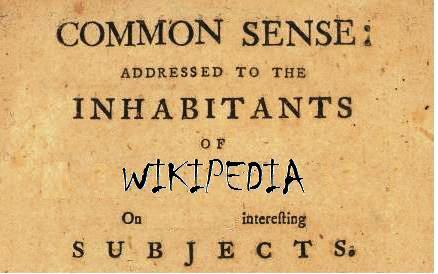
The modern English meaning first appeared at the start of the 18th century: “Those plain, self-evident truths or conventional wisdom that one needed no sophistication to grasp and no proof to accept precisely because they accorded so well with the basic (common sense) intellectual capacities and experiences of the whole social body.” Interest in this concept partly arose as a reaction to Descartes’s critical remarks about the French *bon sens*. It was also tied to the dispute between rationalism and empiricism and arguments over different scientific methods. In the opening line of his *Discourse on Method*, Descartes claimed everyone has a similar, sufficient amount of common or good sense (*bon sens*), but people rarely use it well. So, he argued, a skeptical logical method is necessary, and common sense should not be trusted too much. During the Enlightenment of the 18th century, common sense came to be viewed more positively as the foundation of empiricist modern thinking. It was contrasted with metaphysics, which, like Cartesianism, was associated with the Ancien Régime. Thomas Paine’s pamphlet *Common Sense* (1776) is often called the most influential political pamphlet of the 18th century, affecting both the American and French revolutions. Today, the concept of common sense and how best to use it remains tied to many lasting topics in epistemology and ethics, with special attention often given to the philosophy of the modern social sciences.
The term’s origin lies in Aristotle’s works, though his use had a very different meaning from the modern English one. Still, his original “common sense” was a long-lasting, successful proposal, still referred to in English, Greek, or Latin. Heller-Roazen (2008) notes that philosophers in the medieval Latin and Arabic traditions—from Al-Farabi to Avicenna, Averroës, Albert, and Thomas—found in Aristotle’s *De Anima* and *Parva Naturalia* the scattered elements of a coherent doctrine of a “central” faculty of the sensuous soul. It was “one of the most successful and resilient of Aristotelian notions.”
During the Roman Empire, the Latin *sensus communis* developed yet another meaning, different from both Aristotle’s concept and the typical modern English one, and this Roman meaning is still discussed in philosophy. These Roman meanings were apparently influenced by several Stoic Greek terms using the word *koinḗ* (‘common, shared’)—not only *koinḕ aísthēsis*, but also *koinós noûs* (‘common mind/thought/reason’), *koinḗ énnoia* (‘common conception’), and *koinonoēmosúnē*. All these involve *noûs*, which, at least for Aristotle, would not be present in “lower” animals. *Koinḗ énnoia* comes from Stoic philosophy, a Greek school influenced by Aristotle and influential in Rome. It refers to shared notions or common conceptions that are either inborn or imprinted on the soul by the senses. Few true Stoic texts survive, so our understanding of their technical terms is limited. *Koinós noûs* appears in Epictetus (III).
- origin
- Aristotle (Ancient Greek: koinḕ aísthēsis)
- field
- Philosophy, rhetoric, epistemology
- known_for
- Basic practical judgment shared by nearly all people; subject of Enlightenment debates
- related_terms
- Latin sensus communis, French bon sens, Ancient Greek koinḕ aísthēsis
Lore & Background
The term 'common sense' originates in the works of Aristotle, where it referred to a faculty within the animal soul that perceives real things based on different sensory perceptions from distinct senses. This original meaning, often called Sensus communis in medieval Latin, was developed by philosophers of the medieval Latin and Arabic tradition, including Al-Farabi, Avicenna, Averroës, Albert, and Thomas, who found in Aristotle's De Anima and Parva Naturalia the elements of a coherent doctrine of a central faculty of the sensuous soul. A second philosophical use, Roman-influenced, emerged during the Roman Empire, referring to a natural human sensitivity for other humans and the community, possibly influenced by Stoic Greek terms such as koinḗ énnoia (shared notions) and koinonoēmosúnē (public spirit).
Reader's Guide
The concept of common sense acquired its modern English meaning at the beginning of the 18th century: 'Those plain, self-evident truths or conventional wisdom that one needed no sophistication to grasp and no proof to accept.' This development was partly a reaction to Descartes's critical remarks about the French term bon sens in his Discourse on Method, where he stated that everyone has a similar amount of common sense but it is rarely used well, advocating instead for a skeptical logical method. During the Enlightenment, common sense came to be seen more positively as the basis for empiricist thinking, contrasted with metaphysics associated with the Ancien Régime. Today, the concept remains linked to perennial topics in epistemology and ethics, with special focus on the philosophy of the modern social sciences.
Did You Know?
- The original historical meaning of common sense, from Aristotle, refers to a faculty that perceives real things based on different sensory perceptions from distinct senses.
- The Roman meaning of sensus communis emphasized a natural human sensitivity for other humans and the community, possibly influenced by Stoic philosophy.
- Descartes argued in Discourse on Method that everyone has a sufficient amount of common sense but it is rarely used well, so a skeptical method should be followed.
Ancient Roots and Stoic Influences
The concept of common sense traces back to Aristotle's De Anima and Parva Naturalia, where he proposed a central faculty within the animal soul (psūkhḗ) that perceives real things by integrating inputs from distinct senses—sights, sounds, smells. This Aristotelian notion proved remarkably resilient, shaping medieval Latin and Arabic philosophical traditions from Al-Farabi through Avicenna, Averroës, Albert, and Thomas Aquinas, who all drew scattered elements from those texts to build a coherent doctrine of the sensuous soul's central faculty. Beyond Aristotle, Roman-era Stoic philosophers introduced parallel concepts using the Greek word koinḗ (meaning common or shared): koinós noûs (common mind or reason), koinḗ énnoia (shared notions or common conceptions in-born or imprinted by the senses), and koinonoēmosúnē, a term appearing only in Marcus Aurelius's Meditations. C.S. Lewis noted that koinós noûs, as used by Epictetus, closely resembles the modern English idea of common sense as the elementary mental outfit of the normal man. These layered ancient meanings—sensory integration, shared rational capacity, communal awareness—form the deep substrate from which the modern English term eventually emerged.
The Enlightenment Revaluation
In the early 18th century, the old philosophical term sensus communis underwent a transformation that gave it its modern English sense: plain, self-evident truths requiring no sophistication to grasp or proof to accept, precisely because they aligned with the basic intellectual capacities of the whole social body. This shift was partly a reaction to René Descartes, who in the opening line of Discourse on Method declared that everyone possesses a similar and sufficient amount of bon sens, yet rarely uses it well, arguing instead that a skeptical logical method must be followed and common sense should not be overly relied upon. The ensuing Enlightenment era reversed this skepticism, recasting common sense positively as the foundation for empiricist modern thinking. It became contrasted with metaphysics and Cartesianism, both associated with the Ancien Régime. The term thus became entangled in the great dispute between rationalism and empiricism and in arguments over scientific method, serving as both a standard for good taste and logical axioms and, conversely, a label for conventional wisdom, vulgar prejudice, and superstition.
Political Firepower and Rhetorical Ambiguity
The concept of common sense has wielded extraordinary political force. Thomas Paine's 1776 pamphlet Common Sense has been described as the most influential political pamphlet of the 18th century, shaping both the American and French revolutions by invoking the idea that certain truths are so plain they need no elaborate justification. In philosophical and scientific discourse since the Enlightenment, the term has been deployed rhetorically with deliberate ambiguity: approvingly, it signals good taste, sound judgment, and the source of scientific and logical axioms; disapprovingly, it dismisses ideas as mere conventional wisdom, vulgar prejudice, or superstition. This dual valence makes it a powerful rhetorical tool in debates spanning science, politics, and economics. The English term, in particular, developed these layered shades of meaning more distinctly than other Western European languages—French bon sens, for instance, does not map neatly onto every English usage—and the English formulation has since become the international standard. The interplay between its approving and dismissive registers continues to shape how arguments about knowledge, ethics, and social organization are framed.
Interconnected Meanings and Enduring Relevance
The various meanings of common sense are not isolated definitions but form a complex, interwoven history. The Aristotelian sensory faculty, the Roman-influenced sense of natural human sensitivity toward others and community, and the everyday notion of basic practical judgment all refer to a type of fundamental awareness and ability to judge that most people are expected to share naturally, even when they cannot articulate why. These meanings evolved through major political and philosophical debates in modern Western civilization, particularly concerning science, politics, and economics. The interplay between them is especially pronounced in English, where the term has accumulated more distinct shades than its counterparts in other Western European languages, and the English formulation has in turn become the international reference point. Today, the concept and the question of how it should best be employed remain central to perennial topics in epistemology and ethics, with particular focus on the philosophy of the modern social sciences. The term's resistance to a single fixed definition is itself a testament to its depth and its ongoing relevance in how societies reason about what is self-evident and what requires argument.
Gallery





Frequently Asked Questions
Who is Common sense?
Common sense is a philosophical concept referring to the basic practical judgment and shared knowledge that most adults are expected to possess without formal argument or deep reflection. It traces its roots back to Aristotle's Greek term koinḕ aísthēsis, meaning a shared sensory capacity.
What role does Common sense play in philosophy?
It functions as a foundational layer of epistemology and rhetoric, representing the unexamined, widely accepted facts and judgments that underpin everyday reasoning. Philosophers from the Enlightenment onward have debated whether this shared baseline is truly universal or culturally contingent.
How does Common sense's story end?
It has no definitive ending, as the concept remains an active subject of philosophical and political debate. Rather than being resolved, Common sense continues to be questioned, redefined, and contested across cultures and eras.
Why is Common sense important?
It serves as the assumed starting point for public discourse, political argument, and practical decision-making, since most reasoning presupposes a shared baseline of obvious truths. Without this concept, Enlightenment-era debates about governance and natural rights would lack a common ground from which to argue.
What is Common sense's origin?
The idea originated with Aristotle, who used the Greek phrase koinḕ aísthēsis to describe a shared perceptual faculty common to all humans. It later passed into Latin as sensus communis and French as bon sens, evolving into the broader philosophical and political term used today.
More in Philosophical Concepts 1-24
Spotted an error? Know more?
This is a living reference — every entry is fact-audited, and reader corrections feed straight into our audit queue. Suggest an edit · See this site's audit record