
Herbert Spencer
Polymath who coined 'survival of the fittest' and applied evolution broadly.

not stated · Public domain
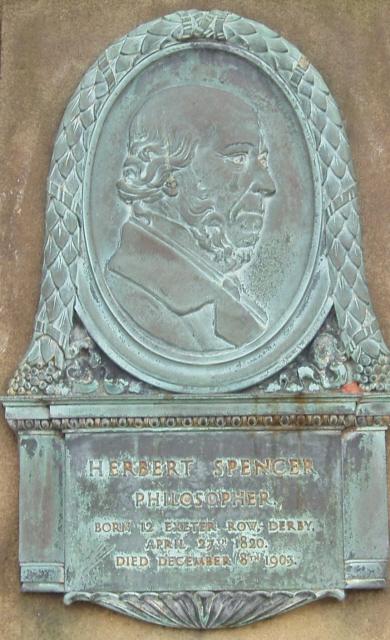
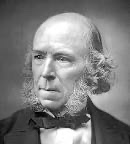
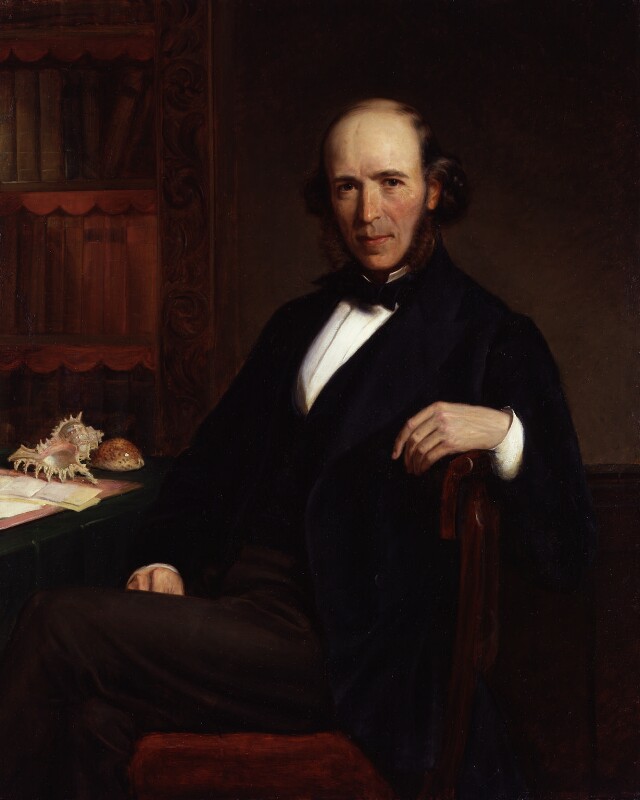
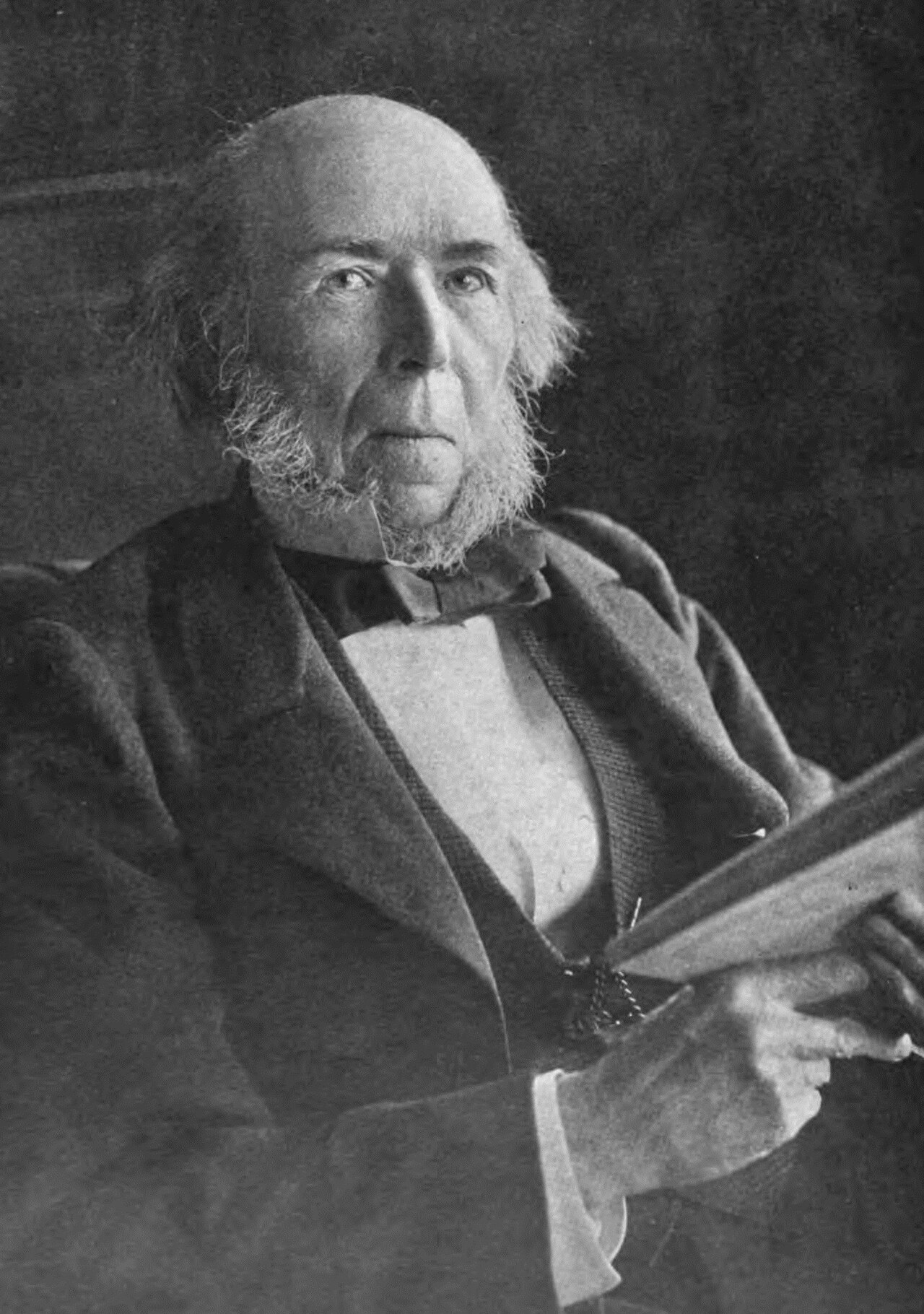
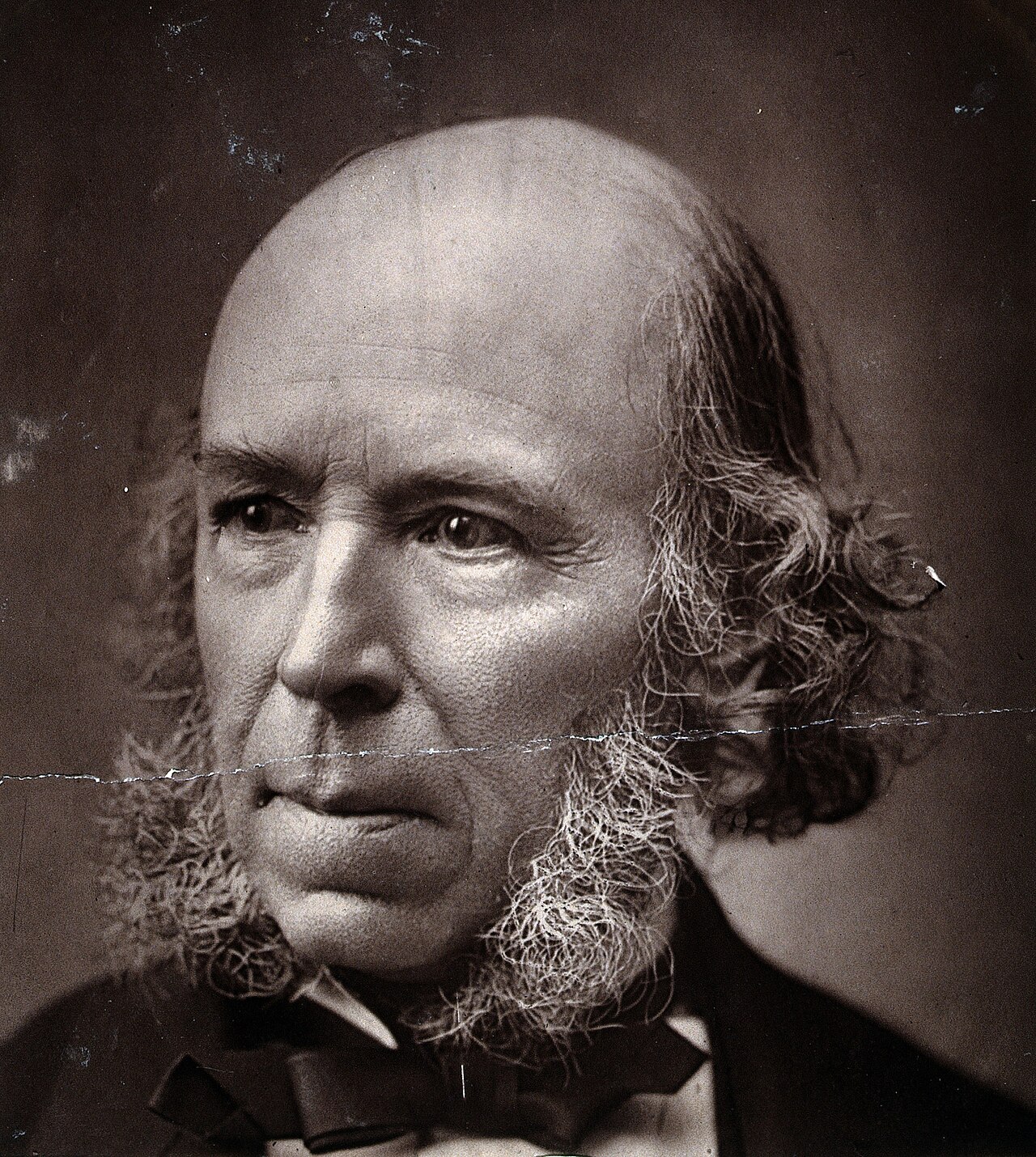
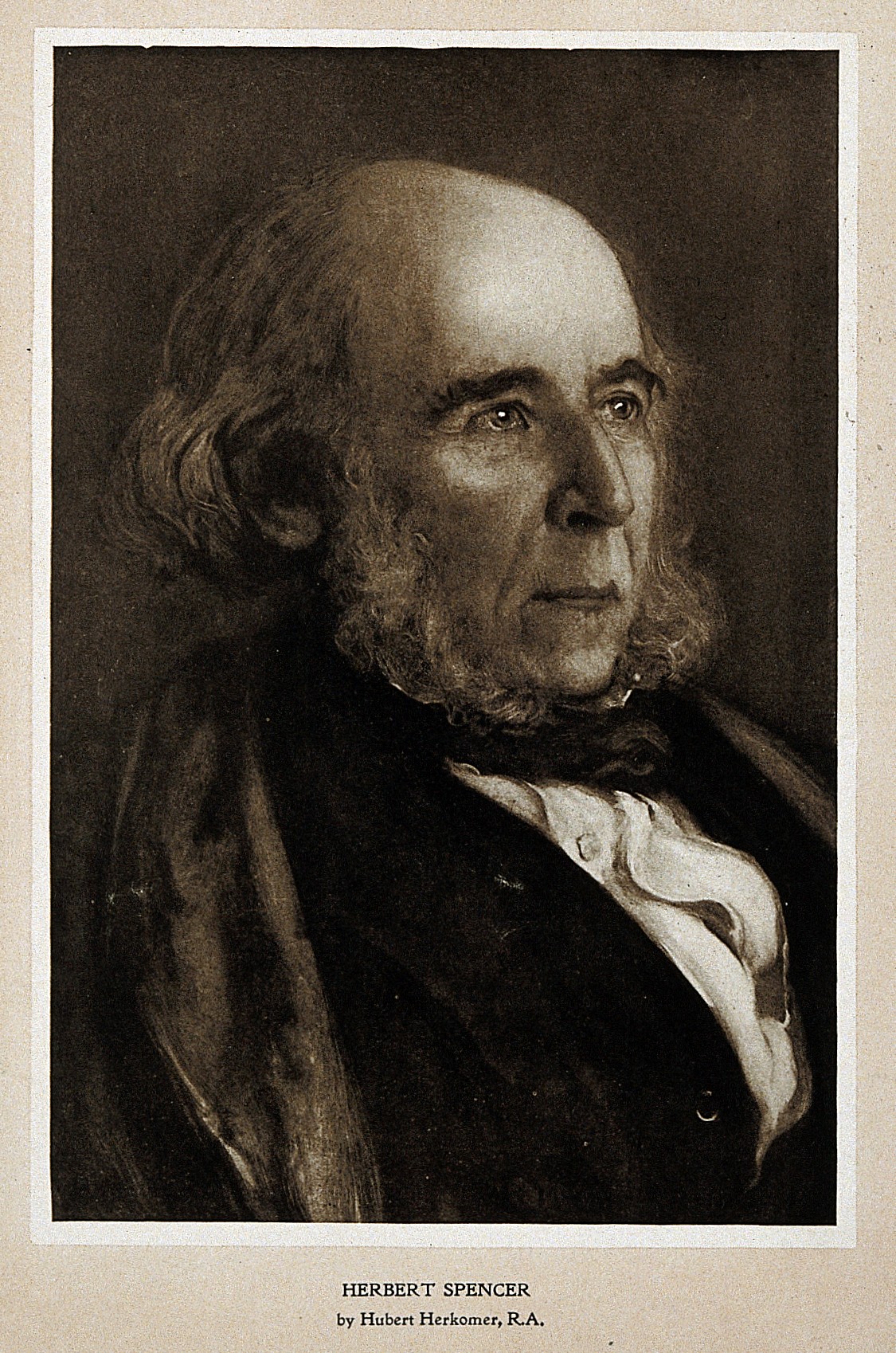
Herbert Spencer (27 April 1820 – 8 December 1903) was an English polymath—a philosopher, psychologist, biologist, sociologist, and anthropologist. He came up with the phrase "survival of the fittest" in his 1864 book *Principles of Biology*, after reading Charles Darwin's *On the Origin of Species* (1859). While the term strongly suggests natural selection, Spencer believed evolution also applied to sociology and ethics, and he supported Lamarckism. He built a sweeping theory of evolution as the progressive development of the physical world, living organisms, the human mind, and human culture and societies. During his lifetime, he held enormous influence, especially in English-speaking academia, and was considered the most famous European intellectual in the late nineteenth century. But his impact dropped sharply after 1900; in 1937, sociologist Talcott Parsons famously asked, "Who now reads Spencer?"
Spencer was born in Derby, England, on 27 April 1820, to William George Spencer (usually called George). His father was a religious dissenter who moved from Methodism to Quakerism and passed on a strong opposition to authority. He ran a school using the progressive teaching methods of Johann Heinrich Pestalozzi and served as secretary of the Derby Philosophical Society, a scientific group founded in 1783 by Erasmus Darwin, Charles Darwin's grandfather. Spencer learned empirical science from his father, and members of the Derby Philosophical Society introduced him to pre-Darwinian ideas about biological evolution, especially those of Erasmus Darwin and Jean-Baptiste Lamarck. His uncle, the Reverend Thomas Spencer, a vicar near Bath, gave him some formal education in mathematics, physics, and enough Latin to translate simple texts, and also instilled in him firm free-trade and anti-statist political views. Apart from that, Spencer was self-taught, picking up most of his knowledge from narrow reading and conversations with friends and acquaintances.
As a teenager and young man, Spencer struggled to settle into any intellectual or professional field. He worked as a civil engineer during the railway boom of the late 1830s, while also writing for provincial journals that were nonconformist in religion and radical in politics. His first book, *Social Statics* (1851), came out while he was sub-editor at the free-trade journal *The Economist* from 1848 to 1853. In it, he predicted that humanity would eventually become fully adapted to living in society, leading to the state's disappearance. Radical publisher John Chapman, who lived across the Strand from *The Economist*’s offices, brought Spencer into his salon, which included leading radical and progressive thinkers like John Stuart Mill, Harriet Martineau, George Henry Lewes, and Mary Ann Evans (George Eliot), with whom Spencer had a brief romantic link. Spencer himself introduced biologist Thomas Henry Huxley (later known as "Darwin's Bulldog"), who became a lifelong friend. But it was his friendships with Evans and Lewes that introduced him to Mill's *A System of Logic* and Auguste Comte's positivism, setting him on his life's path—though he strongly disagreed with Comte.
Spencer's second book, *Principles of Psychology* (1855), explored a physiological basis for psychology, growing out of his friendship with Evans and Lewes. It rested on his core assumption that the human mind follows natural laws discoverable within general biology. This allowed a developmental perspective not just for individuals (as in traditional psychology) but also for species and races. He aimed to reconcile the associationist psychology of Mill's *Logic*—the idea that the mind is built from atomic sensations linked by association—with the more "scientific" theory of phrenology, which locates mental functions in specific brain areas. Spencer argued that both theories are partially correct: repeated associations of ideas get embodied in specific brain tissue strands, which can be passed down generations through the Lamarckian mechanism of use-inheritance. He believed this book would do for the human mind what Isaac Newton had done for matter. But it was not initially successful; the last of the 251 copies of its first edition weren't sold until June 1861.
Spencer's interest in psychology came from a deeper goal: to show the universality of natural law. Like others of his generation, including members of Chapman's salon, he wanted to prove that everything in the universe—human culture, language, and morality—could be explained by universal laws. This went against many theologians of the time, who insisted that parts of creation, especially the human soul, were beyond scientific investigation. Comte's *Système de Philosophie Positive* had aimed to demonstrate the universality of natural law, and Spencer shared that ambition.
- born
- 27 April 1820
- died
- 8 December 1903
- field
- Philosophy, psychology, biology, sociology, anthropology
- nationality
- English
- known_for
- Coining 'survival of the fittest', synthetic philosophy, applying evolution to s
Verified Timeline
Lore & Background
Spencer was born in Derby, Derbyshire, England, on 27 April 1820, the son of William George Spencer. His father was a religious dissenter who drifted from Methodism to Quakerism and transmitted to his son an opposition to all forms of authority. He ran a school founded on the progressive teaching methods of Johann Heinrich Pestalozzi and served as secretary of the Derby Philosophical Society, a scientific society founded in 1783 by Erasmus Darwin. Spencer was educated in empirical science by his father, while members of the society introduced him to pre-Darwinian concepts of biological evolution, particularly those of Erasmus Darwin and Jean-Baptiste Lamarck. His uncle, the Reverend Thomas Spencer, completed his limited formal education by teaching him mathematics, physics, and enough Latin to translate easy texts, and imprinted free-trade and anti-statist political views. Otherwise, Spencer was an autodidact. He worked as a civil engineer during the railway boom of the late 1830s, while also writing for provincial journals. He published his first book, Social Statics (1851), while working as sub-editor on The Economist from 1848 to 1853. Radical publisher John Chapman introduced Spencer to his salon, attended by John Stuart Mill, Harriet Martineau, George Henry Lewes, and Mary Ann Evans (George Eliot), with whom he was briefly romantically linked. Spencer introduced biologist Thomas Henry Huxley to the salon. His second book, Principles of Psychology (1855), explored a physiological basis for psychology, aiming to reconcile associationist psychology with phrenology via the Lamarckian mechanism of use-inheritance. The book was not initially successful; the last of the 251 copies of its first edition were not sold until June 1861. In 1858, Spencer produced an outline of what was to become the System of Synthetic Philosophy, a ten-volume work intended to demonstrate that the principle of evolution applies in biology, psychology, sociology, and morality. It took him twice as long as anticipated and consumed almost all the rest of his long life. By the 1870s he had become the most famous philosopher of the age, able to support himself solely on book sales and income from periodical contributions. His works were translated into German, Italian, Spanish, French, Russian, Japanese, Chinese, and many other languages, and he was offered honours and awards all over Europe and North America. He became a member of the Athenaeum and the X Club, a dining club of nine founded by T.H. Huxley that included physicist-philosopher John Tyndall and banker-biologist Sir John Lubbock.
Reader's Guide
Spencer's significance lies in his ambitious attempt to unify all knowledge under a single law of evolution, which he extended beyond biology into sociology, ethics, psychology, and morality. He coined the phrase 'survival of the fittest' in Principles of Biology (1864) after reading Charles Darwin's On the Origin of Species, though he also supported Lamarckism. His synthetic philosophy, though immensely influential in the late nineteenth century, saw a sharp decline after 1900: 'Who now reads Spencer?' asked Talcott Parsons in 1937. The last decades of Spencer's life were characterised by growing disillusionment and loneliness. He never married, and after 1855 was a life-long hypochondriac who complained endlessly of pains and maladies that no physician could diagnose. His nervous sensibility was extreme: 'A game of billiards was enough to deprive him of his night's rest.' By the 1890s his readership had begun to desert him, many of his closest friends died, and he doubted the confident faith in progress that had been the centre-piece of his philosophical system. His political views became increasingly conservative: whereas Social Statics had been the work of a radical democrat who believed in votes for women and even children, by the 1880s he had become a staunch opponent of female suffrage and made common cause with the Liberty and Property Defence League against what they saw as the drift towards 'socialism'.
Did You Know?
- Spencer coined the expression 'survival of the fittest' in Principles of Biology (1864) after reading Charles Darwin's On the Origin of Species.
- His first book, Social Statics (1851), predicted that humanity would eventually become completely adapted to living in society, with the consequential withering away of the state.
- The last of the 251 copies of the first edition of Principles of Psychology (1855) were not sold until June 1861.
- Spencer never married and after 1855 was a life-long hypochondriac; a game of billiards was enough to deprive him of his night's rest.
- By the 1880s, Spencer had become a staunch opponent of female suffrage, despite having earlier believed in votes for women in Social Statics.
Gallery
More in Philosophers & Thinkers 1-24
Spotted an error? Know more?
This is a living reference — every entry is fact-audited, and reader corrections feed straight into our audit queue. Suggest an edit · See this site's audit record