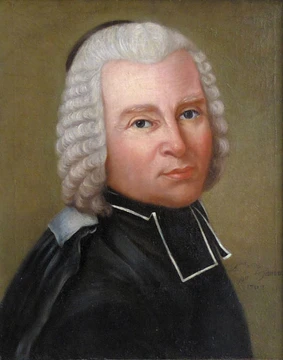
Wilbur Adelman Cogshall
American astronomer who studied visual binary stars and solar eclipses.
Wilbur Adelman Cogshall, an American astronomer, focused on visual binary stars and solar eclipses. He spent most of his career at Indiana University Bloomington, advancing to full professor and helping build the Schwarzschild telescope.
Quick Facts
- Born
- 8 February 1874
- Birthplace
- Benton Harbor, Michigan, U.S.
- Died
- 5 October 1951
- Place of death
- Winnebago, Illinois, U.S.
- Fields
- Astronomy
- Workplaces
- Indiana University Bloomington, Lowell Observatory
- Education
- Albion College (B.S.); Indiana University Bloomington (M.A.)
- Known for
- Work on Visual Binary stars and solar eclipses
Facts from the source article.
Did You Know?
- Cogshall completed his undergraduate studies at Albion College, earning a Bachelor of Science degree in 1895.
- He obtained his master's degree from Indiana University Bloomington in 1902.
- His parents were Wilbur Israel Cogshall and Martha Leavitt.
Career
Wilbur Adelman Cogshall started his career at the Lowell Observatory in Flagstaff, Arizona, where he specialized in measuring visual binary stars. His expertise caught the attention of Indiana University Bloomington, which brought him on in 1900 to work with a new 12-inch refracting telescope at the Kirkwood Observatory. He became an assistant professor of astronomy there in 1904 and later a full professor. Over his career, he joined four solar eclipse expeditions to examine the solar corona and played a key role in constructing the Schwarzschild telescope near Bloomington. In 1929, Cogshall led the U.S. Naval Observatory's solar eclipse expedition to the Philippine Islands as chief scientist, directing the photographic observations of the May 9, 1929 eclipse.
Frequently Asked Questions
When and where was Wilbur Adelman Cogshall born?
Wilbur Adelman Cogshall was born on 8 February 1874 in Benton Harbor, Michigan, U.S.
When did Wilbur Adelman Cogshall die?
Wilbur Adelman Cogshall died on 5 October 1951 in Winnebago, Illinois, U.S.
More in People Associated with Astronomical Catalogues
Spotted an error? Know more?
Reader corrections go straight into our review queue. Suggest an edit · How this site is sourced