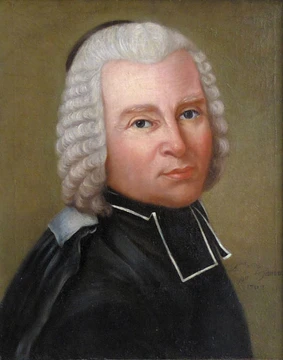
John August Anderson
American astronomer who refined diffraction gratings and oversaw Palomar telescope construction.
John August Anderson was an American astronomer known for improving astronomical instruments in the early 20th century, particularly diffraction gratings. He adapted Michelson's interferometer technique for measuring close double stars and oversaw the construction of the 200-inch Palomar telescope.
Quick Facts
- Born
- August 7, 1876, Rollag, Minnesota
- Died
- December 2, 1959
- Nationality
- American
- Education
- B.S. from Valparaiso University (1900); Ph.D. from Johns Hopkins University (1907)
- Notable collaboration
- Harry O. Wood (Wood–Anderson seismometer)
- Key role
- Executive officer of the Observatory Council for the 200-inch Palomar telescope
Facts from the source article.
Biography
John August Anderson was born on August 7, 1876, in Rollag, Minnesota, a small unincorporated community in Clay County, as the sixth child of Brede Andersen and Elen Martha Brevik. He began his education at Concordia College in Moorhead, Minnesota, from 1891 to 1893, then moved to Minnesota State University Moorhead from 1893 to 1894. In January 1899, he enrolled at Valparaiso University in Indiana, earning a B.S. in August 1900. After teaching until 1904, he went to Johns Hopkins University for graduate work under Joseph Sweetman Ames, focusing on the absorption and emission spectra of neodymium and erbium compounds. He received his PhD in 1907 and became a professor of astronomy at Johns Hopkins in 1908. There, he took over Henry Rowland’s ruling engine, improving it to create diffraction gratings with even finer resolving power, which were in high demand. In 1912, at George E. Hale’s request, he took a year’s leave to help build a large ruling engine at Mt. Wilson Observatory, returning to Johns Hopkins in 1913 before moving permanently to Mt. Wilson in 1916. His key achievement was adapting Michelson’s interferometer technique to measure close double stars, using a rotating mask at the focus to gauge Capella’s separation. In the 1920s, he worked with Harry O. Wood on the Wood–Anderson seismometer. In 1928, after funding for the 200-inch Palomar telescope came through, Hale asked Anderson to serve as executive officer of the Observatory Council. For the next twenty years, he oversaw site selection, mirror design and testing, an on-site optical shop, and the telescope’s structure and instrumentation, remaining head of the council until the telescope’s dedication in June 1948.
More in People Associated with Astronomical Catalogues
Spotted an error? Know more?
Reader corrections go straight into our review queue. Suggest an edit · How this site is sourced