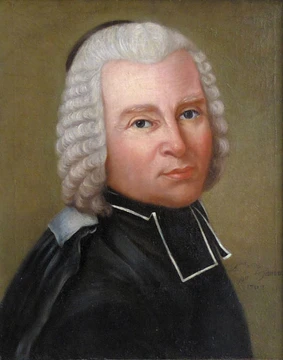
Ralph Copeland
English astronomer and third Astronomer Royal for Scotland.
Ralph Copeland FRSE FRAS (3 September 1837 – 27 October 1905) was an English astronomer who served as the third Astronomer Royal for Scotland. He is known for discovering 35 NGC objects and for the Copeland Septet, a group of seven galaxies in Leo.
Quick Facts
- Honorific suffix
- FRSE, FRAS
- Born
- 3 September 1837
- Birthplace
- Moorside Farm, near Woodplumpton, Lancashire, England
- Died
- 27 October 1905
- Place of death
- Edinburgh, Scotland
- Burial place
- Morningside Cemetery, Edinburgh
- Education
- Kirkham Grammar School
- Occupation
- astronomer
Facts from the source article.
Did You Know?
- Mount Copeland in the Monashee Mountains of British Columbia was named for him in 1909.
- Copeland Ridge and Copeland Creek were also named after him.
- Mount Copeland recorded the highest snowfall in Canada in one season (1 July 1971 – 30 June 1972).
Life
Ralph Copeland was born at Moorside Farm near Woodplumpton in Lancashire, England, to Robert Copeland, a yeoman, and Elizabeth Milner. He attended Kirkham Grammar School and later spent five years in Australia, where he first developed an interest in astronomy. After returning to England in 1858, he initially worked in engineering but soon built a small observatory and abandoned that career to study astronomy at the University of Göttingen in Germany. When he came back to England under the patronage of Lord Rosse, he introduced German astronomical methods and later hired several German astronomers, including Oswald Lohse, as assistants.
Copeland worked at the Dun Echt Observatory, which belonged to the 26th Earl of Crawford. He traveled extensively on scientific expeditions, observing the 1874 transit of Venus from Mauritius and the 1882 transit from Jamaica, and also conducted astronomical observations in Greenland. On 29 January 1889, he was appointed Astronomer Royal for Scotland, initially based at the Calton Hill Observatory in Edinburgh. He was given the job of selecting a site for a new observatory and chose Blackford Hill in Edinburgh. Lord Crawford, his former benefactor, donated the astronomical collection from Dun Echt to the new facility, which opened in 1896.
Copeland was elected a Fellow of the Royal Society of Edinburgh in 1889, with John McLaren, Lord McLaren, Alexander Forbes Irvine, Alexander Buchan, and P.G. Tait as his proposers. He served as the society's vice president from 1892 to 1896 and again from 1898 to 1903. He discovered 35 NGC objects, most using Lord Rosse's 72-inch reflector. He also found planetary nebulae through visual spectroscopy at Dun Echt and during an expedition to the Andes. Seven galaxies in the constellation Leo form the Copeland Septet: NGC 3745, 3746, 3748, 3750, 3751, 3753, and 3754.
Copeland married twice: first in 1859 to Susannah Milner, and second in 1871 to Theodora Benfey. He had six children, including Fanny Susan Copeland, and the family lived on site at the Blackford Hill Observatory. He was fluent in French, German, and Persian. He died in Edinburgh on 27 October 1905 and was buried in Morningside Cemetery, Edinburgh, alongside his second wife Theodora and his daughters Paula Theodora Copeland and Agnes Copeland MD. His grave is in the south-west section of the cemetery.
More in People Associated with Astronomical Catalogues
Spotted an error? Know more?
Reader corrections go straight into our review queue. Suggest an edit · How this site is sourced