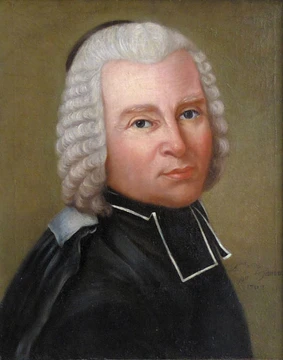
Luís Cruls
Belgian-Brazilian astronomer, geodesist, and co-discoverer of the Great Comet of 1882.
Luís Cruls was a Belgian-Brazilian astronomer and geodesist who served as Director of the Brazilian National Observatory from 1881 to 1908. He led the commission that surveyed and selected a future site for the capital of Brazil in the Central Plateau, and was co-discoverer of the Great Comet of 1882. Cruls also organized Brazilian observations of the 1882 Transit of Venus in Punta Arenas, Chile, as part of efforts to measure solar parallax.
Quick Facts
- Birth name
- Louis Ferdinand Cruls
- Born
- 21 January 1848
- Birthplace
- Diest, Belgium
- Died
- 21 June 1908
- Place of death
- Paris, France
- Field
- Astronomy, Geography
- Workplaces
- National Observatory (Brazil)
- Education
- University of Ghent
Facts from the source article.
Early life
Luís Cruls entered the world in 1848 in Diest, Belgium, born to a civil engineer father, Philippe Augustin Guillaume Cruls, and Anne Elizabeth Jordens. He pursued civil engineering at the University of Ghent from 1863 to 1868, then became a military engineer and officer, starting as a 2nd Lieutenant. Rising to 1st Lieutenant in the Belgian army, he left service around 1873 or 1874. Encouraged by Brazilian university friends, Cruls quit his commission and departed for Brazil on 5 September 1874. On the steamer Orénoque, he met Joaquim Nabuco, a journalist and abolitionist whose father was a powerful politician, a connection that opened doors in Brazilian high society.
Brazil, Belgium, and back again
Soon after arriving in Brazil, Cruls was presented to Emperor Dom Pedro II and met Buarque de Macedo, Director General of the Ministry of Public Works, leading to a job as an engineer in the Geodesy section of the Commission of the Empire General Charter. In January 1875 he returned to Belgium for family reasons; the Commission assigned him to assist the Brazilian ambassador with coordinating geodesic instruments purchased by the Commission. While in Europe he published his first major paper, Discussion of the Methods of Repetition and Reiteration Employed in Geodesy for the Angles, which analyzed methods for fixing geographic points via triangulation. This work earned the respect of Emmanuel Liais, director of the Imperial Observatory, who later hired him. Cruls returned to Brazil in June 1875 and worked with the Commission until its dissolution. He married Maria Margarida de Oliveira on 26 May 1877; they had six children and lived in the Rio neighborhood of Laranjeiras.
Imperial Observatory
In December 1877, Emmanuel Liais appointed Cruls to the Commission on Longitude at the Imperial Observatory. He published thirty-five papers, monographs, and books on astronomy in his lifetime, most in Comptes Rendus. In 1879 he was promoted to Assistant Astronomer. On 12 February 1881 he was naturalized as a Brazilian citizen and changed his first name to Luíz. Later that year, Liais resigned after public accusations from Manoel Pereira Reis, and Cruls became interim director. Pereira Reis remained a persistent critic of Cruls and the Observatory.
Legacy
Cruls's observations of the 1882 Transit of Venus in Punta Arenas were highlighted by Nature as a major astronomical feat. The following year, he and William Huggins jointly received the Valz prize for analyzing the Great Comet of 1882's spectrum. His name appears on Mars's Cruls Crater, the Antarctic Cruls Islands, and Brazil's Refuge Astronomer Cruls summer base. Asteroid 29298 Cruls also commemorates him, and a 1992 Brazilian stamp marked the Cruls Commission centennial.
Frequently Asked Questions
When and where was Luís Cruls born?
Luís Cruls was born on 21 January 1848 in Diest, Belgium.
When did Luís Cruls die?
Luís Cruls died on 21 June 1908 in Paris, France.
More in People Associated with Astronomical Catalogues
Spotted an error? Know more?
Reader corrections go straight into our review queue. Suggest an edit · How this site is sourced