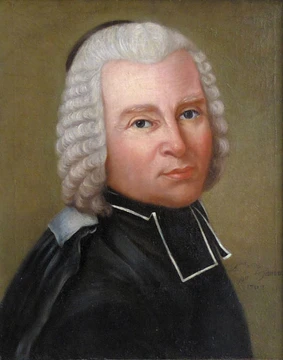
John Louis Emil Dreyer
Danish astronomer who compiled the New General Catalogue.
John Louis Emil Dreyer was a Danish astronomer who worked most of his career in Ireland and later in Oxford, England. He is best known for compiling the New General Catalogue of Nebulae and Clusters of Stars, along with its supplementary Index Catalogues, which remain in widespread use.
Quick Facts
- Motto
- Uden Arbeide Ingen Lykke
Facts from the source article.
Life
John Louis Emil Dreyer came into the world in Copenhagen, the son of Lieutenant General John Christopher Dreyer, who served as Denmark’s Minister for War and the Navy. At fourteen, his curiosity turned to the stars, and he began making regular visits to Hans Schjellerup at the Copenhagen observatory. He completed his education in the city, earning an MA in 1872 and a PhD from the same university two years later. In 1874, at just twenty-two, he crossed to Parsonstown, Ireland, to assist Lord Rosse. Four years on, he moved to Dunsink, working under Robert Stawell Ball at Trinity College Observatory. Another move in 1882 brought him to Armagh Observatory, where he served as Director until 1916. He became a British citizen in 1885. After retiring, he and his wife Kate settled in Oxford, where he devoted himself to editing Tycho Brahe’s works. Dreyer received the Royal Astronomical Society’s Gold Medal in 1916 and later served as its president from 1923 to 1925. He died in Oxford on 14 September 1926 and was buried in Wolvercote Cemetery. A lunar crater on the Moon’s far side bears his name.
Works
Dreyer is best known for creating the New General Catalogue of Nebulae and Clusters of Stars, drawing from William Herschel's earlier catalogue, and for producing two supplementary Index Catalogues; these NGC and IC designations remain in common use. He also worked as an astronomy historian, writing a biography of Tycho Brahe in 1890 and later editing Brahe's writings and letters into the fifteen-volume Opera Omnia, the final volume appearing after Dreyer's death. His 1905 book, originally titled History of the Planetary Systems from Thales to Kepler, is now reprinted as A History of Astronomy from Thales to Kepler. With Herbert Hall Turner, he co-edited the first official history of the Royal Astronomical Society, covering 1820 to 1920.
More in People Associated with Astronomical Catalogues
Spotted an error? Know more?
Reader corrections go straight into our review queue. Suggest an edit · How this site is sourced