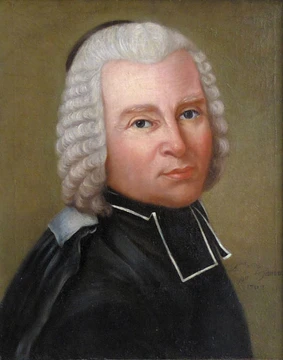
James Dunlop
British astronomer who catalogued southern deep-sky objects and double stars.
James Dunlop (31 October 1793 – 22 September 1848) was a British astronomer who worked in Australia, primarily as a visual observer. He is noted for cataloguing many southern double stars and deep-sky objects, and for later serving as Superintendent of Paramatta Observatory.
Quick Facts
- Born
- 31 October 1793
- Birthplace
- Dalry, Ayrshire, Scotland
- Died
- 22 September 1848
- Place of death
- New South Wales, Australia
- Resting place
- St. Paul's Anglican Church Kincumber, New South Wales
- Fields
- Astronomy
- Workplaces
- Paramatta Observatory
- Known for
- made 40,000 observations and catalogued some 7385 stars, of which included 166 double stars
Facts from the source article.
Did You Know?
- James Dunlop was born in Dalry, Ayrshire, Scotland, the son of a weaver.
- He became interested in astronomy at an early age and was constructing telescopes by 1810.
- In April 1831, Dunlop was appointed superintendent of the Government observatory at Parramatta, succeeding Rümker.
Career in Australia
Soon after arriving in Australia, Brisbane began building his observatory at Paramatta, and Dunlop was employed to perform astrometric observations for a new southern star catalogue. Carl Ludwig Christian Rümker, recruited as first astronomical assistant, left the observatory in 1823 after protesting his treatment, leaving Dunlop in charge of astrometric measures and instrument maintenance. Dunlop lacked formal astronomical training and the mathematical skills for astrometric reductions, but learned observational skills from Rümker and Brisbane. Between June 1823 and February 1826, Dunlop made 40,000 observations and catalogued about 7,385 stars, including 166 double stars and references to bright deep-sky objects. In March 1826 he left Paramatta Observatory and worked from his home in Hunter Street, Paramatta, where he spent 18 months constructing telescopes and equipment for his own southern sky survey. Before departing Sydney in December 1825, Brisbane arranged to sell his instruments to the government and gave some equipment to Dunlop, including a small equatorial mounted 8.0 cm refracting telescope used for double star measures. Rümker returned in May 1826 and was later appointed first New South Wales Government Astronomer, though official confirmation was delayed.
Back to Britain
Upon arrival in Britain, Dunlop reduced his southern double star and deep-sky observations for publication, a process believed to have taken about one month. The resulting papers were published in the first half of 1828 and received many accolades from his peers until about 1834.
Observations and discoveries in Australia
Dunlop made several noteworthy discoveries in the Southern Hemisphere sky. In 1828 he published A Catalogue of Nebulae and Clusters of Stars in the Southern Hemisphere, containing 629 objects; a little more than half proved to be real, with many small nebulous objects likely artificially created by his handmade reflecting telescope. He found many new open clusters, globular clusters, bright nebulae, and planetary nebulae previously unknown to visual observers. His most famous discovery is likely the radio galaxy NGC 5128 (Centaurus A). His other major work catalogued 256 southern double stars below about 30° South, published in 1829. These observations were made between December 1827 and December 1828 using his homemade 9-foot 23 cm speculum Newtonian reflector or the small 8.0 cm equatorial refracting telescope. Most of these pairs proved uninteresting, many being too wide for orbital motion, and observations were often made under unsuitable atmospheric conditions. John Herschel re-observed all of Dunlop's double stars in 1834–1835, beginning with Alpha Crucis, but had trouble identifying them or finding significant differences in measured positions.
Publications
Dunlop's main publications include A catalogue of nebulae and clusters of stars in the southern hemisphere, observed at Parramatta in New South Wales (Philosophical Transactions of the Royal Society, Vol. 118, pp. 113–151, 1828), containing 629 southern deep-sky objects. He also published Approximate Places of Double Stars in the Southern Hemisphere, observed at Paramatta in New South Wales (Memoirs of the Royal Astronomical Society, Vol. 3, 257, 1829), listing 256 southern double stars. Five other astronomical papers appeared between 1829 and 1839, notably on comets, including Places of Encke's comet, from 30 observations (MNRAS, Vol. 1, 120, 1829) and Observation of a small comet at Paramatta (MNRAS, Vol. 1, 130, 1829).
More in People Associated with Astronomical Catalogues
Spotted an error? Know more?
Reader corrections go straight into our review queue. Suggest an edit · How this site is sourced