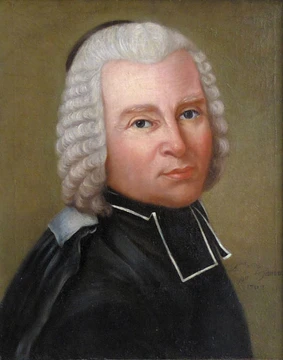
Guillaume Bigourdan
French astronomer who catalogued nebulae and discovered asteroid 390 Alma.
Camille Guillaume Bigourdan (6 April 1851 – 28 February 1932) was a French astronomer. He is known for his extensive work verifying the positions of thousands of nebulae and for discovering the asteroid 390 Alma.
Quick Facts
- Fields
- Astronomy
- Workplaces
- Paris Observatory
- Spouse
- Marie Mélanie Sophie Mouchez
- Children
- 9
- Born
- 6 April 1851
- Birthplace
- Sistels
- Died
- 28 February 1932
- Place of death
- Paris
Facts from the source article.
Personal life
Guillaume Bigourdan was born in Sistels, Tarn-et-Garonne, to Pierre Bigourdan and Jeanne Carrière. His intelligence was noticed by his teachers and the local priest, leading to his transfer to a boarding school in Valence d’Agen, where he performed well. He earned his Baccalauréat in 1870 with a grade of "Assez Bien." He married Marie Mélanie Sophie Mouchez, the eldest daughter of Admiral Amédée Mouchez, and the couple had nine children. Until World War I, the family, including Mouchez cousins, vacationed in Sistels; afterward, Bigourdan went alone, farming his land and meeting old classmates. In Sistels, he spoke Occitan fluently.
Academic and scientific career
Bigourdan studied at the University of Toulouse from 1870, earning a physics degree in 1874 and a mathematics degree in 1876, financing his studies by teaching at a boarding school. In 1877, Félix Tisserand appointed him assistant astronomer at the Toulouse Observatory; in 1879 he followed Tisserand to the Paris Observatory. He submitted his doctoral thesis in 1886 on the personal equation in double star measurements, based on 2800 double stars. He spent many years verifying the positions of 6380 nebulae, hoping to establish a basis for studying their proper motion, though this proved largely in vain as distant nebulae show no proper motion. He discovered about 500 new objects, published in five volumes of the Annales of the Paris Observatory, over 3000 pages. In 1894, he discovered the asteroid 390 Alma. He observed the transit of Venus in Martinique in June 1882, and on that trip visited St Petersburg, Kraków, Berlin and Vienna. In 1892 he traveled to Joal, Senegal, to observe the total solar eclipse of 16 April 1893. In 1902 he participated in redetermining the longitude difference between London and Paris. He became a member of the Bureau des Longitudes in 1903 and of the French Academy of Sciences in 1904. Due to his interest in wireless time signals, he was made director of the newly founded International Time Service in 1912, overseeing the switch to Greenwich time, and remained until 1928. He described a method for adjusting equatorial mount telescopes, known as "Bigourdan's method". He won the Lalande Prize in 1883 and 1891, the Valz Prize in 1886, the Gold Medal of the Royal Astronomical Society in 1919, and the Prix Jules Janssen in 1919. He was director of the Bureau International de l'Heure from 1919 to 1928. In 1924 he became president of the Académie des Sciences and the Institute of France, having served as vice-president in 1923.
More in People Associated with Astronomical Catalogues
Spotted an error? Know more?
Reader corrections go straight into our review queue. Suggest an edit · How this site is sourced