Alpine Cowboys
Semipro and minor league baseball team in Alpine, Texas.

Carol M. Highsmith · Public domain
The Alpine Cowboys are a professional baseball team from Alpine, Texas, located in the Big Bend region of West Texas. They compete in the Pecos League, an independent league with no ties to Major League Baseball. Their home games are played at Kokernot Field, a 1,200-seat ballpark built in 1947 from stone and wrought iron, designed as a replica of Chicago’s Wrigley Field.
The team began in 1946 when Herbert L. Kokernot Jr., the son of a Texas cattle rancher and entrepreneur, reorganized the semiprofessional Alpine Cats into the Alpine Cowboys. A new stadium, Kokernot Field, opened for them in 1947 at a cost of $1.5 million. It featured imported infield clay shipped by train from Georgia. The Cowboys played as a semipro team through 1958, and after each championship season, Kokernot gave each player a pair of handmade red cowboy boots stamped with the brand of his “o6” Ranch—a tradition still reflected in the team’s cap insignia. Kokernot also supported athletes by bringing promising high school graduates onto the roster and offering college scholarships across the Southwest. The team featured future major leaguer Norm Cash. During segregation, Kokernot arranged exhibition games between traveling Negro league teams, led by stars like Satchel Paige, and Mexican League teams, drawing fans from hundreds of miles away. A 2007 Fort Worth Star-Telegram article called the Cowboys “one of the state’s finest semiprofessional teams.”
In 1959, the Boston Red Sox moved their minor league affiliate from Lexington, Nebraska, to Alpine, adopting the Cowboys name. That year, the team won the Class D Sophomore League title with an 88–34 record (.721), the highest winning percentage of any Red Sox minor league team. The 1959 squad was managed by future Red Sox manager Eddie Popowski and included future major leaguers Don Schwall (who won the American League Rookie of the Year two years later), Chuck Schilling (who finished fourth in the same vote), and Guido Grilli. The 1960 team featured future all-star Jim Fregosi. In 1962, the Sophomore League folded, and the team moved to Idaho, becoming the Pocatello Chiefs.
Quick Facts
- Founded
- 1946
- City
- Alpine, Texas
- Ballpark
- Kokernot Field
- League
- Pecos League (2011–present)
- Former Leagues
- Continental Baseball League (2009–10) / Sophomore League (1959–61)
- Former Names
- Big Bend Cowboys (2009–10)
- Retired Numbers
- Jared Strait (57)
- League Champs
- 1959 · 2010 · 2012 (2019–2024)
- Division Champs
- 2015 (2018–2024)
- Owner
- Big Bend Community Baseball and Softball Inc. (nonprofit)
- President
- Bob Ward
- General Manager
- Kristin Cavness
Facts from the source article.
Lore & Background
The Alpine Cowboys began in 1946 when Herbert L. Kokernot Jr. retooled the semiprofessional Alpine Cats into the Alpine Cowboys. Kokernot built Kokernot Field in 1947 at a cost of $1.5 million, with imported infield clay from Georgia. The team played as a semipro team through 1958. Kokernot gave each player handmade red cowboy boots with his 'o6' Ranch brand after championship seasons, a tradition reflected in the current cap insignia. He also brought Negro league and Mexican League exhibition games to Alpine during segregation.
Reader's Guide
The Alpine Cowboys represent a unique thread in baseball history, bridging semiprofessional, minor league, and independent eras. Their early years under Herbert L. Kokernot Jr. showcased a commitment to quality, with a stadium modeled after Wrigley Field and support for players through scholarships. The team launched future major league stars such as Norm Cash, Gaylord Perry, and Joe Horlen, and two Hall of Fame inductees. As a Boston Red Sox affiliate in 1959, the Cowboys set a record for the highest winning percentage of any Red Sox minor league team. After a hiatus, professional baseball returned in 2009, and the Cowboys became charter members of the Pecos League in 2011, winning championships in 2012, 2019, and setting a league record with a .918 winning percentage in 2024. The team's legacy includes community support, integration efforts through exhibition games, and ongoing independent league success.
Did You Know?
- Kokernot Field is a 1,200-seat stone and wrought-iron replica of Chicago's Wrigley Field, built in 1947.
- Herbert L. Kokernot Jr. presented each championship team member with handmade red cowboy boots stamped with his 'o6' Ranch brand.
The Kokernot Founding & Golden Era (1946–1958)
In 1946, Herbert L. Kokernot Jr.—son of a prominent Texas cattle rancher and entrepreneur—transformed the semiprofessional Alpine Cats into the Alpine Cowboys, giving West Texas a new professional baseball identity. The franchise's most defining asset was Kokernot Field, a brand-new stadium that opened in 1947 at a then-staggering cost of $1.5 million. The ballpark featured an elaborately decorated interior and infield clay shipped by train all the way from Georgia. Over the team's twelve seasons in the venue (1947–1958), the Cowboys captured a dozen regional titles and finished as runners-up for a national championship. Kokernot's influence extended beyond the diamond: he brought promising high-school graduates onto the roster and awarded college scholarships to players across the Southwest. The lineup boasted future major leaguers such as Norm Cash, Gaylord Perry, and Joe Horlen, and coach Tom Chandler would later earn a Hall of Fame berth. During the segregated era, Kokernot organized exhibition games pitting traveling Negro league squads—featuring legends like Satchel Paige—against Mexican League visitors, drawing crowds from hundreds of miles away.
Minor League Stardom (1959–1961)
When the Boston Red Sox relocated their Class D affiliate from Lexington, Nebraska, to Alpine in 1959, the Cowboys inherited a new identity within the Red Sox farm system while retaining their traditional name. The move proved immediately historic: the 1959 squad posted an 88–34 record, a .721 winning percentage that still stands as the best mark in Red Sox minor league history. That championship team was helmed by Eddie Popowski, who would later manage the Boston big-league club, and featured three players who went on to reach the majors—pitcher Don Schwall, who claimed the American League Rookie of the Year award two years later; second baseman Chuck Schilling, who finished fourth in the same Rookie of the Year voting; and pitcher Guido Grilli. The following season brought future California Angels all-star Jim Fregosi to the Alpine roster. The Cowboys' minor league run ended abruptly in 1962 when the Sophomore League folded and the franchise was relocated to Idaho, becoming the Pocatello Chiefs of the Class C Pioneer League.
Modern Independent League Resurgence (2009–Present)
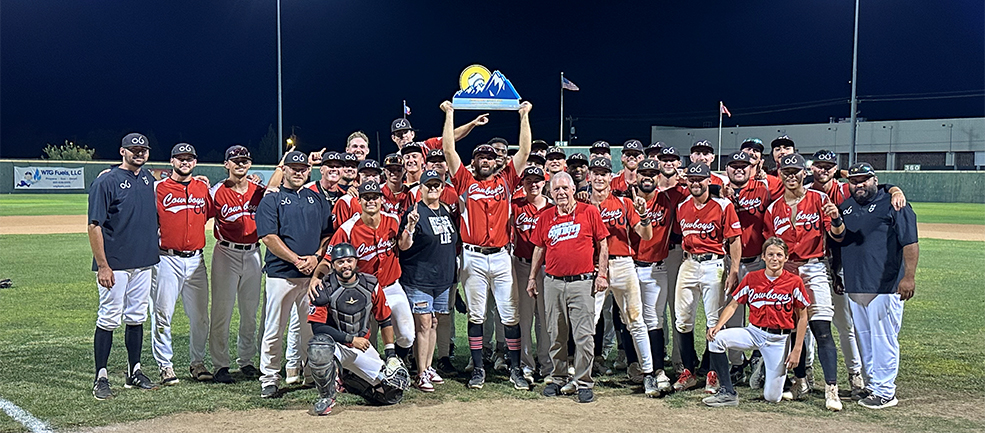
Professional baseball returned to Alpine in 2009 when Fort Worth law professor Frank Snyder—already the founder of the Continental Baseball League's Texarkana Gunslingers—established the Big Bend Cowboys with backing from local Alpine investors. The team finished fourth in 2009 and advanced to the CBL championship before falling to Alexandria in a two-game sweep. In the league's final 2010 season, the Cowboys went 33–15 and defeated Las Cruces in the title game to claim the Ferguson Jenkins trophy. After the CBL dissolved, Alpine reorganized as a nonprofit and became a charter member of the Pecos League alongside Las Cruces, dropping the "Big Bend" moniker in 2011. The franchise captured its first Pecos League title in 2012 by defeating Roswell, then added a second in 2019 over Bakersfield. The 2024 campaign was extraordinary: Alpine posted a league-best 45–4 record and set the Pecos League benchmark with a .918 winning percentage, while infielder James Prockish became the league's all-time hits leader on August 5.
Kokernot Field & the Living Traditions
Kokernot Field remains one of the most distinctive ballparks in American baseball. The 1,200-seat venue, which dates to 1948, is a stone-and-wrought-iron replica of Chicago's Wrigley Field, making it a singular architectural artifact in the remote Big Bend region of West Texas. Its construction in 1947 cost $1.5 million and included infield clay transported by rail from Georgia—a detail that underscored the extraordinary investment behind a small-town team. Beyond the physical structure, the Cowboys carry forward a tradition born in the championship seasons of the 1940s and 1950s: at the close of title runs, Herbert Kokernot presented each player with a pair of handmade red cowboy boots bearing the brand of his "o6" Ranch. That emblem endures today as the insignia on the current Cowboys' cap. The Fort Worth Star-Telegram, in a 2007 profile, called the franchise "one of the state's finest semiprofessional teams," a testament to the lasting cultural footprint Kokernot and his successors left on West Texas baseball.
Gallery
Frequently Asked Questions
Who are the Alpine Cowboys?
The Alpine Cowboys are a professional baseball team based in Alpine, Texas, in the Big Bend region of West Texas. They compete in the Pecos League, an independent circuit with no affiliation to Major League Baseball.
Where do the Alpine Cowboys play their home games?
The team hosts its home schedule at Kokernot Field, a 1,200-seat ballpark that opened in 1947. The structure was built from stone and wrought iron and was designed as a replica of Chicago's Wrigley Field.
How did the Alpine Cowboys franchise get started?
The team traces its origins to 1946, when Herbert L. Kokernot Jr.—the son of a Texas cattle rancher and entrepreneur—reorganized the semiprofessional Alpine Cats into the Alpine Cowboys. A dedicated stadium, Kokernot Field, opened the following year to serve as the new home.
Which notable players have been linked to the Alpine Cowboys?
The franchise's alumni list includes Norm Cash, Don Schwall, Chuck Schilling, and Guido Grilli. These players all went on to pursue careers beyond the Pecos League circuit.
What is the Pecos League and how long have the Alpine Cowboys been part of it?
The Pecos League is an independent baseball league that has no organizational ties to Major League Baseball. The Alpine Cowboys have competed within this league from 2011 through the present season.
More in Pecos League teams 1-24
Spotted an error? Know more?
Reader corrections go straight into our review queue. Suggest an edit · How this site is sourced