Samsung
South Korean conglomerate and global leader in electronics and shipbuilding.

Samsung is a South Korean multinational manufacturing conglomerate headquartered in Seoul. It is the largest chaebol in South Korea and, as of 2024, holds the world's fifth-highest brand value. The group includes numerous affiliated businesses, most operating under the Samsung brand, with key affiliates such as Samsung Electronics, the world's largest information technology company and chipmaker by 2017 revenues.
Quick Facts
- Industry
- Conglomerate
- Founder
- Lee Byung-chul
- Area Served
- Worldwide
- Key People
- Lee Jae-yong (chairman)
- Hq Location
- Samsung Town
- Hq Location City
- Seoul
- Hq Location Country
- South Korea
Facts from the source article.
Lore & Background
Samsung was founded in 1938 by Lee Byung-chul as a trading company named Mitsuboshi Trading Company, dealing in dried fish, groceries, and noodles. It diversified into food processing, textiles, insurance, securities, and retail over the next three decades. In the late 1960s, Samsung entered the electronics industry, producing its first product—a black-and-white television set—and later formed divisions such as Samsung Electronics Devices and Samsung Semiconductor & Telecommunications. The group expanded into construction and shipbuilding in the mid-1970s, areas that fueled its future growth. After Lee's death in 1987, Samsung Group was divided into five business groups: Samsung Group, Shinsegae Group, CJ Group, Hansol Group, and JoongAng Group. These separated groups are independent and not connected to Samsung Group. In the 1990s, Samsung began to rise as an international corporation, becoming the world's largest producer of memory chips in 1992 and the second-largest chipmaker after Intel. Its construction branch built parts of the Petronas Towers, Taipei 101, and the Burj Khalifa.
Reader's Guide
Samsung's significance lies in its transformation from a small trading company into a global industrial powerhouse, particularly in electronics, shipbuilding, and construction. Its entry into electronics in the late 1960s and heavy investment in research and development during the 1980s propelled it to the forefront of the global electronics industry. By 2017, Samsung Electronics was the world's largest information technology company and chipmaker. The group's shipbuilding arm, Samsung Heavy Industries, was the world's second-largest shipbuilder by 2010 revenues. Samsung's construction affiliates, Samsung Engineering and Samsung C&T Corporation, ranked among the top global construction companies. The company's legacy includes its role in building iconic structures and its dominance in memory chips and mobile phones. However, the group has faced legal controversies, including a 1987 U.S. International Trade Commission finding that it unlawfully sold computer chips without licenses, and allegations in 2007 from a former chief lawyer involving bribery and evidence fabrication on behalf of the chairman.
Did You Know?
- Samsung's name means 'three stars' in Korean hanja, symbolizing something big, numerous, and powerful.
- Samsung's first product was a black-and-white television set, released in 1972 under the Samsung Electronics brand.
- Samsung's construction branch contributed to building the Petronas Towers, Taipei 101, and the Burj Khalifa.
Samsung's Role as an OEM Smartphone Maker
Samsung occupies a defined place within the broader world of original equipment manufacturing, specifically in the smartphone segment. Like Sony and Xiaomi, Samsung functions as an OEM that produces both the physical hardware and the software layers of its devices. Rather than building an operating system from scratch, these manufacturers take the Android platform and reshape it to suit their own product identity. Samsung's contribution to this process is the One UI layer, a manufacturer-specific component that sits atop the base Android system. This customization work is a hallmark of the OEM model in mobile: the company designs and assembles the device, adapts the software experience, and brings the finished product to market. The term OEM itself carries multiple meanings across industries, but in the smartphone context it most clearly describes a company that manufactures the complete device—hardware and software—rather than merely supplying a single component to another brand.
Economies of Scale and the OEM Advantage
The business logic underpinning OEM manufacturing rests heavily on the principle of economies of scale. A company that produces parts or complete products at volume can drive the per-unit cost of production downward in ways that a smaller, single-brand operation simply cannot match. This cost advantage is one of the primary reasons purchasing companies turn to OEM partners in the first place: they can source the components or finished goods they need without bearing the capital expense of building and running their own factory. For a smartphone maker like Samsung, this framework means leveraging large-scale production to keep hardware costs competitive while still differentiating the product through software customization. The OEM model also frees the buying company from the operational burden of factory management, quality-control infrastructure, and supply-chain logistics. In essence, the relationship allows one entity to focus on design and brand while another focuses on efficient, high-volume production, creating a division of labor that benefits both parties and ultimately the consumer through lower prices.
The Ambiguity of the OEM Label
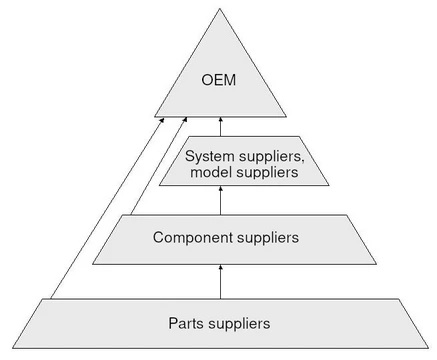
One of the most persistent challenges in manufacturing discourse is the sheer ambiguity of the term OEM. The label is frequently used as a catch-all that lumps together several distinct production arrangements, leading to genuine misunderstanding among industry participants and consumers alike. An OEM might be the company that builds a complete system incorporating subsystems sourced from other firms. It might be an end-product producer selling directly to consumers. In the automotive world, it can refer specifically to the parts installed during a vehicle's original assembly, as opposed to aftermarket replacements. In yet another context, the term is stretched to describe a value-added reseller. This confusion is compounded by the fact that OEM is often used interchangeably with two related but distinct concepts: original design manufacturer (ODM) and original brand manufacturer (OBM). For a company like Samsung, which simultaneously designs, manufactures, and brands its own smartphones, the boundaries between these categories can blur, making precise terminology all the more important when discussing its role in the global supply chain.
OEM Manufacturing Across Diverse Industries
The OEM model is far from confined to any single sector. In the packaging industry, OEM producers specialize in crafting customized gift boxes for wine and spirits brands, allowing those companies to offer distinctive holiday packaging without investing in their own manufacturing facilities. In the automotive space, companies like Autolite, Exide, and Bosch supply spark plugs, batteries, and fuel injectors that become OEM components when installed during a vehicle's initial build, while the same part brands may be classified as aftermarket when sold for later replacement. The software world offers its own variant: Microsoft distributes Windows through OEM licensing to PC builders like Dell, HP, and Lenovo, with product keys tied to specific motherboards rather than being freely transferable. Even skateboarding relies on a handful of specialized deck manufacturers such as PS Stix and BBS that handle everything from wood sourcing to veneer pressing. Samsung's smartphone manufacturing sits within this same broad ecosystem of companies that produce goods at scale for their own labels or for others.
Frequently Asked Questions
What does Samsung actually make for PC gamers?
Samsung Electronics produces SSDs, DDR RAM modules, and gaming monitors that form the backbone of most modern gaming builds. As the world's largest IT company and chipmaker, their storage and memory components are staples in enthusiast rigs.
Who started Samsung and when?
Lee Byung-chul founded the company in 1938 in South Korea. What began as a modest trading operation eventually grew into the largest chaebol in the country.
What does the name Samsung mean?
The name translates to 'three stars' and is derived from the Korean hanja characters 三星. It has been the unifying brand across the conglomerate's many affiliated businesses since the early days.
Why should PC gamers care about Samsung's market position?
Samsung Electronics holds the title of the world's largest information technology company and chipmaker, making their SSDs, memory, and display panels foundational to virtually every gaming PC. Their 2024 brand value ranks fifth-highest globally, underscoring how deeply they sit in the hardware supply chain.
Where is Samsung headquartered?
The conglomerate operates from the Samsung Town office complex in Seoul, South Korea. Beyond electronics, the group also has a major presence in shipbuilding and other industrial sectors.
More in PC Gaming Brands and Manufacturers 1-24
Spotted an error? Know more?
Reader corrections go straight into our review queue. Suggest an edit · How this site is sourced