Sony
Japanese conglomerate known for electronics, entertainment, and the PlayStation.

Sony is a Japanese multinational conglomerate headquartered at the Sony City building in Minato, Tokyo. The Sony Group encompasses businesses including electronics, imaging and sensing, film and television, music, video games, and others. Sony is notable for its role in consumer electronics, its PlayStation video game console line, and its position as the largest image sensor manufacturer, second largest camera manufacturer, and third-largest television manufacturer by sales as of 2020.
Quick Facts
- Romanized Name
- Sonī Gurūpu kabushiki-gaisha
- Traded As
- 6758 / SONY / Nikkei 225 component / TOPIX Core30 component
- Industry
- Conglomerate
- Founded
- 7 May 1946 / Nihonbashi, Chūō, Tokyo, Japan
- Founders
- Masaru Ibuka / Akio Morita
- Hq Location
- Sony City, Kōnan
- Hq Location City
- Minato, Tokyo
- Hq Location Country
- Japan
- Area Served
- Worldwide
- Key People
- Kenichiro Yoshida / (executive chairman) / Hiroki Totoki / (president and CEO) / Lin Tao / (chief financial officer)
- Products
- Automotive / Anime / Cameras / Computer hardware / Consumer electronics / Films / Music / Robots / Semiconductors / Telecommunications equipment / Television shows / Video games
- Services
- Advertising agency / Network services
Facts from the source article.
Lore & Background
Sony began in 1946 when Masaru Ibuka started an electronics shop in Tokyo, joined by Akio Morita to form Tokyo Tsushin Kogyo. The company built Japan's first tape recorder, the Type-G, and changed its name to Sony in 1958. The name was chosen as a mix of the Latin 'sonus' (sound) and 'sonny', a 1950s American slang term for a young boy. The first Sony-branded product was the TR-55 transistor radio in 1955. Sony's TR-63 radio helped crack open the U.S. market and launch consumer microelectronics.
Sony expanded beyond electronics by acquiring CBS Records in 1988 and Columbia Pictures Entertainment in 1989, and entered the home video game console market with the PlayStation in 1994. In 2001, it established a financial services division in Japan, which was turned into a separate company in September 2025, with Sony maintaining 20% of shares. In 2021, the company was renamed Sony Group Corporation as it transitioned into a holding company structure, with its electronics business continuing under Sony Corporation.
Sony has historical ties to the Sumitomo Mitsui Financial Group, dating back to the 1950s when it relied exclusively on Mitsui Bank for financing. The company is publicly traded on the Tokyo Stock Exchange and the New York Stock Exchange.
Reader's Guide
Sony's significance in PC gaming stems primarily from its PlayStation brand, which launched in 1994 and established the company as a major force in video games. While Sony is not a traditional PC hardware manufacturer, its PlayStation consoles have influenced PC gaming through cross-platform releases, technology sharing, and the expansion of Sony's gaming ecosystem. The company's imaging and sensing division, holding 55% of the global image sensor market in 2020, supplies components used in various devices including gaming peripherals and displays. Sony's legacy in consumer electronics—from the Trinitron television and Walkman to the co-development of the compact disc—demonstrates its long history of innovation. The company's transition to a holding company structure in 2021 reflects its diversification across electronics, entertainment, and financial services. Sony's position as the second largest camera manufacturer and third-largest television manufacturer further underscores its broad influence in visual technology relevant to gaming.
Did You Know?
- Sony's first product was an electric rice cooker in the late 1940s.
- The name 'Sony' combines the Latin 'sonus' (sound) and the slang 'sonny' (young boy).
- Sony held a 55% share of the global image sensor market in 2020.
- The company was renamed Sony Group Corporation in 2021 as it became a holding company.
Sony's Position in the OEM Smartphone Ecosystem
Sony occupies a distinct place within the global smartphone manufacturing landscape as an original equipment manufacturer. Alongside peers such as Samsung and Xiaomi, Sony takes on the dual responsibility of producing both the physical hardware and the software layer of its mobile devices. Rather than simply assembling a generic platform, Sony engages in a process of customizing and adapting the Android operating system to fit its own hardware architecture. This means the company layers manufacturer-specific components on top of the base Android framework, creating a tailored user experience that reflects its own design priorities. In this model, Sony is not merely a brand name stamped onto a finished product; it is the entity that oversees the creation of the complete system, integrating its own software elements into the operating system. The OEM designation here signals that Sony is the original maker of the complete system, responsible for both the silicon and the code that define the end-user experience.
Economies of Scale and the Manufacturing Advantage
One of the fundamental economic principles underpinning Sony's OEM operations is the pursuit of cost efficiency through volume production. Original equipment manufacturers across industries rely heavily on their capacity to spread fixed costs across large production runs, thereby driving down the per-unit expense of manufacturing. For a company like Sony, this means that the financial burden of tooling, quality control, and supply chain management is distributed over enormous production volumes rather than concentrated on a single product line. The broader OEM model also offers a strategic advantage: a purchasing entity can source the components or finished products it needs without the capital outlay of constructing and operating its own factory. This separation of design ownership from physical production allows companies to focus resources on innovation and branding while leaving the heavy lifting of manufacturing to specialized producers. In the smartphone context, this framework enables Sony to compete on both hardware quality and software experience without being constrained by the overhead of vertically integrated manufacturing.
Software Adaptation and the Customization Pipeline
The relationship between an OEM and its operating system is far more involved than a simple license agreement. In the Android ecosystem, manufacturers like Sony do not merely install a stock version of the OS onto their devices. Instead, they engage in a process of adapting and customizing the platform to align with their specific hardware configurations. This involves integrating manufacturer-specific software components into the base Android framework, creating a differentiated user interface and feature set that sets their devices apart from competitors. The process mirrors, in structural ways, how Windows OEMs like Dell, HP, or Lenovo bundle additional software—drivers, maintenance tools, and applications—onto their pre-installed images before a device reaches the consumer. For Sony, the customization layer represents a critical point of brand differentiation, where the company's design language and feature priorities are embedded directly into the software experience. The result is a device where hardware and software are not just compatible but deeply intertwined, each shaping the other's functionality.
Navigating the OEM, ODM, and OBM Spectrum
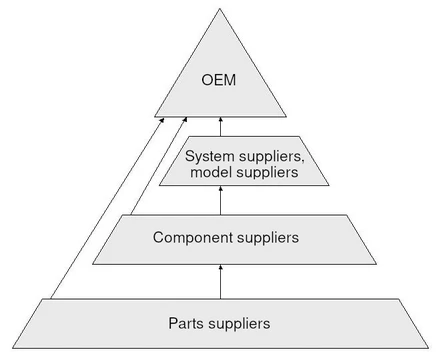
The terminology surrounding manufacturing roles in the technology industry is notoriously imprecise, and Sony's position within it is no exception. The acronym OEM itself carries multiple, often contradictory interpretations depending on the context in which it is used. In some settings, it refers to the company that builds a complete system incorporating subsystems from other vendors. In others, it designates an end-product producer, or even a value-added reseller. The term is frequently conflated with ODM (original design manufacturer) and OBM (original brand manufacturer), creating genuine confusion about who actually designs, who builds, and who brands a given product. For a company like Sony, which both designs and manufactures its own smartphones while also potentially sourcing components from external suppliers, these distinctions matter. The ambiguity means that Sony's role can be described differently depending on whether one is discussing its in-house design work, its assembly operations, or its brand marketing. Understanding where Sony sits on this spectrum requires recognizing that the OEM label is less a fixed category than a flexible descriptor that shifts with context.
Frequently Asked Questions
Who is Sony?
Sony is a Japanese conglomerate originally founded in 1946 as Tokyo Tsushin Kogyo by Masaru Ibuka and Akio Morita. It is headquartered in the Sony City building in Minato, Tokyo, and operates across electronics, entertainment, gaming, and imaging.
What role does Sony play in PC gaming?
Sony's main gaming footprint is the PlayStation console line, whose titles and development tools often cross over into the PC ecosystem. Underneath the hardware, Sony also supplies the image sensors that power a large share of PC cameras and peripherals, holding about 55% of the global sensor market in 2020.
Why is Sony important to gamers?
Sony built the PlayStation franchise, one of the most recognizable gaming brands worldwide, and its first-party studios frequently release titles that also appear on PC. Beyond games, Sony's dominance in image sensors means a huge portion of PC webcam and capture hardware depends on Sony-made components.
Where is Sony based and how big is the company?
Sony runs its global operations from the Sony City building in Minato, Tokyo, and has been listed on the New York Stock Exchange since 1961 alongside its Nikkei 225 and TOPIX Core30 listings in Japan. By 2020 it was the world's largest image sensor manufacturer, the second-largest camera maker, and the third-largest television seller by unit sales.
More in PC Gaming Brands and Manufacturers, Part 2 1-24
Spotted an error? Know more?
Reader corrections go straight into our review queue. Suggest an edit · How this site is sourced