JBL
American audio manufacturer founded in 1946 by James Bullough Lansing.

JBL is an American audio equipment manufacturer headquartered in Los Angeles, California, founded in 1946 by James Bullough Lansing. The company serves the home and professional audio markets, producing home audio speakers, waterproof Bluetooth speakers, car audio, live PA systems, studio monitors, and cinema loudspeakers. JBL is a subsidiary of Harman International, which is owned by Samsung Electronics.
Quick Facts
- Former Name
- Lansing Sound
- Founder
- James Bullough Lansing
- Hq Location City
- Los Angeles, California, United States
- Industry
- Audio
- Products
- Amplifiers, loudspeakers, headphones
- Owner
- Samsung Electronics (2017–)
- Parent
- Harman International Industries (1969–)
Facts from the source article.
Lore & Background
JBL traces its roots to the Lansing Manufacturing Company, founded in 1927 by James Bullough Lansing and Ken Decker in Los Angeles, producing speaker drivers for radio consoles. In 1933, the company built components for the Shearer Horn, developed for MGM, which received an Academy Scientific and Technical Award in 1936. After Decker's death in 1939 and financial troubles, the company was bought by Altec Service Corporation in 1941 and renamed Altec Lansing. Lansing left in 1946 and founded Lansing Sound, later shortened to JBL Sound.
Early JBL products were near-copies of Altec Lansing designs, but the first original product was the D130, a 15-inch transducer that remained in production for 55 years. After Lansing's suicide in 1949, vice president Bill Thomas took over, using a life insurance policy naming the company as beneficiary to continue operations. Thomas revitalized the company and led growth for two decades. Key early designs included the model 375 high-frequency driver and the 075 ring-radiator driver, known as 'JBL bullets'.
In 1955, the brand name JBL was introduced to resolve disputes with Altec Lansing, with a distinctive exclamation point logo. The JBL 4320 series studio monitor became a standard worldwide through Capitol Records and EMI. JBL entered rock and roll when Leo Fender adopted the D130 for Fender guitar amplifiers. In 1969, Thomas sold JBL to Harman International. The 1970s saw the L-100 become the bestselling loudspeaker model of any company at that time, and by 1977 more recording studios used JBL monitors than all other brands combined, according to a Billboard survey.
Reader's Guide
JBL's significance lies in its dual impact on both professional and consumer audio markets. In the professional realm, JBL studio monitors became the de facto standard in recording studios worldwide by the late 1970s, and the company's loudspeakers were the basis for the development of the THX loudspeaker standard, making JBL a prominent cinema loudspeaker manufacturer. The company also became a major supplier to the tour sound industry, with its loudspeakers used by touring rock acts and music festivals.
For consumers, the L-100 speaker of the 1970s was a landmark product, becoming the bestselling loudspeaker model of any company at that time and making JBL a household brand. The company later expanded into mass-market consumer lines with the Northridge series while also pursuing high-end projects like the Everest and K2 lines. JBL's automotive division currently supplies audio systems to Fiat, Kia, and Toyota. The company's longevity is reflected in products like the D130 transducer, which remained in production for 55 years, and the D175 high-frequency driver, which stayed in the catalog through the 1970s. JBL's history is marked by innovation in driver design, including the use of Alnico V magnets, four-inch voice coils, and titanium-deposition tweeter diaphragms.
Did You Know?
- James Bullough Lansing committed suicide in 1949, but a life insurance policy naming the company as beneficiary allowed it to continue.
- The JBL 075 ring-radiator driver is known as the 'JBL bullet' because of its distinctive shape.
- The D130 15-inch transducer remained in production for 55 years after its introduction in 1947.
Position Within the Component Ecosystem
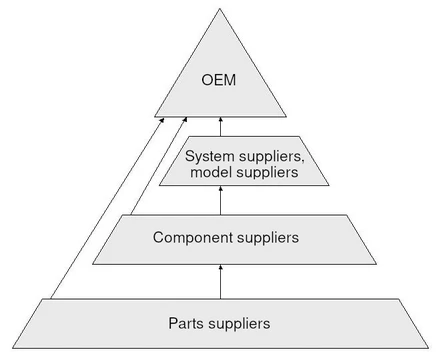
In the broad taxonomy of computer hardware manufacturing, speakers occupy a distinct category alongside dozens of other component types, from CPUs and motherboards to power supply units and network interface cards. A speaker manufacturer like JBL operates within this wider industrial landscape, producing one specialized element of the personal computer ecosystem rather than assembling complete systems. The hardware industry is structured so that individual component makers—those crafting memory modules, solid-state drives, cooling systems, or audio output devices—supply parts that ultimately feed into finished machines. This modular architecture means a company focused on speakers does not need to design a graphics processing unit or manufacture a motherboard; its role is to deliver high-quality audio transduction as a discrete product. The existence of dedicated categories for speakers, headphones, and sound cards in the hardware taxonomy underscores that audio output is treated as its own manufacturing discipline, separate from the processing, storage, and connectivity components that make up the rest of a computer's internal architecture.
The Architecture of Hardware Specialization
The computer hardware industry is organized around deep specialization, with each component category maintained by a relatively small set of dedicated manufacturers. Where some sectors like NAND flash for solid-state drives concentrate production among just a handful of firms, others such as keyboards, mice, or optical disc drives support a broader field of producers. A speaker manufacturer fits into this pattern of focused expertise: rather than attempting to cover the full spectrum from central processing units to video cards, the company concentrates its engineering and production capacity on acoustic output. This specialization is mirrored across the entire hardware tree, where even subcategories like non-refillable liquid cooling versus refillable kits, or internal versus external hard disk drives, each maintain their own manufacturer rosters. The result is an industry where no single entity typically dominates every component, and where a firm's identity is anchored to the particular slice of the hardware stack it serves with precision and consistency.
Audio Components in the PC Landscape
Within the full inventory of computer hardware categories, audio-related components appear in several distinct slots: speakers, headphones, and sound cards each carry their own manufacturer listings, reflecting the industry's tendency to separate audio output, personal listening, and signal processing into independent product lines. A company operating in the speaker segment therefore exists in a parallel relationship to sound card designers and headphone makers rather than in direct competition with them. The hardware taxonomy further distinguishes these audio elements from adjacent categories such as webcams, image scanners, or USB flash drives, reinforcing that each functional role in a computer setup is treated as its own manufacturing domain. For a speaker-focused manufacturer, this means the competitive and supply-chain context is defined by the speaker category specifically, with its own list of active producers, rather than being subsumed under a broader audio or peripheral grouping. The separation also means that innovations in, say, sound card chipsets do not automatically translate into changes in speaker design, preserving a degree of independence within the audio sub-ecosystem.
Market Structure and Industry Taxonomy
The structure of the computer hardware market, as reflected in its manufacturer listings, reveals a layered industry in which some components are produced by a tight oligopoly while others support a long tail of smaller firms. The NAND flash market, for instance, is dominated by a small group of major producers, whereas categories like joystick manufacturers or TV tuner card makers may encompass a wider, more fragmented set of companies. Speaker manufacturing sits within this broader pattern of varying market concentration. The industry also shows a clear distinction between companies that design components and those that manufacture them; in the CPU space, for example, many firms produce designs without fabricating their own silicon. This design-versus-manufacture split, along with the presence of both current and defunct companies across categories, paints a picture of a hardware ecosystem that is both deeply specialized and historically layered, with firms entering and exiting different component niches over time while the overall taxonomy of categories remains stable.
Frequently Asked Questions
Who is JBL?
JBL is an American audio equipment company based in Los Angeles, California, that was started in 1946 by James Bullough Lansing. It serves both consumer and professional audio markets.
What does JBL actually make?
The company produces a wide range of audio gear including home speakers, waterproof Bluetooth speakers, car audio systems, live PA systems, studio monitors, and cinema loudspeakers.
Who owns JBL now?
JBL operates as a subsidiary of Harman International, and Harman is in turn owned by Samsung Electronics, making the Korean tech giant the ultimate parent company.
What were JBL's very first products?
The company launched with the Model D101 15-inch loudspeaker and the D175 high-frequency driver, and an early standout was the D130 15-inch transducer featuring a 4-inch flat ribbon wire voice coil and an Alnico V magnet.
Why does JBL matter to gamers and audio enthusiasts?
Since 1946, JBL has been a defining name in sound reproduction, and its studio monitors and home audio lines are commonly used by PC gamers, content creators, and music producers who need reliable, high-fidelity sound.
More in PC Gaming Brands and Manufacturers, Part 2 1-24
Spotted an error? Know more?
Reader corrections go straight into our review queue. Suggest an edit · How this site is sourced