Cytotechnology
Microscopic cell interpretation to detect cancer and abnormalities.

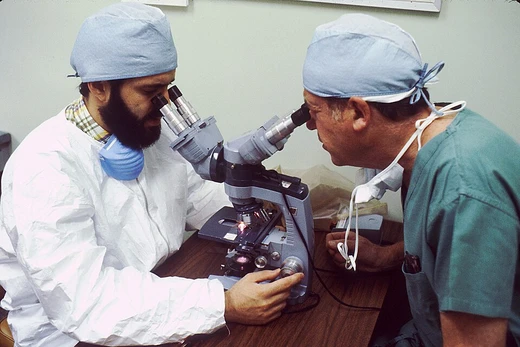
Cytotechnology involves using a microscope to examine cells for signs of cancer and other diseases. The cells being studied can come from various sources, including the cervix (via a Pap test), the lungs, the gastrointestinal tract, or body cavities. The professionals who perform this work, called cytotechnologists, are allied health specialists trained to analyze cell samples mounted on glass slides.
The evaluation process has two stages. First, an initial screening—sometimes done by a computer—flags areas that might need closer attention. Then, the cytotechnologist conducts a secondary review to decide if the specimen is normal or abnormal. Any abnormal findings are passed on to a pathologist, who makes the final medical diagnosis.
Accuracy is critical in this field, just as in other medical disciplines. The collaboration between cytotechnologists and pathologists serves as a built-in quality control system. Their discussions and any disagreements help measure quality assurance. For instance, when building a tissue microarray (TMA), the cytotechnologist must consult the supervising pathologist at several steps. The pathologist first clarifies what to look for during selection, then reviews any samples the cytotechnologist finds questionable.
Certification requirements for cytotechnologists vary by country. In the United States, there are two main paths: earning a bachelor’s degree followed by a one-year accredited cytotechnology program, or completing a cytotechnology program that also grants a bachelor’s degree. After finishing either route, candidates can take a certification exam from the American Society for Clinical Pathology (ASCP). Those who pass may use the designation “CT (ASCP).” International applicants can take the ASCPi exam instead; however, passing the ASCPi does not automatically allow practice in the U.S.—additional state licensure and regulatory requirements must be met. Professional standards in the U.S. are set by the American Society for Cytotechnology (ASCT), which also handles legislative and regulatory issues and provides education. Individual states regulate licensure, usually following guidelines from the American Society of Cytopathology (ASC), an organization open to all cytology professionals, not just cytopathologists.
- First certification year
- 1958
Lore & Background
Cytotechnologists are allied health professionals who evaluate cell specimens on glass slides using microscopes. Their work begins with an initial evaluation, which may be performed by a computer to highlight areas of interest, followed by a secondary evaluation by the cytotechnologist to classify specimens as normal or abnormal. Abnormal findings are referred to a pathologist for final diagnosis. The working relationship between cytotechnologist and pathologist provides quality control; discussions and disagreements between them serve as a measure of quality assurance. For example, when constructing a tissue microarray (TMA), the cytotechnologist must consult the supervising pathologist at multiple points, including ensuring the selection criteria are understood and reviewing any questionable samples. The American Society of Cytopathology (ASC) is open to all cytology professionals, not primarily for cytopathologists.
Reader's Guide
Cytotechnology plays a critical role in the early detection of cancer and other diseases through the microscopic analysis of cells. The field's significance lies in its systematic two-step evaluation process, which combines computer-assisted screening with human expertise to improve accuracy. The collaboration between cytotechnologists and pathologists ensures quality control and assurance, with their discussions and disagreements serving as benchmarks. Certification pathways in the United States require a bachelor's degree plus an accredited cytotechnology program or a combined program, followed by an exam from the American Society for Clinical Pathology (ASCP). The American Society for Cytotechnology (ASCT) sets professional standards and monitors legislative issues, while individual states regulate licensure. Internationally, organizations like the British Association of Cytopathology (BAC) and the European Federation of Cytology Societies (EFCS) fulfill similar roles. The field's history includes the first ASCP certification in 1957, a peak of 130 schools in the 1970s, and a decline to 32 schools by 2011.
Did You Know?
- The first cytotechnologist was certified by the ASCP in 1957.
- The number of cytotechnology schools peaked at 130 in the 1970s and dropped to 32 in 2011.
- Cytotechnologists can join the American Society of Cytopathology (ASC), which is primarily for cytopathologists.
- People outside the United States can take the ASCPi certification exam to practice in the USA.
More in Pathology 1-24
Spotted an error? Know more?
Reader corrections go straight into our review queue. Suggest an edit · How this site is sourced