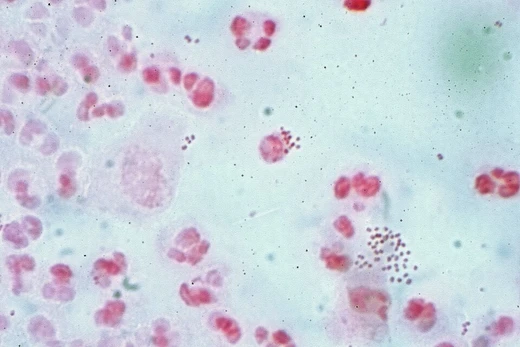
Clostridium botulinum
Anaerobic bacterium producing the most potent known neurotoxin.
Last updated
A gram-positive, rod-shaped, motile bacterium that forms spores, requires an oxygen-free environment, and generates the potent neurotoxin known as botulinum toxin is Clostridium botulinum.[1] In humans and other animals, the severe flaccid paralytic condition called botulism is brought on by this toxin.[2] Bulging canned food is a common sign of C. botulinum presence, and the bacterium can also proliferate in carrion and traditionally aged meats.[3]
Scientific classification
- DomainBacteria
- KingdomBacillati
- PhylumBacillota
- ClassClostridia
- OrderEubacteriales
- FamilyClostridiaceae
- GenusClostridium
- SpeciesClostridium botulinum
Named by van Ermengem, 1896
Close relatives
Other species of Clostridium with a Codexery entry.
- Clostridium perfringens Clostridium perfringens
- Clostridium tetani Clostridium tetani
Sources: Wikipedia taxobox: Clostridium botulinum (CC BY-SA 4.0)
Where the clostridium botulinum has been recorded
Each dot is a place where the species has been observed and reported (447 records, half-degree grid) — not a modelled range. 98 inland records left out (institution coordinates).
Map: drawn by Codexery. Data: GBIF occurrence search (records CC0 / CC BY) · Natural Earth basemap (public domain)
Quick Facts
- Field
- Microbiology
- Known for
- Production of botulinum toxin, the most potent toxin known in scientific literature
- Toxin lethal dose
- 1.3–2.1 ng/kg in humans
- Serotypes
- A–G
Facts from the source article.
Key facts and history
The isolate was originally named Bacillus botulinus, after the Latin word for sausage, botulus.[4] Ida A. Bengtson proposed placing the organism into the genus Clostridium.[4] The Wellcome Trust Sanger Institute sequenced the entire genome of C. botulinum ATCC 3502 in 2007.[5] A type "A" toxin is encoded by this particular strain.[5]
Four separate groups, designated I through IV, now make up the varied collection of pathogenic bacteria known as C. botulinum.[6] With a lethal dose for humans of 1.3–2.1 ng/kg, the botulinum toxin is the most potent toxin that has been identified.[2] Heat-resistant endospores that are frequently present in soil and can endure harsh circumstances are produced by C. botulinum.[6]
What the research sources say
Botulinum spores are found on most fresh produce but are harmless on fresh foods because they grow only in oxygen-free environments.[7] The Extension states that pressure canners reaching 250 degrees Fahrenheit can destroy C. botulinum spores, while water-bath canners at 212 degrees Fahrenheit cannot.[7] Health Canada describes botulism as a rare neuroparalytic disease caused by a neurotoxin produced by C. botulinum.[8] Health Canada also states that laboratory confirmation of foodborne botulism is made by demonstration of botulinum toxin in serum, stool, gastric aspirate, or incriminated food.[8]
References
- Wikipedia, "Clostridium botulinum" (CC BY-SA 4.0), which cites: "StatPearls", StatPearls Publishing, 2021; "Botulinal neurotoxins: revival of an old killer", Current Opinion in Pharmacology, June 2005, p. 274–279; "Crystal structure of the catalytic domain of the Weissella oryzae botulinum-like toxin", FEBS Letters, June 2019, p. 1403–1410; "Botulinum toxin: Bioweapon & magic drug", Indian Journal of Medical Research, November 2010, p. 489–503; Rossetto, "Botulinum neurotoxins: genetic, structural and mechanistic insights", Nature Reviews Microbiology, August 2014, p. 535–549; "Biology and gen en.wikipedia.org
- Wikipedia, "Clostridium botulinum" (CC BY-SA 4.0), which cites: "Laboratory diagnostics of botulism", Clinical Microbiology Reviews, April 2006, p. 298–314; "Crystal structure of the catalytic domain of the Weissella oryzae botulinum-like toxin", FEBS Letters, June 2019, p. 1403–1410; "Sherris Medical Microbiology", 2010 (we also read that source) en.wikipedia.org
- Wikipedia, "Clostridium botulinum" (CC BY-SA 4.0), which cites: "Preventing Foodborne Illness: Clostridium botulinum", edis.ifas.ufl.edu, 9 January 2015; Austin, "Botulism in the North: a disease without borders", Clinical Infectious Diseases, 2011, p. 593–594; Middaugh, "Outbreak of botulism type E associated with eating a beached whale--Western Alaska, July 2002", Morbidity and Mortality Weekly Report, 2003, p. 24-26 (original not read by us) en.wikipedia.org
- Wikipedia, "Clostridium botulinum" (CC BY-SA 4.0), which cites: "Über einen neuen anaeroben Bacillus und seine Beziehungen Zum Botulismus", Zeitschrift für Hygiene und Infektionskrankheiten, 1897, p. 1–8; "Historical notes on botulism, Clostridium botulinum, botulinum toxin, and the idea of the therapeutic use of the toxin", Movement Disorders, March 2004, p. S2–S6; "Studies on organisms concerned as causative factors in botulism", Bulletin (Hygienic Laboratory), 1924, p. 101 fv (original not read by us) en.wikipedia.org
- Wikipedia, "Clostridium botulinum" (CC BY-SA 4.0), which cites: "Clostridium botulinum A str. ATCC 3502 genome assembly ASM6358v1", ncbi.nlm.nih.gov (we also read that source) en.wikipedia.org
- Wikipedia, "Clostridium botulinum" (CC BY-SA 4.0), which cites: "Biology and genomic analysis of Clostridium botulinum", Advances in Microbial Physiology, 2009, p. 183–265, 320 (we also read that source) en.wikipedia.org
- "Botulism: take care when canning low-acid foods", extension.umn.edu. facts only, no text reused. extension.umn.edu
- "Botulism - Guide for Healthcare Professionals", Health Canada, 2012-07-18. facts only, no text reused. canada.ca
Each numbered sentence above was checked against the source it cites before publication. Sentences citing Wikipedia adapt text from the English Wikipedia article Clostridium botulinum (contributors), used under CC BY-SA 4.0; this entry is available under the same licence. Other sources were used for facts only; no text or images are copied from them.
More in Pathogenic Bacteria
Sources
Compiled from Wikipedia and the sources listed below. Text from Wikipedia is available under CC BY-SA 4.0; this entry is adapted from it.
- Wikipedia: Clostridium botulinum (CC BY-SA 4.0).
- Occurrence records: GBIF (CC0 / CC BY). Basemap: Natural Earth (public domain).
- Word definitions: the , each quoted from its Wikipedia article.
Spotted an error? Know more?
Reader corrections go straight into our review queue. Suggest an edit · How this site is sourced