Lo mein
A Chinese noodle dish with Cantonese origins and global variations.
Last updated

Slakjaw (talk) · via Wikipedia: Lo mein · CC-BY-3.0
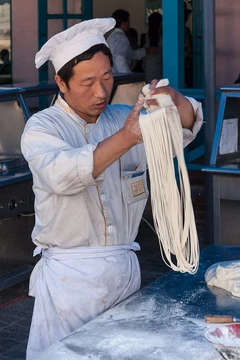
Lo mein is a Chinese dish featuring noodles, known for its preparation in Cantonese style where it is often topped with or accompanied by meat, wontons, or vegetables, and may be served with a bowl of broth. The term originates from the Cantonese 撈麵, meaning 'stirred noodles,' and the dish is made of thin flour-and-egg noodles notable for their elastic texture.
Lore & Background
In Cantonese cuisine, lo mein typically consists of boiled wheat noodles tossed in a sauce such as oyster sauce, or served with a sauce alongside. It may be accompanied by wontons, char siu, or beef brisket. Unlike chow mein, Cantonese-style lo mein is not traditionally pan-fried or stir-fried. In northern China, the term bàn miàn can refer to other types of wheat noodles without egg, including laghman in Xinjiang.
Reader's Guide
In American Chinese restaurants, lo mein is a popular take-out food sometimes considered synonymous with chow mein, but it is distinct from both Cantonese lo mein and Cantonese crispy chow mein. U.S. lo mein noodles are usually stir-fried with a sauce made from soy sauce and other seasonings, with vegetables like bok choy and cabbage, and meats such as roast pork, beef, or chicken.
Varieties include shrimp lo mein, lobster lo mein, vegetable lo mein, and 'house' lo mein. In Indonesian Chinese cuisine, lo mein is made using egg noodles or 'mie hokkien,' which are ribbon-shaped noodles made of wheat flour and eggs. The dish's significance lies in its adaptability across cultures while retaining its core identity as a noodle dish with a sauce.
More in Pasta & Noodles
Sources
Compiled from Wikipedia and the sources listed below. Text from Wikipedia is available under CC BY-SA 4.0; this entry is adapted from it.
- Wikipedia: Lo mein (CC BY-SA 4.0).
Spotted an error? Know more?
Reader corrections go straight into our review queue. Suggest an edit · How this site is sourced