Cockatiel
Smallest cockatoo, native to Australia, popular companion parrot.

Shreya.Bhopal · CC BY-SA 4.0
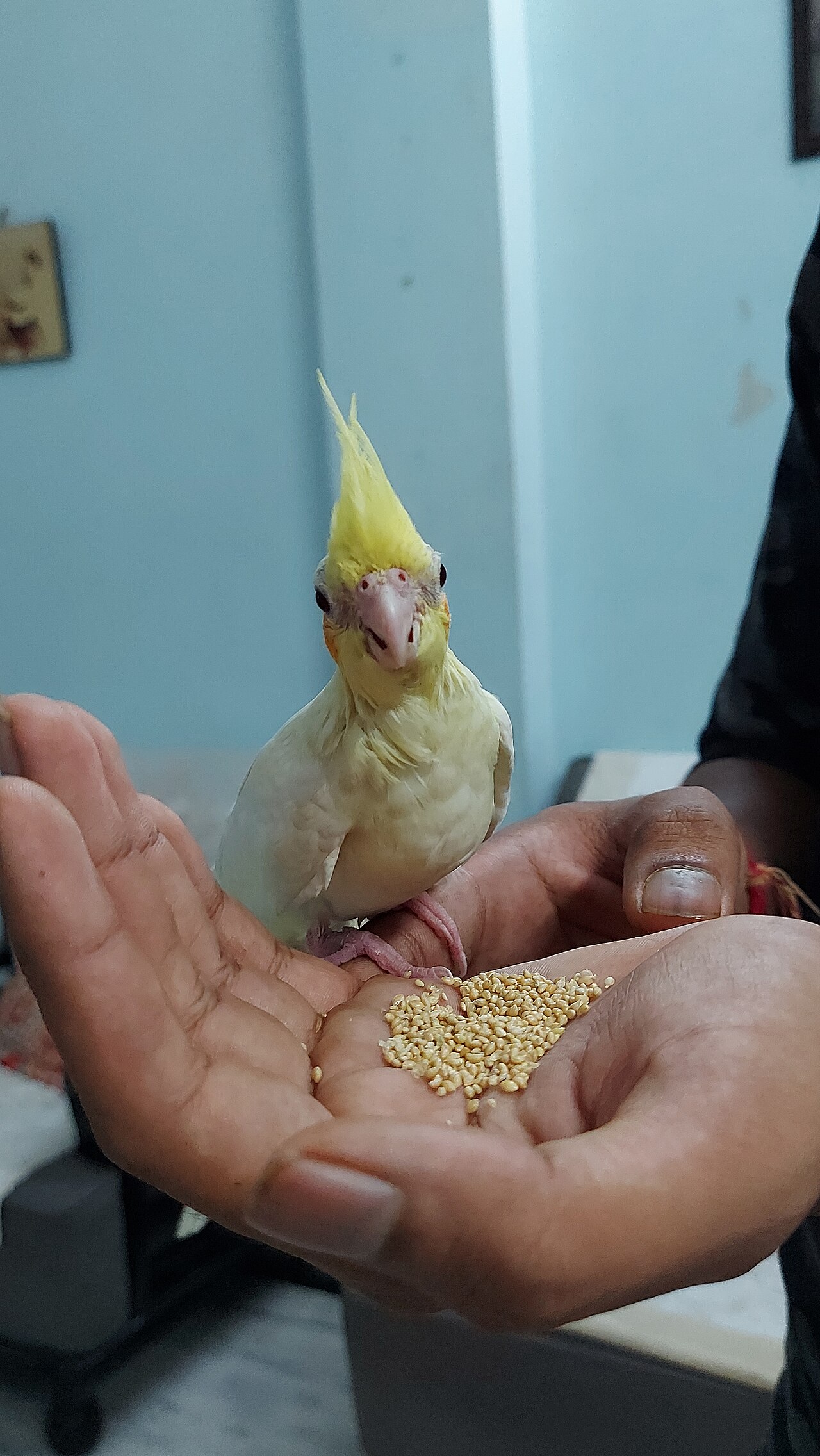
The cockatiel (Nymphicus hollandicus)—also called the weero, weiro, or quarrion—is a small- to medium-sized parrot and the tiniest member of the cockatoo family (Cacatuidae). This bird is native to Australia and is the only species in its genus, Nymphicus. Known for their expressive crests, long tail feathers, and friendly, playful demeanor, cockatiels form strong bonds with people. This makes them one of the most popular companion parrots globally and places them among the top five most common pet bird species; around 4.8 million households in the United States keep them. Yet, a lack of proper care knowledge leads to one of the highest surrender rates among pet birds. Good care involves regular social time with owners, a balanced diet, toys for mental stimulation, annual vet visits, and quick action if signs of illness or breathing problems appear. Owners should provide perches of different widths, exposure to UV light, and roughly two hours outside the cage each day. Because many owners are unfamiliar with these needs, cockatiels often suffer from long-term malnutrition and behavior issues, and are frequently given up to shelters within about a year and a half of being adopted. The cockatiel is the sole member of the genus Nymphicus. For a time, scientists weren’t sure if it was a crested parakeet or a small cockatoo, but recent molecular studies have placed it in its own subfamily, Nymphicinae. It is now considered the smallest subfamily within the Cacatuidae (cockatoo family). Cockatiels are native to Australia, where they favor wetlands, scrublands, and bushlands. Many different color mutations exist. **Taxonomy and etymology**
The species was first described by J. F. Gmelin in 1788 in an edition of *Systema naturae* as *Psittacus novaehollandiae*, then by Scottish writer and naturalist Robert Kerr in 1792 as *Psittacus hollandicus*, and finally moved to its own genus, *Nymphicus*, by Wagler in 1832. The genus name comes from early European travelers who found the birds so beautiful they named them after mythical nymphs. The species name *hollandicus* refers to New Holland, an old name for Australia. Its biological relationships were unclear for a long time. It is now placed in the monotypic subfamily Nymphicinae, though it was once classified among the Platycercinae (broad-tailed parrots). Molecular studies settled the matter. A 1984 study of protein allozymes showed it is more closely related to cockatoos than to other parrots, and mitochondrial 12S rRNA sequence data places it within the Calyptorhynchinae (dark cockatoos) subfamily. Its parakeet-like (long-tailed) appearance is a result of its smaller size and shift in ecological niche. However, sequence analysis of intron 7 of the nuclear β-fibrinogen gene suggests it may be distinct enough to keep the Nymphicinae subfamily separate rather than including it in Calyptorhynchinae. Today, the cockatiel is biologically classified as a true member of Cacatuidae because it shares all the cockatoo family’s key features: an erectile crest, a gallbladder, powder down, a suppressed cloudy-layer (which prevents blue and green structural colors), and facial feathers covering the sides of the beak—traits rarely found outside Cacatuidae. This relationship is further supported by at least one documented case of a successful hybrid between a cockatiel and a galah, often called a galatiel. **Distribution and habitat**
Cockatiels are native to Australia, mostly found in arid or semi-arid areas but always near water. They are largely nomadic, moving to where food and water are available. They are usually seen in pairs or small flocks, and sometimes hundreds gather around a single water source. In the wild, they mainly eat seeds, especially from acacia, wheat, sunflower, and sorghum, and often feed on cultivated crops, much to farmers’ dismay. They can be observed in and around western New South Wales and Queensland, Alice Springs, the Kimberley region, and the northwestern corner of Western Australia. They are absent from the most fertile southwest and southeast corners of the country, the deepest Western Australian deserts, and Cape York Peninsula. **Description**
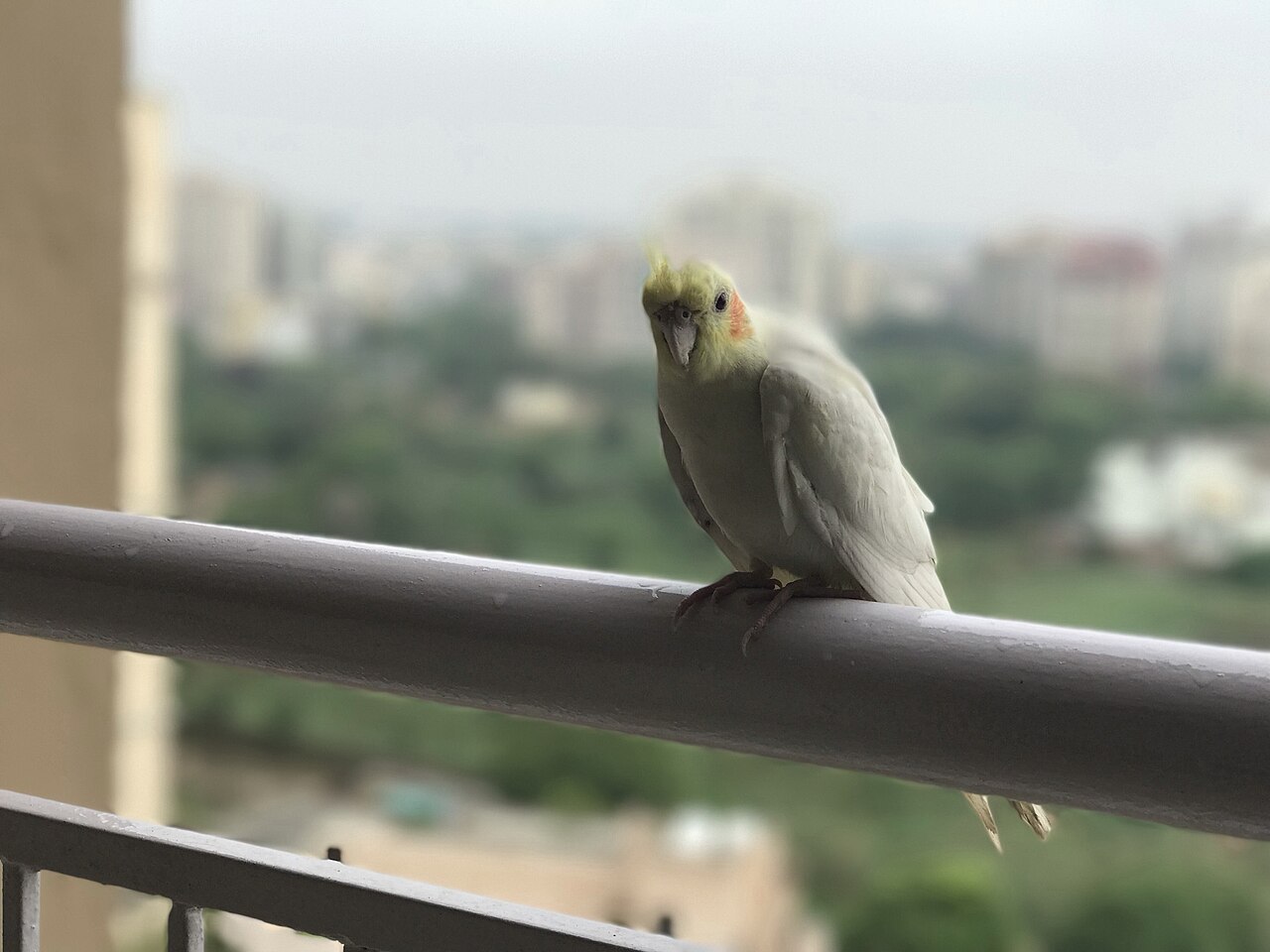
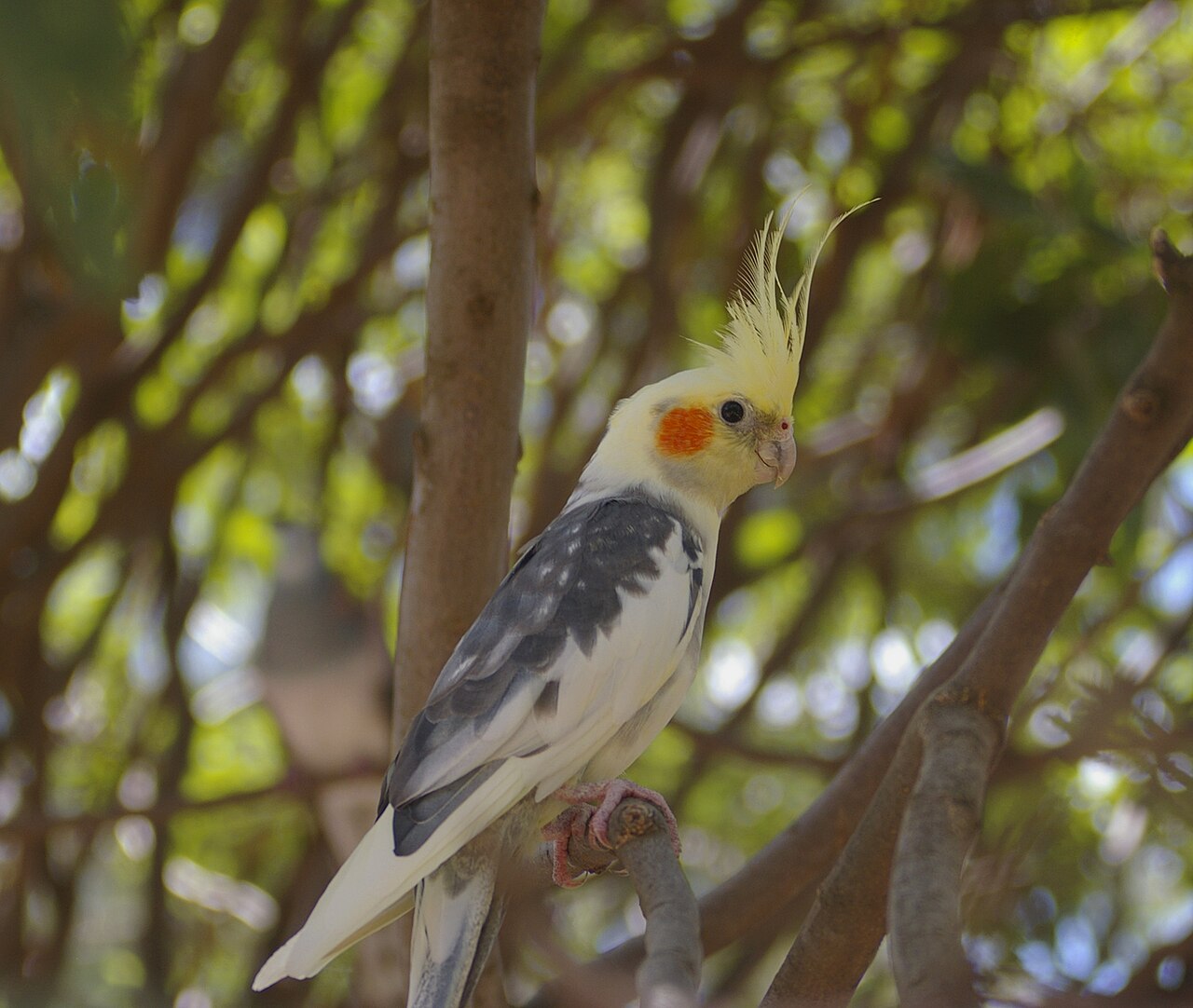
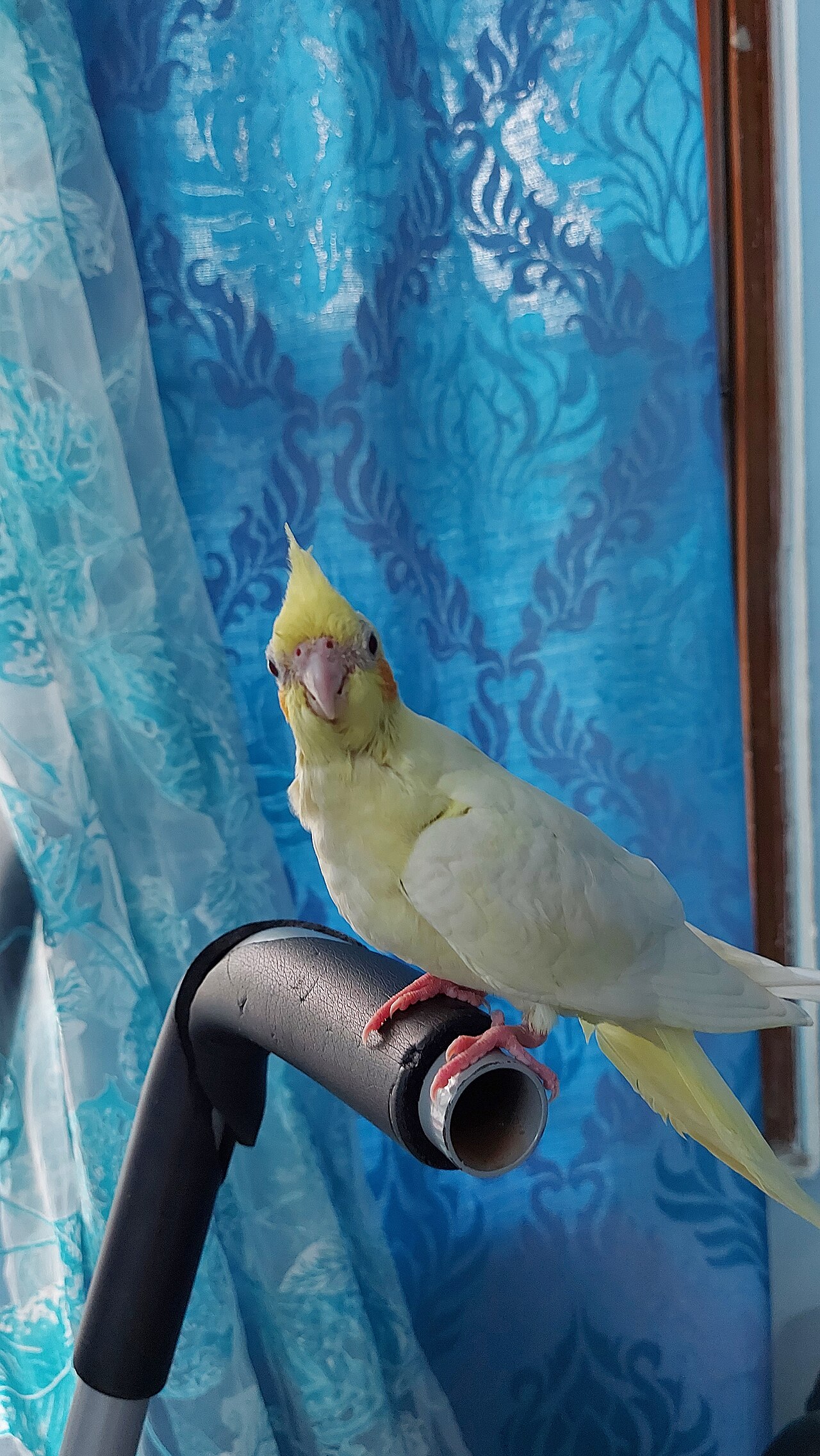
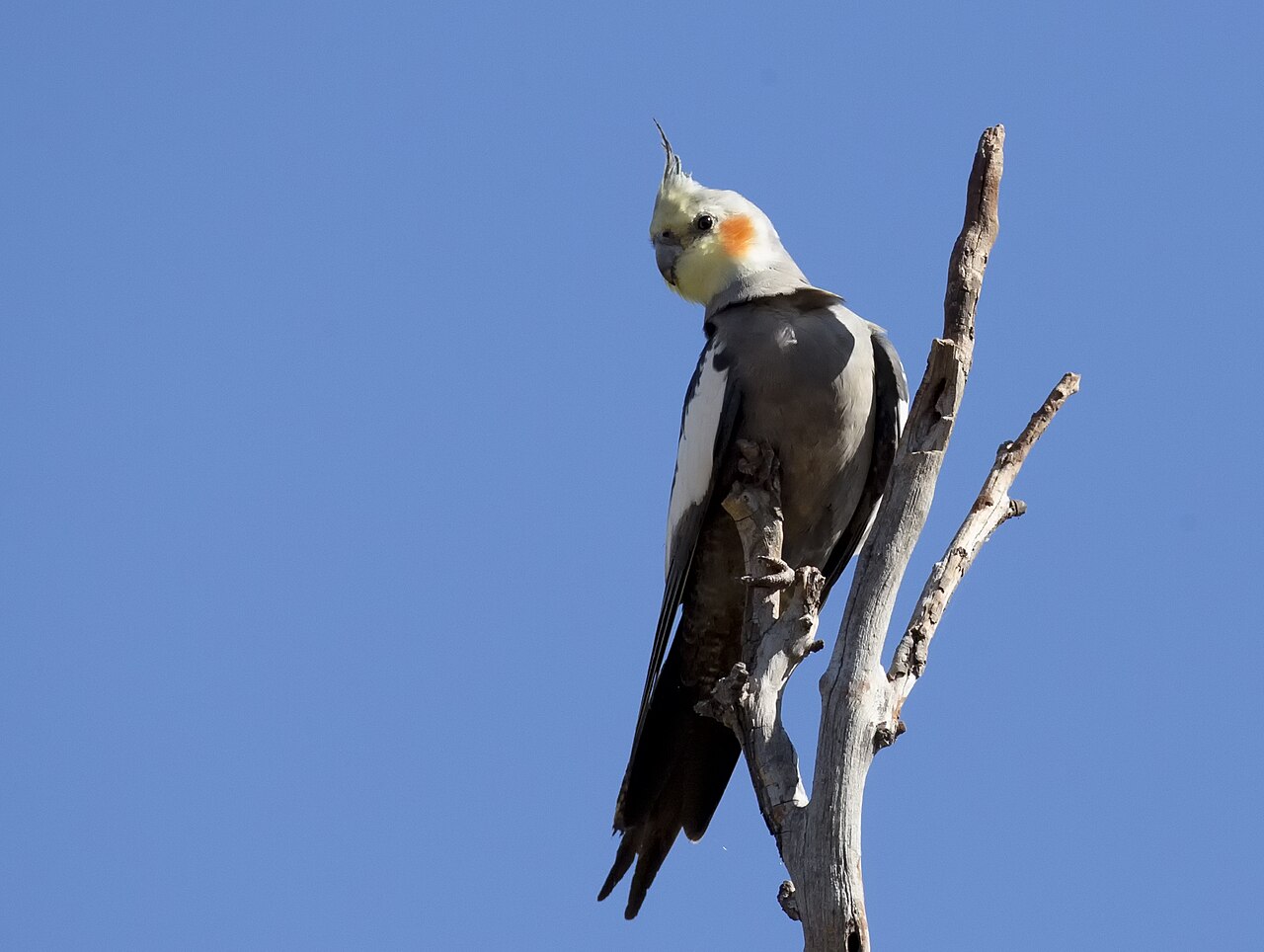
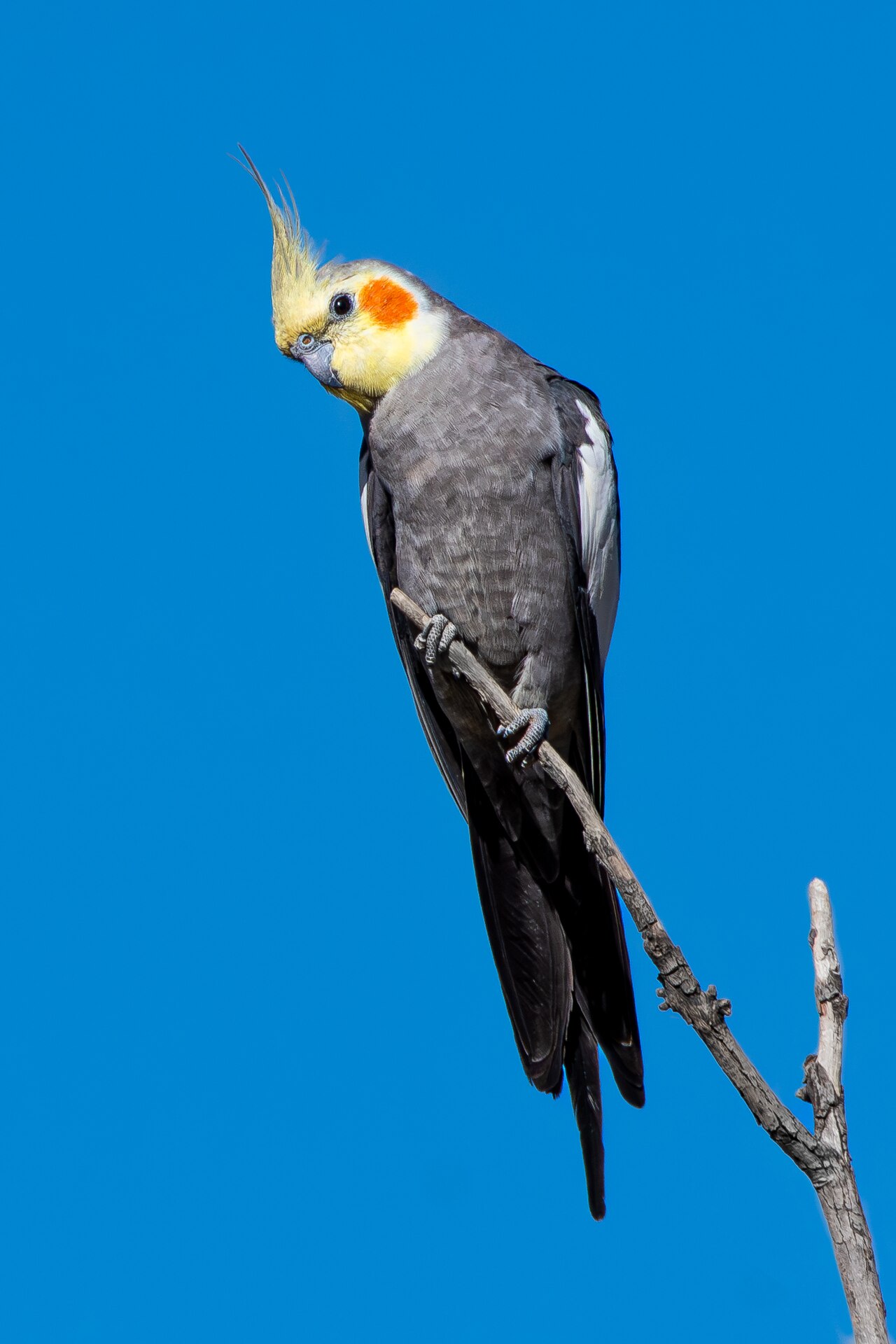
**Appearance** The cockatiel’s distinctive crest shows its emotional state. It stands straight up when the bird is startled or excited, slants gently when neutral or relaxed, and flattens against the head when angry or defensive. The crest also flattens but sticks out at the back when the bird is trying to appear flirtatious. When tired, the crest sits halfway up with the tip usually curling upward. Unlike most cockatoos, the cockatiel has long tail feathers that make up about half its total length. At 30 to 33 cm (12 to 13 in), it is the smallest cockatoo, as most others range from 30 to 60 cm (12 to 24 in). The “normal grey” or “wild-type” cockatiel is mostly grey with prominent white flashes on the outer edges of each wing. Males have a yellow or white face, while females have a primarily grey or light grey face. Both sexes have a round orange patch on each ear, often called “cheddar cheeks.” This orange is usually bright in adult males and much duller in females, making visual sexing possible for this variant.
- Estimated US households keeping them
- 1–2 million (APPA survey range)
- Number of established colour mutations i
- 15–18
Lore & Background
Originally described by Johann Friedrich Gmelin in 1788. Its genus name reflects the experience of early European travellers who thought the birds were so beautiful that they named them after mythical nymphs. The specific name hollandicus refers to New Holland, a historical name for Australia. Its biological relationships were long uncertain; it was sometimes classified among the broad-tailed parrots, but molecular studies have placed it in the monotypic subfamily Nymphicinae within the cockatoo family.
Reader's Guide
The cockatiel is significant as the smallest member of the cockatoo family and one of the most popular pet bird species worldwide, with an estimated 4.8 million US households keeping them. However, insufficient knowledge of their care contributes to one of the highest surrender rates among pet bird species. Proper care requires regular social interaction, a nutritionally appropriate diet, toy-based enrichment, annual veterinary check-ups, perches of varying diameters, UV exposure, and about two hours of daily out-of-cage time. Due to many owners' unfamiliarity with these requirements, many cockatiels suffer chronic malnutrition and behavioral problems and are often relinquished to shelters within approximately 1.5 years of adoption. The cockatiel is also notable for its distinctive erectile crest, which expresses the animal's emotional state, and for being the only member of its genus. Its biological classification as a genuine member of Cacatuidae is supported by shared features including the erectile crest, gallbladder, powder down, and facial feathers covering the sides of the beak, as well as at least one documented hybrid with a galah.
Did You Know?
- The cockatiel is the smallest member of the cockatoo family, measuring 30 to 33 cm in length.
- Its genus name Nymphicus comes from early European travellers who named them after mythical nymphs.
- Cockatiels are native to Australia and favour wetlands, scrublands, and bushlands.
- There are 15–18 cockatiel colour mutations established in aviculture worldwide.
Gallery
Frequently Asked Questions
What is a Cockatiel?
The cockatiel (Nymphicus hollandicus) is a small-to-medium parrot native to Australia, also called a weero or quarrion in some regions. It is the only species in the genus Nymphicus.
How does the Cockatiel fit into the cockatoo family?
It holds the distinction of being the smallest member of the Cacatuidae family, yet it still sports the signature crest that defines cockatoos. No other species shares its genus, making it taxonomically unique among its relatives.
How popular is the Cockatiel as a pet bird in the US?
APPA survey data estimates that roughly one to two million American households keep a cockatiel. That popularity places it squarely among the five most common pet bird species in the country.
How many established colour mutations does the Cockatiel have?
Breeders have developed between fifteen and eighteen recognized colour mutations of the species. This variety is a major draw for enthusiasts who collect or show different plumage types.
Why are Cockatiels considered such good companion birds?
Their expressive crests, playful temperament, and strong drive for human interaction make them exceptionally engaging in a home setting. That social nature is the primary reason they rank among the most widely kept parrots worldwide.
More in Parrots And Songbirds 1-17
Spotted an error? Know more?
This is a living reference — every entry is fact-audited, and reader corrections feed straight into our audit queue. Suggest an edit · See this site's audit record