Common blackbird
A widespread thrush known for its melodious song and black plumage.
Last updated

Charles J. Sharp · CC BY-SA 4.0
It was described by Carl Linnaeus in his 1758 10th edition of Systema Naturae.[1] The true thrush species Turdus merula, called the common blackbird, is referred to as the Eurasian blackbird in North America to differentiate it from unrelated New World blackbirds.[2]
Scientific classification
- KingdomAnimalia
- PhylumChordata
- ClassAves
- OrderPasseriformes
- FamilyTurdidae
- GenusTurdus
- SpeciesTurdus merula
Named by Linnaeus, 1758
Close relatives
Other species of Turdus with a Codexery entry.
- Tasman Sea island thrush Turdus poliocephalus
Sources: Wikipedia taxobox: Common blackbird (CC BY-SA 4.0) · order, family and genus agree with WoRMS AphiaID 558602 (CC BY 4.0)
Conservation status
Least Concern (LC)
- LC▲ this species
- NT
- VU
- EN
- CR
- EW
- EX
Source: IUCN Red List assessment · GBIF copy of the Red List category
How big is it?
Largest length in the source, 0.29 m, next to a 1.8 m person.
Diagram: drawn by Codexery, schematic shapes to scale (not a likeness). Length: Wikipedia: Common blackbird
Where the common blackbird has been recorded
Each dot is a place where the species has been observed and reported (13,502,537 records, half-degree grid) — not a modelled range. 484 inland records left out (institution coordinates).
Map: drawn by Codexery. Data: GBIF occurrence search (records CC0 / CC BY) · Natural Earth basemap (public domain)
Biology and range
The common blackbird is 23.5 – 29 cm in length and weighs 80 – 125 g.[3] It feeds mainly on the ground, pulling earthworms from the soil and searching leaf litter for invertebrates.[4] The common blackbird has an average life expectancy of 2.4 years.[5] The species is categorised as least concern by the IUCN.[6]
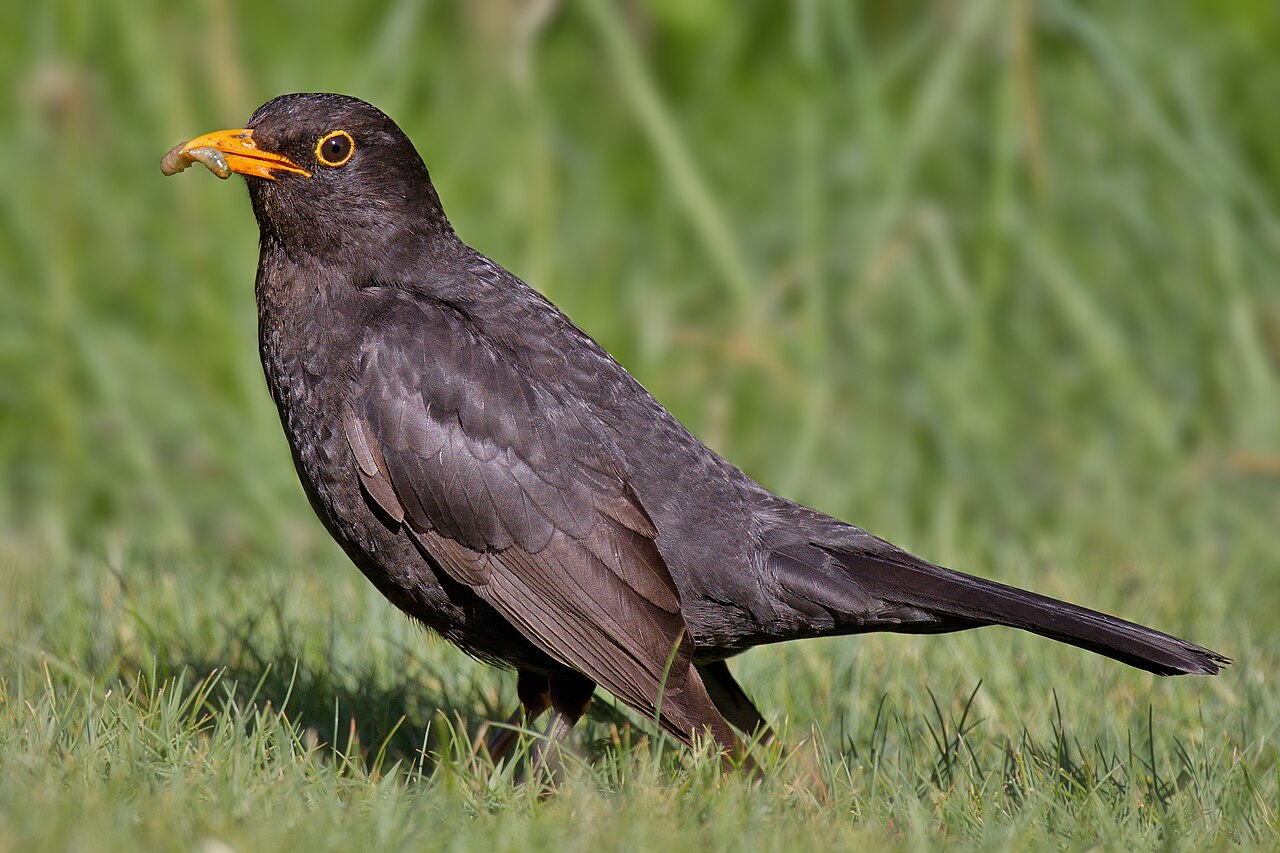
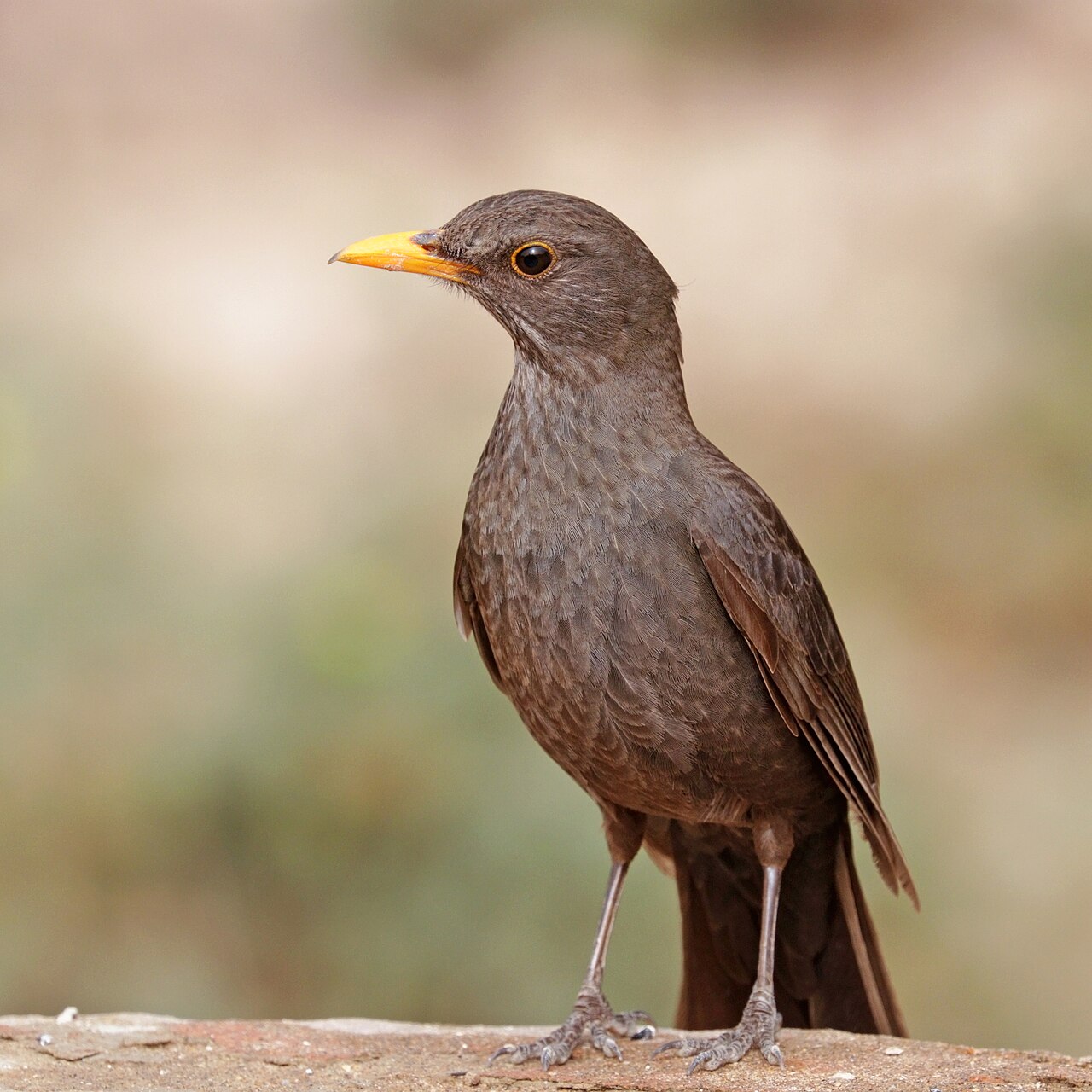
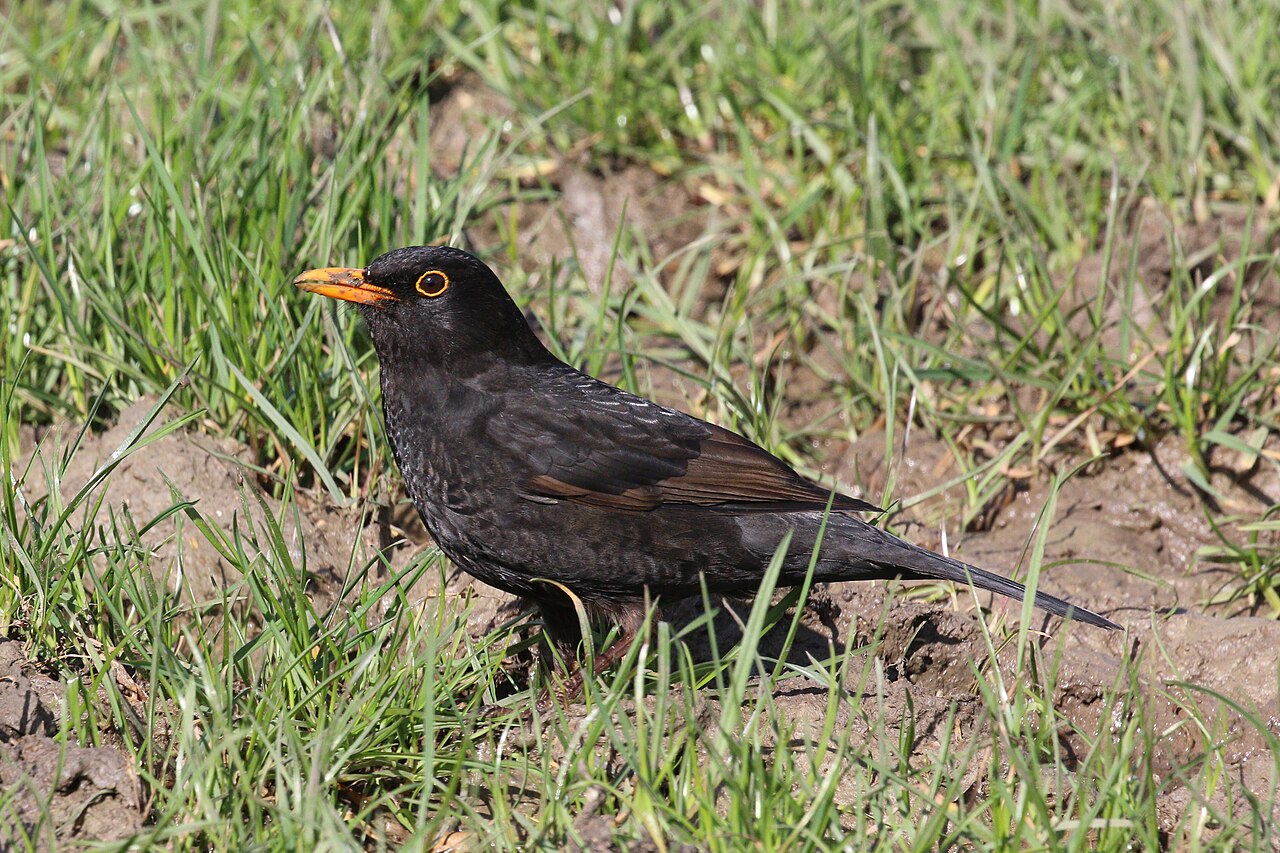
An adult male of this species displays a glossy black body, legs that are blackish-brown, a ring around the eye that is yellow, and a bill colored orange-yellow.[3] A sooty-brown plumage and a dull yellowish-brownish bill characterize the adult female.[3] From March through June, and sometimes into early July, the male produces a song that is a low-pitched, melodious, and varied fluted warble, typically delivered from elevated perches like trees and rooftops.[7]
What the specialist sources record
The nominate subspecies T. m. merula breeds commonly throughout much of Europe from Iceland east to the Ural Mountains.[8][9] According to the sources, the Turdus genus includes about 65 species of thrushes that are medium to large, have rounded heads, and possess wings that are longish and pointed.[10][9] A study found that 88% of common blackbirds examined had intestinal parasites, with Isospora and Capillaria species being the most common.[11]
References
- Wikipedia, "Common blackbird" (CC BY-SA 4.0), which cites: Linnaeus, "Systema naturae per regna tria naturae, secundum classes, ordines, genera, species, cum characteribus, differentiis, synonymis, locis. Tomus I. Editio decima, reformata", Holmiae (Laurentii Salvii), 1758, p. 1; Le Robert, "Le Grand Robert de la langue française", Dictionnaires Le Robert, 2001; "Dictionary of the Scots Language", Scottish Language Dictionaries (original not read by us) en.wikipedia.org
- Wikipedia, "Common blackbird" (CC BY-SA 4.0), which cites: "Complete Birds of North America", National Geographic Society, 2006, p. 489 (original not read by us) en.wikipedia.org
- Wikipedia, "Common blackbird" (CC BY-SA 4.0), which cites: Mullarney, Killian; Svensson, Lars, Zetterstrom, Dan; Grant, Peter (2001). Birds of Europe. Princeton University Press. pp. 304–306. (original not read by us) en.wikipedia.org
- Wikipedia, "Common blackbird" (CC BY-SA 4.0), which cites: "We watched a blackbird kill and then fly away with a shrew. Is this unusual?", The RSPB; Elliott, "Birds get taste for tadpoles as summer heat keeps worms under ground", The Times; Snow, "A Study of Blackbirds", British Museum (Natural History), 1988 (we also read that source) en.wikipedia.org
- Wikipedia, "Common blackbird" (CC BY-SA 4.0), which cites: "British garden birds – lifespan", garden-birds.co.uk; "European Longevity Records", euring.org (original not read by us) en.wikipedia.org
- Wikipedia, "Common blackbird" (CC BY-SA 4.0), which cites: BirdLife International, "Turdus merula", 2014; "The Birds of the Western Palearctic concise edition (2 volumes)", Oxford University Press, 1998; "Threats", Blackbird (we also read that source) en.wikipedia.org
- Wikipedia, "Common blackbird" (CC BY-SA 4.0), which cites: "Blackbird - learn its song and calls", Birdsong Academy (we also read that source) en.wikipedia.org
- Wikipedia, "Common blackbird" (CC BY-SA 4.0), which cites: Clement, "Thrushes (Helm Identification Guides)", Christopher Helm Publishers Ltd., 2000 (we also read that source) en.wikipedia.org
- Open Library record, ISBN 0713639407 ("Thrushes (Helm Identification Guides)"). CC0 (metadata); book content not read. openlibrary.org
- Wikipedia, "Common blackbird" (CC BY-SA 4.0), which cites: Reilly, "The Ascent of Birds", Pelagic, 2018, p. 221–225; Clement, "Thrushes (Helm Identification Guides)", Christopher Helm Publishers Ltd., 2000 (we also read that source) en.wikipedia.org
- Wikipedia, "Common blackbird" (CC BY-SA 4.0), which cites: Misof, "Eurasian Blackbirds (Turdus merula) and their gastrointestinal parasites: A role for parasites in life-history decisions?", Doctoral dissertation, Bonn, 2005; "The prevalence and ecology of the haematozoan parasites of European blackbirds, Turdus merula", Canadian Journal of Zoology, 2000, p. 684–687 (original not read by us) en.wikipedia.org
Each numbered sentence above was checked against the source it cites before publication. Sentences citing Wikipedia adapt text from the English Wikipedia article Common blackbird (contributors), used under CC BY-SA 4.0; this entry is available under the same licence. Other sources were used for facts only; no text or images are copied from them.
More in Parrots And Songbirds
Sources
Compiled from Wikipedia and the sources listed below. Text from Wikipedia is available under CC BY-SA 4.0; this entry is adapted from it.
- Wikipedia: Common blackbird (CC BY-SA 4.0).
- Classification: the source article's taxobox; order, family and genus checked against WoRMS, the World Register of Marine Species (CC BY 4.0).
- Conservation status: IUCN Red List assessment.
- Occurrence records: GBIF (CC0 / CC BY). Basemap: Natural Earth (public domain).
- Word definitions: the , each quoted from its Wikipedia article.
Spotted an error? Know more?
Reader corrections go straight into our review queue. Suggest an edit · How this site is sourced