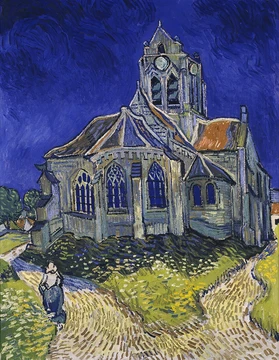
Impressionism
A 19th-century French art movement emphasizing light and ordinary subjects.

Impressionism was a 19th-century art movement. Its key features included visible brush strokes, open compositions, and a focus on capturing light as it changed, often highlighting the effects of time passing. The artists chose ordinary subjects, unusual angles, and made movement central to how people see and experience the world. The movement began with a group of artists based in Paris, who became well known through their own independent shows in the 1870s and 1880s.
These early Impressionists were considered radicals. They broke the rules of academic painting, building their pictures with freely brushed colors that mattered more than lines and outlines, following the lead of painters like Eugène Delacroix and J. M. W. Turner. They painted realistic scenes of everyday life in natural settings, often working outdoors to capture a moment as it was experienced. Before them, paintings—whether landscapes, still lifes, or portraits—were made in a studio, with an emphasis on looking true to life. The Impressionists found they could capture the brief, changing effects of sunlight by painting in the open air, or *en plein air*. They focused on overall visual effects rather than details, using short, broken brush strokes of mixed and pure, unmixed colors—not smoothly blended or shaded as was usual—to create a sense of intense color vibration.
The French art establishment strongly opposed the Impressionists. The style got its name from a Claude Monet painting called *Impression, Sunrise*. The critic Louis Leroy used that title in a sarcastic 1874 review of the first Impressionist exhibition, published in the Parisian newspaper *Le Charivari*, and the term stuck. After Impressionism in visual art, similar approaches appeared in other media, known as Impressionist music and Impressionist literature.
Impressionism developed in France at the same time other painters, like the Italian Macchiaioli and American Winslow Homer, were also exploring outdoor painting. But the Impressionists created new techniques specific to their style. They argued for a different way of seeing—an art of immediacy and movement, of candid poses and compositions, of light expressed through bright, varied color. In 1876, the poet and critic Stéphane Mallarmé described the new style: the subject, made of a harmony of reflected, ever-changing lights, cannot always look the same but pulses with movement, light, and life. The public was initially hostile but gradually came to believe the Impressionists had captured a fresh, original vision, even as art critics and the establishment disapproved. By recreating the sensation in the eye that sees the subject, rather than detailing the subject itself, and by using a variety of techniques and forms, Impressionism led to later painting styles like Post-Impressionism, Fauvism, and Cubism.
In the mid-19th century, during a time of rapid industrialization and unsettling social change in France, the Académie des Beaux-Arts controlled French art. It preserved traditional standards of content and style, valuing historical subjects, religious themes, and portraits over landscapes and still lifes. The Académie preferred carefully finished images that looked realistic up close, made with precise brush strokes blended to hide the artist's hand. Color was restrained and often dulled further by a thick golden varnish. The Académie held a yearly, juried art show, the Salon de Paris. Artists whose work was shown won prizes, got commissions, and gained prestige. The juries' standards reflected the Académie's values, seen in works by artists like Jean-Léon Gérôme and Alexandre Cabanel. Using techniques and formulas from Western painting since the Renaissance—such as linear perspective and figure types from Classical Greek art—these artists created escapist visions of a reassuringly ordered world. By the 1850s, some artists, especially the Realist painter Gustave Courbet, had drawn public attention and criticism by showing contemporary realities without the idealization the Académie demanded.
In the early 1860s, four young painters—Claude Monet, Pierre-Auguste Renoir, Alfred Sisley, and Frédéric Bazille—met while studying under the academic artist Charles Gleyre. They discovered they all shared an interest in painting landscape and contemporary life instead of historical or mythological scenes. Following a practice pioneered by artists like the Englishman John Constable, which had become popular by mid-century, they often went to the countryside together to paint in the open air. Their goal was not to make sketches for later studio work, as was usual, but to finish their paintings outdoors. By painting in sunlight directly from nature and boldly using the vivid synthetic pigments available since the start of the century, they developed a lighter, brighter style that extended the Realism of Courbet and the Barbizon school. A favorite meeting place was the Café Guerbois on Avenue de Clichy in Paris, where discussions were often led by Édouard Manet, whom the younger artists greatly admired. They were soon joined by Camille Pissarro and Paul Cézanne.
- field
- Visual arts
- nationality
- French
- known_for
- Visible brush strokes, open composition, depiction of changing light, ordinary subject matter, unusual visual angles, movement
- era
- 19th century
Quick Facts
- Country
- France
- Influences
- Realism, Barbizon School
- Influenced
- Post-Impressionism · Neo-Impressionism · Expressionism
- Commons
- yes
Facts from the source article.
Lore & Background
In the middle of the 19th century, the Académie des Beaux-Arts dominated French art, valuing historical subjects, religious themes, and portraits with carefully finished, realistic images. In the early 1860s, four young painters—Claude Monet, Pierre-Auguste Renoir, Alfred Sisley, and Frédéric Bazille—met while studying under academic artist Charles Gleyre and discovered a shared interest in painting landscape and contemporary life. They often ventured into the countryside to paint in the open air, completing their paintings out-of-doors rather than making sketches for studio work. They were soon joined by Camille Pissarro, Paul Cézanne, and Armand Guillaumin, and a favourite meeting place was the Café Guerbois, where discussions were often led by Édouard Manet. During the 1860s, the Salon jury routinely rejected about half of the works submitted by Monet and his friends. In 1863, the jury rejected Manet's *Le déjeuner sur l'herbe* primarily because it depicted a nude woman with two clothed men in a contemporary setting. After Emperor Napoleon III saw the rejected works, he decreed the Salon des Refusés, which drew attention to a new tendency in art. to exhibit independently.
Reader's Guide
Impressionism emerged in France at a time of rapid industrialization and social change, challenging the Académie des Beaux-Arts' dominance. The Impressionists violated academic rules by constructing pictures from freely brushed colours that took precedence over lines and contours, following the example of painters such as Eugène Delacroix and J. M. W. Turner. They painted realistic scenes of everyday life in natural settings, often outdoors, attempting to capture a moment as experienced. By painting en plein air and using short 'broken' brush strokes of mixed and pure unmixed colour, they achieved an effect of intense colour vibration. The public, at first hostile, gradually came to believe the Impressionists had captured a fresh and original vision, even as art critics and the art establishment disapproved. The movement is a precursor of various painting styles, including Post-Impressionism, Fauvism, and Cubism. Its development in visual arts was soon followed by analogous styles in other media known as Impressionist music and Impressionist literature.
Did You Know?
- In 1863, the Salon jury rejected Édouard Manet's *Le déjeuner sur l'herbe* primarily because it depicted a nude woman with two clothed men in a contemporary setting.
- The Impressionists often painted outdoors (en plein air) to capture momentary and transient effects of sunlight.
The Rebellious Origins
In the early 1860s, four young painters—Monet, Renoir, Sisley, and Bazille—crossed paths while studying under the academic instructor Charles Gleyre. What united them was a shared desire to paint landscapes and scenes of contemporary life rather than the historical or mythological subjects the French art establishment demanded. Following a tradition already popularized by painters like John Constable, they began venturing into the countryside together, not to make preliminary sketches for later studio refinement, but to complete their finished works directly outdoors. Their gathering spot became the Café Guerbois on Avenue de Clichy, where discussions were often steered by Édouard Manet, a figure the younger group deeply admired. Camille Pissarro, Paul Cézanne, and Armand Guillaumin soon joined their circle. The result was a lighter, brighter approach to painting that pushed beyond the Realism of Courbet and the Barbizon school, made possible by the vivid synthetic pigments that had become available earlier in the century.
A Name Born in Sarcasm
The movement's very name was an accident of mockery. The term was meant to ridicule, yet it stuck. The artists had been fighting a well-established enemy: the Académie des Beaux-Arts, which controlled French artistic standards through its juried Salon de Paris. The Académie prized carefully blended, varnished, realistic images of historical and religious subjects, and its juries routinely rejected about half of the works submitted by Monet and his friends. Manet's Le déjeuner sur l'herbe was turned down in 1863 largely because it showed a nude woman alongside two clothed men at a picnic—a transgression the juries tolerated only in allegorical contexts. Despite this institutional hostility, the public gradually shifted from open rejection to appreciation, recognizing in these works a fresh and original way of seeing the world, even as critics and the art establishment continued to disapprove.
Painting Light, Not Objects
The technical revolution at the heart of Impressionism was a fundamental shift in what painters chose to render. Rather than delineating the details of a subject, the artists aimed to recreate the sensation in the eye that perceives it. They abandoned the smooth blending and careful shading that academic training demanded, replacing them with short, broken brush strokes of mixed and pure, unmixed colour laid side by side to produce an effect of intense colour vibration. Lines and contours yielded to freely brushed colour, following the example of earlier innovators like Delacroix and Turner. The emphasis fell on the accurate depiction of light in its constantly shifting qualities, often accentuating the effects of the passage of time. Compositions were open rather than closed, subject matter was drawn from ordinary life, and unusual visual angles gave way to candid poses. Movement itself became a crucial element of human perception.
Ripples Beyond the Canvas
Impressionism's influence radiated far beyond the French painting studios where it was forged. In the visual arts, it served as a direct precursor to Post-Impressionism, Fauvism, and Cubism, each of which inherited and transformed its emphasis on subjective perception over objective detail. The movement also spawned analogous styles in entirely different media: Impressionist music and Impressionist literature emerged as parallel explorations of atmosphere, suggestion, and the fleeting quality of experience. It is worth noting that the impulse to paint from direct observation in natural light was not unique to the Parisian group. Italian painters known as the Macchiaioli and the American Winslow Homer were independently exploring plein-air techniques around the same period. Yet the Impressionists developed a coherent set of new techniques and a self-conscious philosophy of seeing that set them apart. Their radicalism was inseparable from the broader social upheaval of mid-nineteenth-century France, a time of rapid industrialisation, the rebuilding of Paris under Napoleon III, and the waging of war—conditions that made the old academic order feel increasingly out of touch with lived reality.
Frequently Asked Questions
What is Impressionism?
Impressionism is a French art movement from the 19th century that shifted the focus of painting toward capturing fleeting effects of natural light and everyday moments rather than polished, idealized detail. It grew out of a circle of Paris-based painters who rejected the official Salon in favor of their own independent shows.
Who are the key figures behind Impressionism?
The movement is most closely tied to a group of Paris-based artists such as Claude Monet, Pierre-Auguste Renoir, Edgar Degas, and Camille Pissarro. They broke into the public eye through a series of self-organized group exhibitions during the 1870s and 1880s.
What visual techniques define Impressionist paintings?
Works in this style are instantly recognizable for their loose, visible brushwork, open and often cropped compositions, and a preoccupation with how light shifts from moment to moment. They also lean on ordinary, unglamorous subjects, unconventional vantage points, and a built-in sense of motion that mirrors how the human eye actually takes in a scene.
When and where did Impressionism originate?
The movement took shape in France during the latter half of the 1800s, with its most active creative window falling in the 1870s and 1880s. Its Paris-centered origins and distinctly French character remain central to how art historians classify it.
Why is Impressionism considered a turning point in art history?
It proved that perception itself—how light, color, and movement feel to a viewer in a single instant—could be the true subject of a painting, rather than a fixed, idealized narrative. That radical reorientation of purpose paved the way for the broader modernist experiments that followed in the 20th century.
More in Painting & Visual Arts 1-20
Spotted an error? Know more?
This is a living reference — every entry is fact-audited, and reader corrections feed straight into our audit queue. Suggest an edit · See this site's audit record