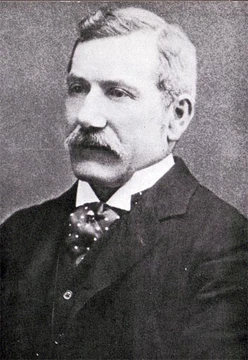
John E. Douglas
Pioneering FBI profiler who shaped modern criminal profiling.

via Wikipedia: John E. Douglas · see source
John Edward Douglas is a retired FBI special agent and former unit chief of its Behavioral Science Unit, recognized as one of the pioneers of criminal profiling. He is the bestselling author of Mindhunter, which details his career and the development of behavioral profiling. His work contributed significantly to the formation and evolution of the FBI's Behavioral Science Unit, where he helped establish methods for analyzing and investigating serial and violent offenders.
Quick Facts
- Birth name
- John Edward Douglas
- Born
- 18 June 1945
- Birthplace
- New York City, U.S.
- Education
- Eastern New Mexico University (BS)
- University of Wisconsin
- Milwaukee (EdS, MS)
- Nova University (EdD)
- Occupation
- FBI special agent, author
- Years active
- 1970–1995
Facts from the source article.
Did You Know?
- Douglas received an official letter of censure from the FBI Director after his quote about Wayne Williams was widely reported, though he later helped the prosecution trap Williams into showing anger during the trial.
- Douglas's profile of Robert Hansen included the detail that the killer might stutter—Hansen did stutter, and 'souvenirs' of victims' jewelry were found at his residence.
- He interviewed 12 named violent criminals in prisons, including Lynette Fromme, Sara Jane Moore, James Earl Ray, Sirhan Sirhan, Donald Harvey, and Joseph Paul Franklin.
- Douglas's book Mindhunter served as the basis for the 2017 Netflix series Mindhunter, produced by David Fincher and Charlize Theron.
Early life and education
Douglas was born in Brooklyn, New York City, and grew up in Hempstead, New York. He initially aspired to study veterinary medicine at Cornell University but lacked the grades, entering Montana State University's veterinary program in 1963. After poor marks, he abandoned his studies in 1965 and enlisted in the United States Air Force in 1966. While in the military, he earned a Bachelor of Science degree at Eastern New Mexico University. Graduate studies in psychology led to his recruitment into the FBI by agent Frank Haines in Clovis, New Mexico. He later earned an Educational Specialist degree in 1975 and a Master of Science in educational psychology in 1977, both from the University of Wisconsin–Milwaukee, and a doctorate in education from Nova University in 1989.
Career
Douglas joined the FBI in 1970, initially assigned to Detroit, Michigan, where he served as a sniper on the local FBI SWAT team and later as a hostage negotiator. In 1977, he transferred to the FBI's Behavioral Science Unit (BSU) at the FBI Academy in Quantico, Virginia, teaching hostage negotiation and applied criminal psychology. He created and managed the FBI's Criminal Profiling Program, later called the Behavioral Analysis Unit (BAU), and became unit chief of the Investigative Support Unit within the FBI's National Center for the Analysis of Violent Crime (NCAVC).
While traveling to instruct police, he interviewed numerous violent criminals in prisons, including David Berkowitz, Ted Bundy, John Wayne Gacy, Charles Manson, Lynette Fromme, Sara Jane Moore, Edmund Kemper, James Earl Ray, Sirhan Sirhan, Richard Speck, Donald Harvey, and Joseph Paul Franklin. He used this information in the book Sexual Homicide: Patterns and Motives and the Crime Classification Manual (CCM). He received two Thomas Jefferson Awards from the University of Virginia for his work on the study.
Douglas examined crime scenes, created perpetrator profiles, and built interrogation and prosecution strategies. He acknowledged being doubted and criticized by colleagues during profiling's early days; the efficacy of profiling remains debated, with studies indicating it is often too vague for definitive profiles. He retired from the FBI in 1995 after 25 years.
In popular culture
By January 2015, the creators of Criminal Minds had stated that FBI profilers Jason Gideon and David Rossi were modeled after John E. Douglas. Netflix later picked up a screenplay based on his book Mindhunter: Inside the FBI's Elite Serial Crime Unit, with Jonathan Groff playing a character inspired by Douglas. Before that, an MSNBC documentary version of Mindhunter featured Douglas interviewing killers like Joseph Kondro and Donald Harvey. Those interviews later appeared in his books, including The Killer Across the Table, which explored psychopathy in the cases of Kondro, Joseph McGowan, and Harvey.
Publications
Douglas has authored or co-authored numerous books. Notable works include Crime Classification Manual (1992, with Ann W. Burgess, Allen G. Burgess, and Robert K. Ressler); Journey into Darkness (1997, with Mark Olshaker); Obsession (1998, with Olshaker); Guide to Careers in the FBI (1998); The Anatomy of Motive (1999, with Olshaker); The Cases That Haunt Us (2000, with Olshaker); John Douglas' Guide to the Police Officer Exams (2000); Anyone You Want Me to Be (2003, with Stephen Singular); John Douglas's Guide to Landing a Career in Law Enforcement (2004); a second edition of Crime Classification Manual (2006); Inside the Mind of BTK (2007, with Johnny Dodd); Law & Disorder (2013, with Olshaker); Mindhunter: Inside the FBI's Elite Serial Crime Unit (2017, with Olshaker); The Killer Across the Table (2019, with Olshaker); The Killer's Shadow (2020, with Olshaker); When a Killer Calls (2022, with Olshaker); Broken Wings (1999, with Olshaker); and Man Down (2002, a Broken Wings thriller).
More in Offender Profiling
Spotted an error? Know more?
Reader corrections go straight into our review queue. Suggest an edit · How this site is sourced