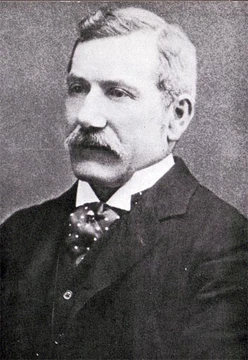
Roy Hazelwood
FBI profiler who classified organized and disorganized murderers.
Roy Hazelwood was a former FBI profiler who specialized in sex crimes. He worked for the FBI for much of his career, retiring in the mid-1990s. His work focused on understanding and classifying violent sexual offenders, including developing the distinction between organized and disorganized murderers in 1980, a concept still used by law enforcement.
Quick Facts
- Birth name
- Robert Roy Hazelwood
- Born
- 4 March 1938
- Birthplace
- Pocatello, Idaho, U.S.
- Died
- 18 April 2016
- Place of death
- United States
- Occupation
- FBI agent
- criminal profiler
- author
- Years active
- 1971–1990s
Facts from the source article.
Did You Know?
- He served in the Vietnam War as a military police officer, completing his tour in 1968, and left the U.S. Army after 11 years with the rank of Major.
- Hazelwood died peacefully while taking a nap in the sun at his home on April 18, 2016, and was buried at Quantico National Cemetery.
Early life
Roy Hazelwood was born on March 4, 1938, in Pocatello, Idaho, to Louella Matilda (Schaible) Hazelwood and her husband Elmo Earl, his stepfather. He had three siblings: half-brothers James Martin and Gene Hazelwood, and half-sister Earlene Daniels. As an infant, his biological father, Myrle Reddick, kidnapped him and kept him for six months before returning him to his paternal grandparents; the two never met again. Raised in Spring Branch, Houston, Texas, he attended Sam Houston State University. He served in the U.S. Army as a military police officer in Vietnam, finishing in 1968, and left the military after 11 years as a Major. He then completed a forensic medicine fellowship with the Armed Forces Institute of Pathology and worked as an instructor with the CID. He joined the FBI in 1971.
Career
In 1980, Roy Hazelwood developed the distinction between 'organized' and 'disorganized' murderers, a concept that is still used by law enforcement to help apprehend criminals. He also defined the six categories of rapists: power-reassurance, power assertive, anger retaliatory, anger excitation, opportunistic and gang. Of the six, anger excitation is by far the most dangerous and the hardest to capture. Hazelwood also offered the theory that there is no cure for pedophilia or sexual sadists.
He conducted numerous studies involving sex crimes, including cases of erotic asphyxiation. He did numerous studies involving the willing victims of sexual sadists (wives and girlfriends) and how sexual sadists appear in everyday life. In his career he found equivocal death crime as the most dubious and complex investigation to overcome. After he retired from the FBI, Hazelwood was an active member of the Academy Group, an organization of former FBI agents and law enforcement officers.
He continued to work closely with the FBI and other government agencies in an effort to track down sexually oriented murderers. Hazelwood also co-authored two books with Stephen Michaud: The Evil That Men Do and Dark Dreams. Hazelwood gave lectures across North America about sexual sadism and autoerotic fatalities. His presentation was also heavily focused on Dennis Rader, the 'B.T.K.' serial killer of Wichita, Kansas.
A fully endowed scholarship in memory of Roy Hazelwood is available for the master's degree in Criminal Justice Studies (Applied Criminology Concentration) at California University of Pennsylvania.
More in Offender Profiling
Spotted an error? Know more?
Reader corrections go straight into our review queue. Suggest an edit · How this site is sourced