2084: The End of the World
A dystopian novel set in an Islamist totalitarian world after nuclear holocaust.

Boualem Sansal · Public domain
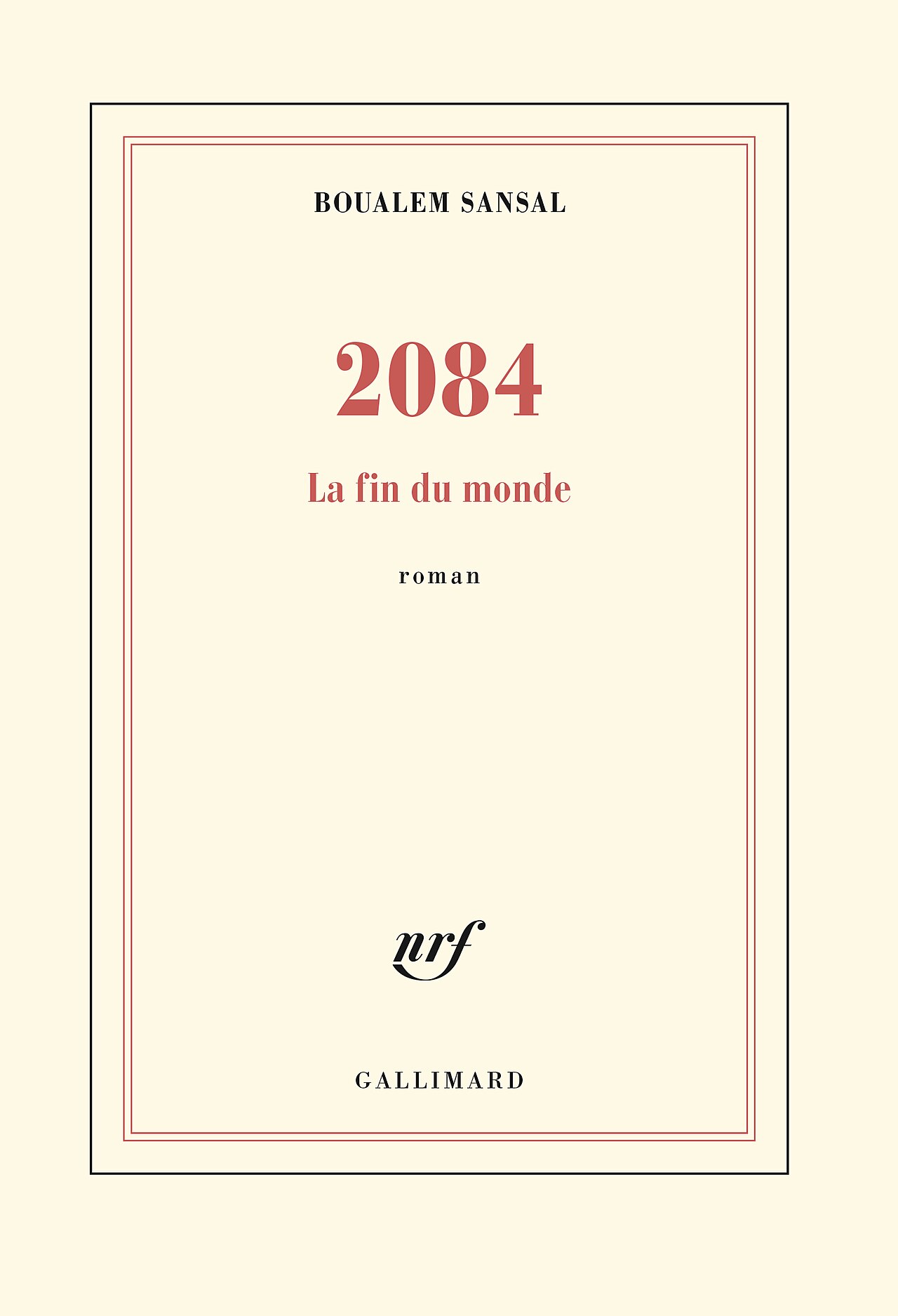
2084: The End of the World (original French title *2084. La fin du monde*) is a dystopian novel by Algerian author Boualem Sansal. It was released by Éditions Gallimard on 20 August 2015. The book draws from George Orwell’s *Nineteen Eighty-Four* and takes place in a totalitarian society governed by Islamist ideology, following a nuclear catastrophe. In 2015, it shared the Grand Prix du roman de l’Académie française with Hédi Kaddour’s *Les Prépondérants*, and the literary magazine *Lire* named it the year’s best book. An English translation by Alison Anderson came out through Europa Editions on 31 January 2017 (ISBN 9781609453664).
The story is set in the empire of Abistan, named after the prophet Abi, who is considered Yölah’s sole earthly representative. The regime enforces collective amnesia and total submission to one God. Individual thought and memory of the past are forbidden. A pervasive surveillance system reports anyone with deviant thoughts or actions. Citizens are officially said to live contentedly in unquestioning faith, while religion controls every private aspect of life. Thought is further restricted by a single language, abilang, which limits word length. Despite this, the protagonist Ati feels a pull toward freedom and tries to find out if anything else exists beyond Abistan.
The empire claims to be the entire world and the beginning of history, with 2084 as the only known year—nothing is said to have come before. The sole recorded historical event is the Great Holy War of 2084 against the Great Disbelief, which killed hundreds of millions of martyrs. Ati begins to doubt these imposed truths. Along with his friend Koa, he travels through Abistan’s districts to break free from enforced ignorance and uncover the origins of the Gkabul (the holy book). He finds an underground network of heretics living in ghettos on the empire’s margins, without religion. The plot also revolves around an archaeologist named Nas, whose discovery of an ancient village challenges the religious dictatorship’s legitimacy.
Key characters include Abi (Yölah’s delegate and namesake of Abistan), Ati (the questioning protagonist), Koa (his companion in the search for truth), Nas (the archaeologist whose find threatens official history), Toz (a mysterious collector of old artifacts who aids Ati), and Yölah (God).
Critical reception was mixed.
Quick Facts
- Author
- Boualem Sansal
- Title Orig
- 2084. La fin du monde
- Orig Lang Code
- fr
- Translator
- Alison Anderson
- Language
- French
- Genre
- Dystopian · political fiction · social science fiction
- Publisher
- Éditions Gallimard
- Pub Date
- 20 August 2015
- English Pub Date
- 31 January 2017
- Media Type
- Print (paperback)
- Pages
- 288
- Isbn
- 978-2-07-014993-3
Facts from the source article.
Lore & Background
The plot centers on the discovery of an ancient village by the archaeologist Nas, which challenges the religious dictatorship's official history. The action takes place in 2084, the only known event being the Great Holy War of 2084 against the Great Disbelief, in which hundreds of millions died. Ati questions imposed certainties and seeks to understand if anything else exists on earth.
Reader's Guide
2084: The End of the World is significant as a dystopian fable that critiques totalitarianism and religious extremism, drawing direct inspiration from George Orwell's Nineteen-Eighty Four. The novel received critical attention in France, winning the Grand Prix du roman de l'Académie française and being named best book of the year by Lire. Reviews were mixed: some praised its power and chilling subject, while others noted didacticism that made the narrative abstract. The novel's English translation in 2017 extended its reach to an international audience. Its legacy lies in its warning about the dangers of Islamism and totalitarian control, though some critics questioned its long-term impact.
Did You Know?
- The novel was jointly awarded the 2015 Grand Prix du roman de l'Académie française with Les Prépondérants by Hédi Kaddour.
- The empire Abistan takes its name from the prophet Abi, Yölah's sole delegate on earth.
- The novel's single language, abilang, limits the length of words to reduce thought.
- The English translation by Alison Anderson was published by Europa Editions on 31 January 2017.
The World of Abistan
The novel constructs a vast empire called Abistan, named after Abi, who serves as the sole earthly delegate of the deity Yölah. The society operates on a foundation of enforced collective amnesia—citizens are forbidden from remembering the past or engaging in individual thought. An all-encompassing surveillance apparatus monitors deviant behavior, while religion penetrates even the most private corners of daily existence. Language itself is weaponized through abilang, a single imposed tongue in which word length is deliberately curtailed, narrowing the scope of possible expression. The empire proclaims that nothing existed before the Great Holy War of 2084, a conflict against the Great Disbelief that supposedly claimed hundreds of millions of martyrs. Within this sealed worldview, the protagonist Ati begins to feel an inner pull toward freedom, questioning whether anything beyond the sanctioned narrative might exist. Together with his companion Koa, he embarks on a journey through Abistan's districts, ultimately uncovering hidden communities of heretics living in ghettos at the empire's fringes, beyond the reach of religious authority.
Critical Reception and Awards
Upon its release, the novel quickly attracted both acclaim and pointed controversy. It shared the 2015 Grand Prix du roman de l'Académie française with Hédi Kaddour's Les Prépondérants, and the literary magazine Lire selected it as the year's finest book. Critics across French publications responded with a mix of admiration and skepticism. Marianne Payot of L'Express described it as a fable, parable, and pamphlet rolled into one, calling it a profound and frightening work about a dictatorship stripped of history. Jean-Louis Le Touzet of Libération praised Sansal's narrative rhythm, noting readers would be swept into the nightmare the book constructs. Michel Abescat of Télérama called the fable powerful, the humor devastating, and the subject chilling, framing it as a warning to those who underestimate the threat of Islamism. Not all responses were uniformly positive: David Caviglioli of BibliObs felt the didacticism rendered the narrative abstract and distanced readers from the characters, while Gilles Martin-Chauffier of Paris Match questioned whether the work would be remembered as more than a slow thriller once the political moment passed.
Orwellian Lineage and Thematic Warning
Sansal openly draws on George Orwell's Nineteen-Eighty Four as a structural and thematic inspiration, yet transposes the totalitarian template into a distinctly religious register. Where Orwell's Oceania suppresses thought through political orthodoxy, Abistan enforces conformity through faith, collective forgetting, and a linguistically restricted language. The novel's central tension revolves around the archaeologist Nas, whose discovery of an ancient village threatens to unravel the official narrative that Abistan constitutes the entirety of the earth and the beginning of all history. This plot device—material evidence contradicting state-sanctioned truth—mirrors Orwell's Ministry of Truth while adding a theological dimension. Critics consistently read the book as a pointed warning. Télérama's Abescat explicitly positioned it as a cautionary signal directed at those who, in Sansal's view, underestimate the danger posed by Islamism. The novel thus functions simultaneously as literary fable, political pamphlet, and philosophical inquiry into whether a society can survive without memory, individual thought, or the possibility of questioning its founding myths.
Publication and English-Language Reach
The novel first appeared in French under the title 2084. La fin du monde, published by Éditions Gallimard on 20 August 2015. Its immediate critical success—winning the Grand Prix du roman de l'Académie française and being named best book of the year by Lire—established it as a major literary event in the French-speaking world. The work's journey into English-language readership came roughly eighteen months later, when translator Alison Anderson rendered the text for Europa Editions, which issued the English edition on 31 January 2017 under ISBN 971609453664. This translation opened the novel to a broader international audience, allowing Sansal's dystopian vision of an Islamist totalitarian empire to reach readers beyond the Francophone sphere. The English publication also contextualized the book within the wider canon of political dystopian fiction, making its Orwellian debts and its specific warnings about religious authoritarianism accessible to Anglophone critics and general readers who might otherwise have encountered it only through secondary commentary in French-language press.
Gallery
More in Novels set in the future 1-24
Spotted an error? Know more?
Reader corrections go straight into our review queue. Suggest an edit · How this site is sourced